What Visible Veins on Your Hands Actually Mean: The Truth Behind Bulging Hand Veins
Meta Description: Bulging veins on the back of the hand are common, but what do they actually mean? Discover the real medical reasons behind visible hand veins and when you should see a doctor.
Introduction
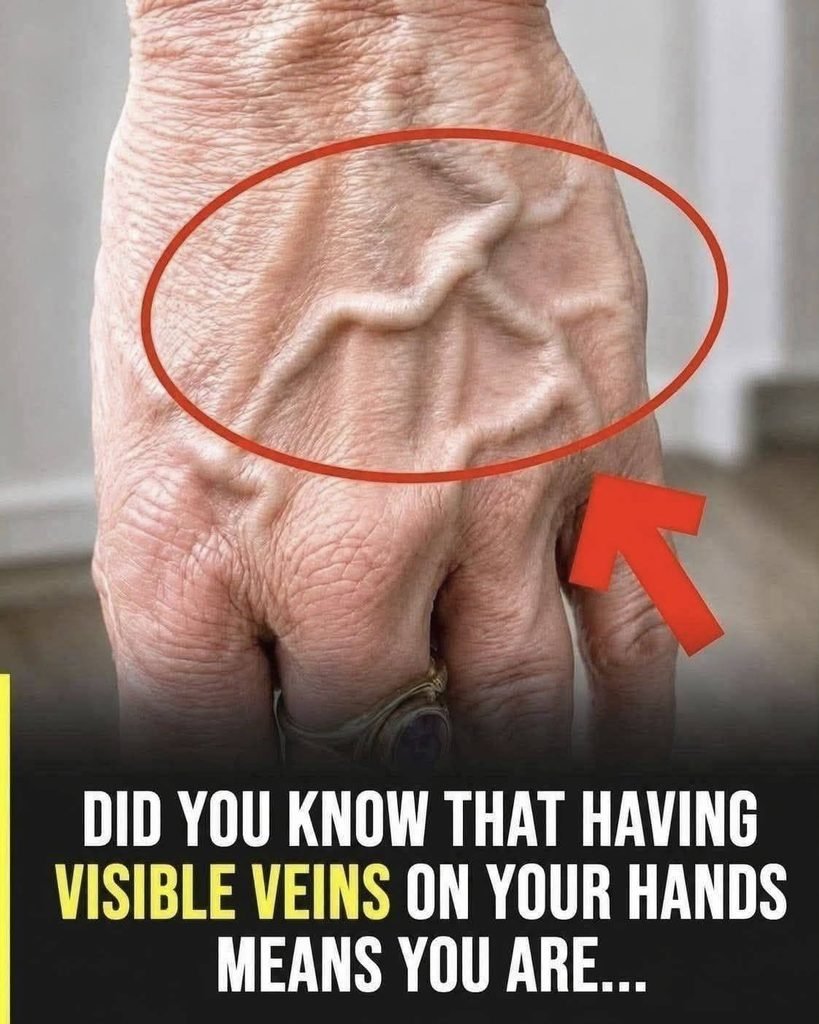
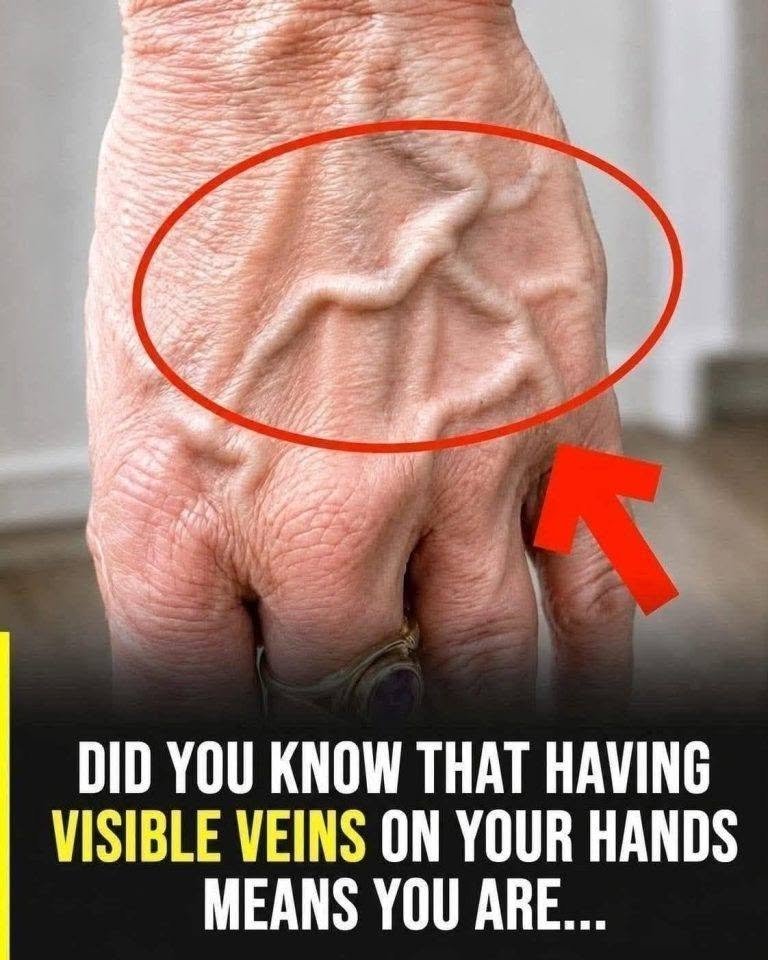
Social media is full of clickbait images claiming that having visible, bulging veins on your hands is a secret sign of a specific health condition or personality trait. The image above, showing an elderly hand with prominent veins, hints at a hidden meaning.
The medical reality is much simpler and less dramatic. For the vast majority of people, visible hand veins are a completely normal anatomical feature. They are not usually a sign of poor health or high blood pressure.
Here is a factual breakdown of what having visible veins on your hands actually means about your body.
1. You Are Aging (The Most Common Cause)
The hand in the image belongs to an older individual, and aging is the number one reason hand veins become prominent.
Loss of Collagen and Elastin: As we age, our skin naturally loses collagen and elastin, becoming thinner and less elastic.
Loss of Subcutaneous Fat: The layer of fat that sits just beneath the skin (subcutaneous fat) also thins out over time, particularly on the backs of the hands. Without this fatty cushion to hide them, the veins become much more visible and appear to “bulge.”
2. You Have Low Body Fat
Visible veins are very common in people with low body fat percentages.
The Science: Veins are located just beneath the skin. If you have a thick layer of subcutaneous fat, the veins are hidden. If you are lean, athletic, or naturally thin, there is less tissue covering the veins, making them stand out clearly. This is why bodybuilders and athletes often have highly visible “vascularity.”
3. You Exercise Regularly or Do Physical Labor
If you work with your hands or exercise frequently, your veins may become permanently more prominent.
The Mechanism: During physical exertion, arterial blood pressure increases, and the body pushes more blood into the veins. To handle this increased volume and to help cool the body down, the veins expand (vasodilation). Over time, this repeated expansion can cause the veins to remain slightly enlarged and visible even when you are at rest.
4. It Is in Your Genetics
Anatomy plays a massive role in how your veins look.
Skin Tone and Thickness: People with fair or thin skin will naturally have more visible veins than those with darker or thicker skin.
Vein Depth: Some people are simply born with veins that sit closer to the surface of the skin. If your parents have prominent hand veins, you are highly likely to have them as well.
5. You Are Hot
Temperature has a direct effect on your circulatory system.
Vasodilation: When you are in a hot environment, your blood vessels expand to bring blood closer to the surface of the skin. This helps release body heat and cool you down. As a result, your hand veins will look much larger and more bulging on a hot day than they do in the cold.
When Should You Be Concerned?
While bulging hand veins are almost always harmless and cosmetic, there are a few rare instances where they can indicate a medical issue. You should consult a doctor if your hand veins are accompanied by:
Pain or Tenderness: If the vein is painful to the touch, it could be a sign of superficial thrombophlebitis (inflammation of the vein).
Swelling and Redness: If the area around the vein is red, warm, and swollen, it may indicate an infection or a blood clot.
Sudden Bulging: If a vein suddenly bulges out after an injury to the hand, it could be a sign of a ruptured vein or a hematoma.
Bleeding: If a prominent vein is cut and will not stop bleeding, seek medical attention, as hand veins can bleed profusely.
Conclusion
The next time you see a viral post claiming that visible hand veins mean something mysterious, you can ignore it. Having prominent veins on your hands usually just means you are aging, you have low body fat, you exercise regularly, or you are simply hot. It is a natural part of human anatomy and, in the vast majority of cases, a sign of a healthy, functioning circulatory system.
Disclaimer: This article is for informational and educational purposes only and does not constitute professional medical advice. If you are concerned about sudden changes in your veins or are experiencing pain, please consult a healthcare provider.