What Does the Color of Your Urine Say About Your Health?
The human body is a remarkably complex and communicative machine. Long before a disease reaches a critical stage, the body often broadcasts subtle, and sometimes not-so-subtle, warning signs. We monitor our skin for new moles, we check our throats for swelling, and we step on the scale to track our weight. Yet, there is one daily, vital health indicator that most of us flush away without a second thought: our urine.
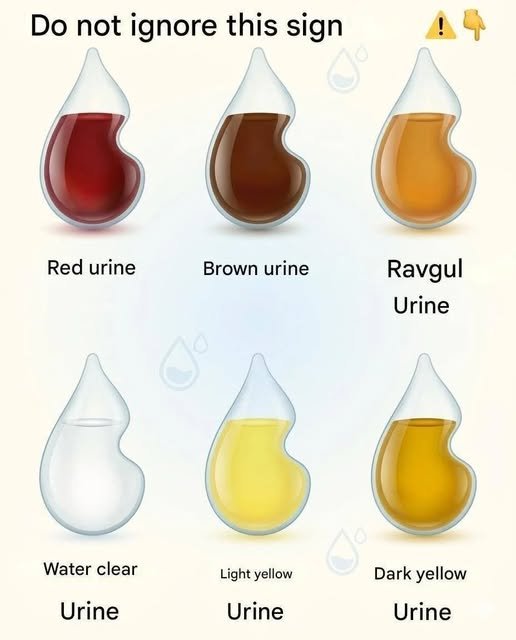
The image presented here serves as a vivid, highly visual guide to the diagnostic power of urine. It displays six teardrop-shaped vials, each containing a liquid of a different hue—ranging from completely clear, to pale yellow, to dark amber, to deep orange, to brown, and finally to a deep, alarming red. The bold text at the top delivers an urgent directive: “Do not ignore this sign.”
Urine is far more than just bodily waste; it is a liquid biopsy. It is filtered by the kidneys from the bloodstream, meaning its color, clarity, and odor provide a direct, real-time snapshot of your hydration levels, your kidney function, your liver health, and even the presence of hidden infections or tumors. While it is true that the color of your urine can fluctuate based on what you eat, the medications you take, and how much water you drink, persistent changes in its hue can be the very first indicator of a serious underlying medical condition.
This comprehensive guide will decode the messages hidden within your urine. We will explore the six distinct colors presented in the image, explain the physiological mechanisms that cause each color change, detail the potential health conditions they indicate, and provide clear guidance on when a specific color warrants an immediate visit to a doctor.
The Science of Urine: Understanding Urochrome and Hydration
Before diving into the specific colors, it is essential to understand the basic biology of urine. Urine is primarily composed of water (about 95%), along with urea, uric acid, creatinine, and various dissolved salts and toxins that the body needs to excrete.
The characteristic yellow color of normal urine comes from a pigment called urochrome (also known as urobilin). This pigment is produced when the body breaks down hemoglobin—the oxygen-carrying protein in red blood cells. When red blood cells reach the end of their lifespan (about 120 days), they are broken down in the liver, and the byproduct is excreted by the kidneys.
The Hydration Factor
The concentration of urochrome is entirely dependent on the volume of water in your body.
When you are well-hydrated, the kidneys release more water to maintain fluid balance. This dilutes the urochrome, resulting in a pale, light yellow color.
When you are dehydrated, the body retains water to prevent dehydration. The kidneys release less water, causing the urochrome to become highly concentrated, resulting in a dark yellow or amber color.
However, urochrome is not the only substance that can alter the color of urine. Food dyes, vitamins, medications, blood, and liver pigments can all dramatically change the hue, ranging from neon yellow to deep brown.
1. Water Clear Urine: The Overhydration Zone
Looking at the first vial in the image—labeled “Water clear Urine”—it is entirely colorless, resembling a glass of pure water.
What It Means
While it might seem like the ultimate sign of healthy hydration, completely clear urine is often a sign of overhydration. Drinking excessive amounts of water throughout the day can dilute the urochrome pigment to the point where it is virtually invisible.
The Health Implications
For most healthy adults, drinking too much water is harmless; the kidneys simply excrete the excess. However, in extreme cases, overhydration can lead to hyponatremia, a dangerous condition where the body’s sodium levels become dangerously low. Sodium is a vital electrolyte that regulates nerve and muscle function. When the sodium in the blood becomes too diluted, it can lead to confusion, nausea, headaches, seizures, and, in severe cases, brain swelling and coma.
What to Do: If your urine is consistently clear, you may be drinking more water than your body needs. Try spacing out your water intake and monitoring your thirst cues. You do not need to force yourself to drink water if you are not thirsty.
2. Light Yellow Urine: The Golden Standard
The second vial, labeled “Light yellow Urine,” represents the color of a perfectly functioning, well-hydrated body. It is a pale, straw-like yellow, reminiscent of a light beer or lemonade.
What It Means
This is the optimal color for healthy urine. It indicates that your body is well-hydrated, your kidneys are filtering efficiently, and the concentration of urochrome is perfectly balanced.
The Health Implications
If your urine consistently looks like this, it is a strong indication that your kidneys are healthy and you are drinking the right amount of fluids. It is the color doctors like to see, as it suggests a low risk of dehydration and optimal waste clearance.
What to Do: Keep doing what you are doing. Maintain your current hydration habits, and your body will continue to function optimally.
3. Dark Yellow Urine: The Dehydration Warning
The third vial, labeled “Dark yellow Urine,” is a much deeper, golden-amber color. It represents the first clear warning sign from your body.
What It Means
Dark yellow urine is a strong indicator of mild to moderate dehydration. Your body is telling you that it needs more water. The kidneys have reduced their fluid output, causing the urochrome concentration to become highly concentrated.
The Health Implications
Dehydration can lead to a host of uncomfortable symptoms, including fatigue, dizziness, headaches, brain fog, and constipation. It also puts extra strain on the kidneys, as they have to work harder to filter waste in a low-water environment. Chronic dehydration is a known risk factor for the development of kidney stones and urinary tract infections.
What to Do: Drink a large glass of water immediately. Take a moment to assess your recent fluid intake. If you are exercising heavily, sweating a lot, or taking medications that have a diuretic effect (like some blood pressure drugs), you may need to consciously increase your water intake throughout the day.
4. Orange / Amber Urine (The “Ravgul” Section)
The fourth vial in the image is labeled “Ravgul Urine.” While the word “Ravgul” may be a typo or a mistranslation, the color displayed is a distinct, vibrant orange-amber.
What It Means
Orange urine can be caused by a variety of factors, ranging from benign dietary choices to serious medical conditions.
Benign Causes:
Dehydration: Just like dark yellow urine, severe dehydration can turn urine a deep amber or orange color.
Medications: Several common medications can turn urine bright orange. This includes rifampin (an antibiotic used to treat tuberculosis), phenazopyridine (a pain reliever for urinary tract infections), and certain chemotherapy drugs.
Vitamins: Taking high doses of Vitamin B2 (riboflavin) or multivitamins can turn urine a neon yellow-orange.
Diet: Eating large amounts of carrots, sweet potatoes, or foods containing artificial orange dyes can alter the color.
Medical Causes:
Liver or Bile Duct Issues: One of the most concerning medical causes of orange urine is a problem with the liver or the bile ducts. When the liver is damaged (due to conditions like hepatitis, cirrhosis, or gallstones), bilirubin—a yellow-orange pigment produced during the breakdown of old red blood cells—can build up in the blood and eventually be excreted in the urine.
What to Do: If you are taking a medication or a vitamin that is known to cause orange urine, there is no need to worry. However, if the orange color appears suddenly, persists despite drinking plenty of water, and is accompanied by symptoms like yellowing of the skin or eyes (jaundice), pale stools, or abdominal pain, seek medical attention immediately.
5. Red Urine: The Most Alarming Sign
The fifth vial, labeled “Red urine,” is the most alarming and urgent color in the image. It represents a liquid that is a deep, bloody crimson.
What It Means
Red or pink urine is a sign of hematuria, which is the medical term for blood in the urine. Blood can enter the urinary tract at any point—from the kidneys, down through the ureters, into the bladder, and out through the urethra.
Benign Causes:
Diet: Eating large amounts of beets, blackberries, or rhubarb can turn urine pink or red. This is often called “beeturia” and is completely harmless.
Medications: Some over-the-counter laxatives contain senna, which can cause a pinkish-red hue.
Menstruation: If you are a woman, a small amount of blood from your period can mix with urine, causing a pink tint.
Medical Causes (The Serious Risks):
Urinary Tract Infection (UTI): A severe UTI can cause bleeding in the bladder. This is usually accompanied by pain, a burning sensation when urinating, and a strong, foul odor.
Kidney Stones: As a stone moves through the urinary tract, it can scratch the delicate lining of the ureters or bladder, causing blood to appear in the urine. This is often accompanied by severe, cramping back or flank pain.
Kidney Disease: Conditions like glomerulonephritis (inflammation of the kidney’s filtering units) can cause red blood cells to leak into the urine.
Tumors: Blood in the urine is a primary symptom of bladder cancer, kidney cancer, or prostate cancer. In many cases, painless hematuria (blood in urine with no other symptoms) is the first and only sign of a tumor.
What to Do: If you notice red or pink urine and you have not eaten beets or started a new medication, you must see a doctor immediately. Even if the bleeding stops on its own, it is critical to rule out serious conditions like cancer or kidney disease.
6. Brown Urine: The Liver and Muscle Signal
The final vial, labeled “Brown urine,” displays a dark, cola-colored or tea-colored liquid.
What It Means
Brown urine is a complex symptom that can indicate several distinct physiological issues.
Benign Causes:
Severe Dehydration: Extreme dehydration can concentrate urochrome to the point where it looks brown.
Diet: Eating large amounts of fava beans, rhubarb, or aloe can sometimes darken the urine.
Medical Causes:
Liver Disease: If the liver is failing (due to cirrhosis, hepatitis, or other conditions), bilirubin can build up in the blood and be excreted in the urine, turning it a dark brown or tea color. This is often accompanied by jaundice (yellowing of the skin and eyes).
Rhabdomyolysis: This is a serious medical emergency that occurs when skeletal muscle breaks down rapidly. The muscle fibers release a protein called myoglobin into the bloodstream, which is then filtered by the kidneys and excreted in the urine. This can turn the urine dark brown or cola-colored and can lead to kidney failure.
Porphyria: A rare group of genetic disorders that affect the nervous system and skin. It can cause urine to turn a deep brown or reddish-brown when exposed to light.
What to Do: Brown urine that is not caused by extreme dehydration or food should always be evaluated by a doctor. If it is accompanied by muscle weakness, severe pain, or a change in skin color, seek emergency medical care immediately.
Other Factors That Affect Urine Color
Beyond the six primary colors shown in the image, there are several other factors that can alter the appearance of your urine.
Cloudy or Murky Urine
If your urine is not just a different color but is also cloudy or murky, it can be a sign of a urinary tract infection (UTI). The cloudiness is caused by white blood cells and bacteria. It can also be caused by the presence of crystals (which can lead to kidney stones) or skin cells.
Foamy Urine
A small amount of foam in the urine is normal, especially if you urinate quickly. However, persistent, thick foam that looks like soap suds can be a sign of protein in the urine (proteinuria). This is a common symptom of kidney disease, as the damaged kidneys leak protein that should stay in the bloodstream.
Strong Odor
Urine is naturally slightly odorous, but a strong, pungent, or foul smell can indicate an infection (like a UTI) or severe dehydration. Certain foods (like asparagus) can also cause a distinct odor.
How to Monitor Your Urine Health
To use urine as an effective health monitoring tool, you should practice a few simple habits.
Look Before You Flush: Take a quick glance at the toilet bowl after you urinate. It only takes a second and can provide valuable information.
Stay Hydrated: Keep a water bottle with you and sip on it throughout the day. The goal is to achieve that light yellow color consistently.
Be Aware of Dietary Changes: If you notice a sudden color change, think about what you ate or what medications you took in the last few hours.
Don’t Ignore Persistent Changes: If a color persists for more than a day or two, despite adequate hydration, it is time to investigate.
When to See a Doctor
While minor fluctuations in urine color are usually harmless, there are specific “red flag” symptoms that require immediate medical evaluation. You should see a doctor if you experience:
Red or brown urine that is not explained by diet or medication.
Pain or burning during urination (dysuria).
Frequent urges to urinate, often with very little urine output.
Fever, chills, or lower back pain alongside a change in urine color.
Jaundice (yellowing of the skin or whites of the eyes) along with dark urine.
Unexplained weight loss or a general feeling of being unwell.
A persistent, foul-smelling odor in the urine.
Conclusion: Listen to the Liquid Messenger
The image presented is a powerful, urgent reminder of the diagnostic power hidden within our daily routines. The six teardrops represent the entire spectrum of potential renal and systemic health, from the optimal hydration of light yellow to the alarming presence of red blood or brown muscle breakdown.
Your urine is a liquid messenger, carrying vital information directly from your kidneys, liver, and bloodstream. Do not ignore it. By paying attention to its color, clarity, and frequency, you can catch potentially serious health conditions in their earliest, most treatable stages. If you notice something out of the ordinary, trust your instincts, and seek the guidance of a medical professional. Your health is too important to be flushed away.
Frequently Asked Questions
What is the healthiest color for urine?
The healthiest color for urine is a pale, light yellow, resembling straw. This indicates optimal hydration and a healthy balance of urochrome in the body.
Can dehydration cause bright yellow urine?
Yes. When you are dehydrated, the kidneys conserve water, which concentrates the urochrome pigment in the urine. This makes the urine appear darker yellow or amber.
Does eating beets turn urine red?
Yes. Eating large amounts of beets can cause a harmless condition called “beeturia,” where the urine takes on a pink or red hue. This is due to the pigment betanin, which is not fully broken down by the body.
What does brown urine mean?
Brown urine can indicate severe dehydration, liver disease (like cirrhosis or hepatitis), or a serious condition called rhabdomyolysis (the breakdown of muscle tissue). It should always be evaluated by a doctor.
Can medications change urine color?
Yes. Many medications can alter urine color. For example, rifampin turns urine orange, some laxatives turn it pink, and certain chemotherapy drugs can change its color. Always read the side effect information on your prescriptions.
What does cloudy urine indicate?
Cloudy urine is often a sign of a urinary tract infection (UTI). The cloudiness is caused by white blood cells and bacteria fighting the infection. It can also be caused by the presence of crystals or excess protein.
When should I see a doctor about my urine?
You should see a doctor if you notice blood (red or brown urine), pain when urinating, a persistent foul odor, or if your urine is consistently very dark despite drinking plenty of water.
Is foamy urine a sign of a problem?
Occasional foam is normal. However, persistent, thick foam that looks like soap suds can indicate proteinuria, a condition where the kidneys are leaking protein into the urine. This is a symptom of kidney damage and requires medical evaluation.
Can drinking too much water be dangerous?
Yes. In rare cases, drinking excessive amounts of water can dilute the sodium in your body to dangerous levels (hyponatremia), which can cause brain swelling and other serious health issues. This is why completely clear urine is not always ideal.
Does orange urine always mean a medical problem?
No. Orange urine can be caused by dehydration, certain medications, or eating large amounts of carrots or foods with orange dyes. However, if it occurs with other symptoms like jaundice or abdominal pain, it may indicate a liver problem.