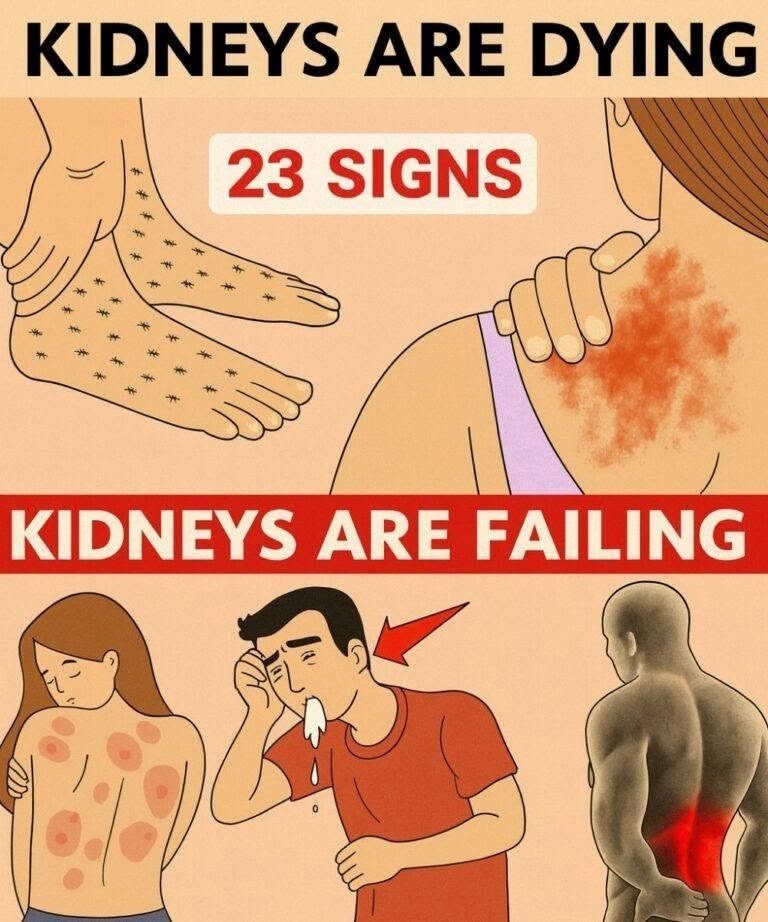
The True Early Warning Signs of Kidney Disease: Recognizing the Silent Symptoms Before It Is Too Late
The human body is an intricate network of systems, each performing vital functions that sustain life. Among the most critical, yet often overlooked, are the kidneys. These two bean-shaped organs, located just below the rib cage on either side of the spine, act as the body’s master filtration system. They work tirelessly, 24 hours a day, to filter waste products, balance electrolytes, regulate blood pressure, and produce essential hormones. However, the kidneys possess a remarkable and dangerous trait: they are incredibly resilient and can continue to function even after significant damage has occurred.
Because of this massive reserve capacity, kidney disease is often referred to as a “silent killer.” In its earliest stages, Chronic Kidney Disease (CKD) typically presents with no symptoms at all. By the time a person begins to feel unwell, they may have already lost up to 90% of their kidney function, at which point the damage is often irreversible.
Understanding the true early warning signs of kidney disease is not just about recognizing the symptoms; it is about understanding the subtle ways the body communicates distress. Early detection through medical screening is the most powerful tool in the fight against kidney failure. This comprehensive guide will explore the biological functions of the kidneys, detail the nine true early warning signs of kidney disease, explain the risk factors that necessitate screening, and provide actionable steps to protect your renal health for years to come.
The Essential Functions of the Kidneys
To fully grasp the importance of recognizing kidney disease symptoms, one must first understand the complex physiological roles these organs play. The kidneys are not merely simple filters; they are multifaceted endocrine and metabolic organs.
Filtration and Waste Removal
Every day, the kidneys filter approximately 150 quarts of blood to produce about one to two quarts of urine. This urine is composed of waste products, excess fluid, and toxins. Each kidney contains roughly a million microscopic filtering units called nephrons. Inside each nephron is a glomerulus—a tiny cluster of blood vessels where the actual filtration takes place. If the glomeruli are damaged, waste products accumulate in the bloodstream, leading to a condition known as uremia.
Fluid and Electrolyte Balance
The kidneys meticulously regulate the body’s water and mineral balance. They adjust the amount of sodium, potassium, calcium, phosphorus, and magnesium excreted in the urine to ensure that the blood chemistry remains within a narrow, healthy range. This balance is essential for nerve function, muscle contraction, and maintaining normal heart rhythms.
Blood Pressure Regulation
The kidneys play a pivotal role in controlling blood pressure through the renin-angiotensin-aldosterone system (RAAS). When blood pressure drops, the kidneys release an enzyme called renin, which triggers a cascade of hormonal events that cause blood vessels to constrict and the body to retain sodium and water, thereby raising blood pressure. In kidney disease, this system can malfunction, often leading to chronic hypertension.
Red Blood Cell Production
The kidneys produce a hormone called erythropoietin (EPO). When oxygen levels in the blood are low, the kidneys release EPO, which signals the bone marrow to produce more red blood cells. If the kidneys are damaged, EPO production declines, leading to anemia—a condition characterized by a lack of healthy red blood cells to carry oxygen to the body’s tissues.
Bone Health and Vitamin D Activation
The kidneys are responsible for converting Vitamin D into its active form (calcitriol). Active Vitamin D is essential for the absorption of calcium from the digestive tract, which is necessary for strong, healthy bones. In chronic kidney disease, this activation process is impaired, leading to calcium imbalances, weak bones, and an increased risk of fractures.
The “Silent” Nature of Chronic Kidney Disease
The reason kidney disease is so insidious is that the body is designed to compensate for declining organ function. If one kidney is damaged, the other can take over its workload. Even within a single kidney, the healthy nephrons can enlarge and filter more blood to compensate for the damaged ones.
Because of this extraordinary reserve capacity, symptoms of kidney disease do not typically manifest until the disease has reached an advanced stage (Stage 4 or 5). The symptoms that do occur in the early stages are often vague and non-specific, frequently misattributed to aging, stress, or other common ailments. This is why medical professionals universally emphasize the importance of regular blood and urine tests, rather than relying solely on physical symptoms, for early detection.
The 9 True Early Warning Signs of Kidney Disease
While late-stage kidney disease has a distinct set of severe symptoms, early-stage symptoms are subtle. Paying close attention to the following nine signs can provide crucial clues about your kidney health.
1. Changes in Urination Patterns
The most direct and noticeable signs of kidney disease often manifest in the urine itself. Because the kidneys are responsible for creating urine, any change in its frequency, color, or consistency should be monitored closely.
Frequent Urination (Nocturia): Waking up multiple times during the night to urinate is a common early sign of kidney trouble. When the kidneys are damaged, their ability to concentrate urine diminishes, leading to an increased volume of urine production, particularly at night.
Foamy or Bubbly Urine: If your urine frequently looks very foamy or bubbly, it may be a sign of proteinuria. Healthy kidneys filter out waste but retain essential proteins like albumin. When the filters are damaged, albumin leaks into the urine. While occasional foam is normal, persistent, thick foam that looks like beer head is a red flag.
Blood in the Urine (Hematuria): The presence of blood in the urine can turn it pink, red, or brown. This can be caused by kidney damage, kidney stones, tumors, or urinary tract infections. Hematuria requires immediate medical evaluation.
Reduced Urine Output: A dramatic decrease in the amount of urine you produce, or the complete inability to urinate, is a medical emergency and may indicate acute kidney failure.
2. Swelling in the Extremities (Edema)
When the kidneys fail to remove excess fluid and sodium from the body, it can accumulate in the tissues. This condition, known as edema, is a classic sign of kidney disease.
Where it occurs: Edema often presents as puffiness in the lower legs, ankles, and feet, particularly after standing for long periods. It can also manifest as swelling in the hands or face.
Periorbital Edema: Puffiness around the eyes, especially in the morning, is a common early sign of kidney disease. This happens because the tissue around the eyes is very loose and prone to fluid accumulation when the body is lying flat during sleep.
How to check: Gently press your finger into the swollen area for a few seconds. If a dimple remains when you release the pressure (a condition called pitting edema), it is a significant indicator of fluid retention that warrants medical attention.
3. Persistent Fatigue and Weakness
Feeling tired is a common complaint in modern life, but persistent, overwhelming fatigue that does not improve with adequate rest is a serious symptom of kidney disease.
As the kidneys fail, they produce less erythropoietin (EPO), leading to anemia. Without enough red blood cells, the body’s tissues are deprived of oxygen, resulting in profound weakness and a constant feeling of exhaustion. Furthermore, the buildup of toxins in the blood (uremia) can also contribute to a general sense of malaise and low energy.
4. Shortness of Breath
Shortness of breath (dyspnea) is a symptom that can have multiple causes in kidney disease.
Pulmonary Edema: When the kidneys cannot remove excess fluid, it can back up into the lungs. This fluid accumulation makes it difficult to breathe, especially when lying flat (orthopnea) or during physical exertion.
Anemia: The lack of red blood cells caused by kidney disease reduces the body’s oxygen-carrying capacity, leading to breathlessness even with minimal activity.
5. Unexplained and Persistent Itching (Pruritus)
Severe, generalized itching is a common symptom of advanced kidney disease, but it can begin in earlier stages.
As the kidneys fail to filter out waste products, the blood levels of phosphorus and other minerals rise. This buildup can cause calcium to deposit in the skin, triggering intense itching. The itching associated with kidney disease is usually widespread, dry, and relentless, often worsening at night. It is not accompanied by a visible rash, though scratching can cause redness and skin damage.
6. Metallic Taste and Bad Breath (Uremic Halitosis)
The buildup of urea in the blood can significantly affect your sense of taste and the smell of your breath.
Urea is a waste product that is normally excreted in urine. When kidney function declines, urea accumulates in the saliva, where it breaks down into ammonia. This can cause a persistent metallic taste in the mouth, an aversion to certain foods (particularly meats), and foul-smelling breath that resembles ammonia. This can lead to a loss of appetite and unintentional weight loss.
7. Cognitive Changes and “Brain Fog”
The kidneys play a crucial role in maintaining a healthy nervous system. When they fail to filter out toxins, these waste products can cross the blood-brain barrier and affect cognitive function.
This can manifest as memory problems, difficulty concentrating, confusion, or a general feeling of “brain fog.” In severe cases of uremia, it can lead to drowsiness, seizures, or even coma. While cognitive decline is often attributed to aging, a sudden or progressive change in mental sharpness warrants a check of kidney function.
8. Puffy Eyes
As mentioned earlier, periorbital edema (puffiness around the eyes) is a hallmark sign of kidney issues. Because the skin around the eyes is very thin and sensitive, it easily traps fluid.
If you consistently wake up with swollen, puffy eyes that take hours to subside, or if the swelling is accompanied by foamy urine, it is a strong indication that your kidneys are leaking protein and struggling to balance fluid levels.
9. Sleep Disturbances
Sleep problems are incredibly common in people with kidney disease, though the exact cause is often multifactorial.
Nocturia: The frequent need to urinate at night is a primary disruptor of sleep.
Restless Legs Syndrome (RLS): Kidney disease can lead to iron deficiency and nerve damage, both of which are closely linked to RLS—an uncontrollable urge to move the legs, often accompanied by tingling or aching sensations, that worsens at night.
Sleep Apnea: There is a strong, bidirectional relationship between sleep apnea and kidney disease. Sleep apnea (repeated pauses in breathing during sleep) can reduce oxygen levels, which damages blood vessels in the kidneys. Conversely, kidney disease can cause fluid to build up in the neck, worsening sleep apnea.
Understanding the Risk Factors for Kidney Disease
While anyone can develop kidney disease, certain factors significantly increase your risk. If you fall into any of the following categories, regular screening is absolutely essential.
1. Diabetes
Diabetes is the leading cause of Chronic Kidney Disease, accounting for approximately 44% of new cases. Chronically high blood sugar levels damage the tiny blood vessels in the kidneys (diabetic nephropathy), impairing their ability to filter waste.
2. High Blood Pressure (Hypertension)
Hypertension is the second leading cause of kidney failure. High blood pressure damages the blood vessels in the kidneys, causing them to narrow and weaken. This creates a vicious cycle, as damaged kidneys are less able to regulate blood pressure, causing it to rise even further.
3. Family History
If you have a parent, sibling, or close relative with kidney disease, your risk is significantly higher. This is particularly true for hereditary conditions like polycystic kidney disease (PKD).
4. Age
The risk of kidney disease increases with age. The natural aging process causes the kidneys to lose some of their filtering capacity. The prevalence of CKD is highest in adults over the age of 60.
5. Ethnicity
Certain ethnic groups are disproportionately affected by kidney disease. African Americans, Hispanics, Native Americans, and Asian Americans have a higher risk of developing kidney failure compared to Caucasians. This is due to a complex interplay of genetic, environmental, and socioeconomic factors.
6. Prolonged Use of NSAIDs
Nonsteroidal anti-inflammatory drugs (NSAIDs), such as ibuprofen, naproxen, and high-dose aspirin, can cause acute kidney injury and chronic kidney damage if used heavily over long periods. They reduce blood flow to the kidneys, which can be detrimental to already compromised organs.
7. Smoking
Smoking damages blood vessels throughout the body, including those in the kidneys. It also exacerbates other risk factors like hypertension and diabetes, accelerating the progression of kidney disease.
How Kidney Disease is Diagnosed
Because symptoms are often absent or non-specific, the only way to reliably diagnose kidney disease is through specific medical tests. If you have any risk factors or experience any of the symptoms mentioned above, your doctor will likely order the following tests.
1. The estimated Glomerular Filtration Rate (eGFR) Blood Test
The eGFR is the most accurate measure of kidney function. It is a calculation based on the level of creatinine, a waste product produced by muscle metabolism, in your blood. The eGFR estimates how much blood passes through the glomeruli every minute.
An eGFR of 90 or higher is considered normal.
An eGFR below 60 for three months or more indicates Chronic Kidney Disease.
An eGFR below 15 indicates kidney failure.
2. The Urine Albumin-to-Creatinine Ratio (UACR)
This test checks for the presence of albumin (a type of protein) in your urine. As previously mentioned, healthy kidneys keep protein in the blood, but damaged kidneys leak it into the urine. The UACR test is crucial for detecting early kidney damage, often before the eGFR begins to drop.
3. Imaging and Biopsy
In some cases, your doctor may order an ultrasound or a CT scan to visualize the size and structure of the kidneys. If the cause of kidney disease is unclear, a kidney biopsy may be performed to examine the tissue under a microscope.
Strategies for Protecting and Preserving Kidney Health
If you are diagnosed with kidney disease or want to prevent it, adopting a kidney-friendly lifestyle is paramount.
Control Blood Sugar and Blood Pressure: This is the single most important step for protecting your kidneys. Keep your blood pressure below 130/80 and maintain a target HbA1c level as advised by your doctor.
Maintain a Balanced Diet: Focus on fresh fruits, vegetables, whole grains, and lean proteins. Limit sodium intake to less than 2,300 mg per day. If you have advanced CKD, your doctor may recommend restricting potassium and phosphorus.
Stay Hydrated: Drink plenty of water to help the kidneys clear sodium and toxins. However, if you have advanced kidney disease, your doctor may limit your fluid intake.
Limit NSAID Use: Avoid long-term use of over-the-counter painkillers like ibuprofen and naproxen. Opt for acetaminophen (paracetamol) when appropriate.
Quit Smoking: Smoking cessation is one of the most effective ways to protect your kidneys and overall cardiovascular health.
Regular Screening: If you have diabetes, hypertension, or a family history of kidney disease, get your kidneys checked annually.
Frequently Asked Questions
Q: Is lower back pain a reliable sign of kidney disease? Lower back pain is most often caused by musculoskeletal issues, such as muscle strain or spinal problems. While kidney pain is felt in the flank (the sides of the body), kidney disease itself rarely causes pain. Acute infections or kidney stones cause severe flank pain, but chronic kidney disease is usually painless.
Q: Can kidney disease cause a visible rash? Advanced kidney disease can cause severe, generalized itching (pruritus) due to the buildup of toxins and phosphorus. However, it does not typically cause a distinct rash or red spots. Skin changes in kidney disease are usually related to dryness and scratching.
Q: What is the most reliable way to check my kidney function? The most reliable ways are through blood and urine tests. The eGFR blood test and the UACR urine test can detect kidney disease in its earliest stages, long before symptoms appear.
Q: Can kidney disease be reversed? In some cases, such as acute kidney injury caused by dehydration or medication, kidney function can recover. However, chronic kidney disease is generally irreversible. The goal of treatment is to slow the progression of the disease and prevent complications.
Q: What are the red flags that require immediate medical attention? You should seek immediate medical attention if you experience a sudden inability to urinate, severe flank pain accompanied by fever, or if your urine contains visible blood.
Q: Does drinking a lot of water cure kidney disease? While hydration is important for kidney health, drinking excessive amounts of water will not cure kidney disease. If you have advanced CKD, you may actually need to limit your fluid intake to prevent fluid overload.
Conclusion
The true early warning signs of kidney disease are often subtle, easily overlooked, and frequently masked by the body’s remarkable ability to compensate for organ decline. From changes in urination and unexplained swelling to persistent fatigue and cognitive changes, the body often whispers its distress long before it screams. Relying on internet myths or waiting for severe symptoms to appear is a dangerous strategy.
The most effective way to protect your kidneys is through proactive awareness. Understanding your personal risk factors—particularly diabetes, hypertension, and family history—and prioritizing regular medical screening are the cornerstones of early detection. By managing your blood pressure and blood sugar, staying hydrated, and making informed lifestyle choices, you can significantly reduce your risk of kidney disease. Do not wait for your body to send a loud warning; listen to the subtle signs, consult your healthcare provider, and take control of your renal health today.