Decoding the Color of Your Urine: What It Reveals About Your Health
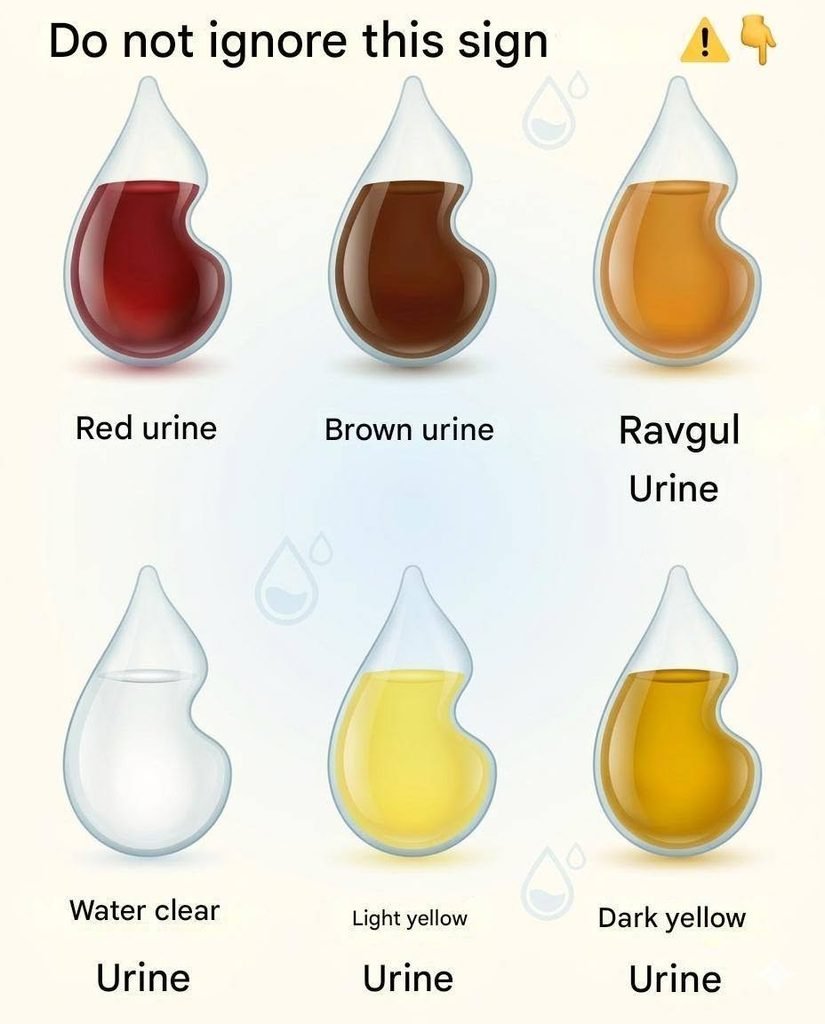
The human body is a complex and highly communicative system. While we often rely on obvious signs like fever, pain, or fatigue to gauge our health, some of the most critical clues are found in the everyday fluids we often ignore. The image presented to you features a chart with six distinct droplets of varying colors, ranging from deep red and brown to clear water and dark yellow. Above them, a stark warning reads: “Do not ignore this sign.”
This simple chart conveys a profound medical truth: urine is not merely a waste product; it is a liquid biopsy, a window into the intricate workings of your kidneys, liver, and overall metabolic state. The color of your urine—medically known as the shade of your urochrome—can fluctuate daily based on what you eat, how much you drink, and the medications you take. However, persistent or unexplained changes in urine color can be one of the earliest warning signs of infections, dehydration, or serious systemic diseases.
For generations, physicians have used the color of a patient’s urine as a rapid, non-invasive diagnostic tool. While it is crucial not to panic over a single strange hue, understanding what the spectrum of colors means empowers you to listen to your body and seek appropriate medical care when necessary. This comprehensive guide will explore the medical significance behind each color depicted in the image, the science of urine production, the dietary and pharmaceutical factors that alter its hue, and the specific red flags that demand immediate medical attention.
The Science of Urine: More Than Just Water
Before dissecting the colors, it is essential to understand how urine is created. The kidneys filter approximately 150 quarts of blood every single day. Through a microscopic network of nephrons, they remove excess water, waste products like urea and creatinine, and electrolytes, while returning essential nutrients to the bloodstream. The resulting fluid is urine.
What Gives Urine Its Color?
The primary pigment responsible for the characteristic yellow color of urine is urochrome (also known as urobilin). Urochrome is a byproduct of the breakdown of hemoglobin, the protein in red blood cells that carries oxygen. When old red blood cells are broken down in the liver, a yellow pigment called bilirubin is produced. This bilirubin is then processed and excreted in the bile, eventually making its way to the kidneys and out of the body in the urine, giving it that familiar golden hue.
The intensity of this color is directly related to the concentration of your urine. When you are well-hydrated, the urochrome is diluted, resulting in a pale yellow color. When you are dehydrated, the kidneys conserve water by concentrating the urine, leading to a darker, more amber color.
The Hydration Spectrum: From Clear to Dark Yellow
The four lower droplets in the image—Water clear, Light yellow, and Dark yellow—represent the standard spectrum of hydration.
Water Clear Urine: The Overhydration Illusion
What it means: You are drinking a significant amount of water, possibly more than your body needs. The Context: While being hydrated is healthy, drinking excessive amounts of water can lead to a condition called hyponatremia—a dangerous dilution of sodium in the blood. The kidneys are highly efficient; they will excrete the excess water, creating clear urine. However, if you are drinking so much water that your urine is consistently colorless and you are urinating constantly, you may be washing away vital electrolytes. Medical Considerations: Clear urine can also occur in cases of diabetes insipidus (a rare condition affecting antidiuretic hormone) or if you are taking diuretics. Action: If your urine is consistently water-clear and you are not drinking excessive fluids, it is worth mentioning to a doctor, especially if accompanied by excessive thirst.
Light Yellow Urine: The Gold Standard
What it means: This is the ideal color. It indicates optimal hydration and normal kidney function. The Context: Your body is perfectly balanced. You are drinking enough water to dilute the waste products without over-flushing your system. The urochrome concentration is exactly where it should be. Action: Keep doing what you are doing. This is the target color you should aim for throughout the day.
Dark Yellow Urine: The Dehydration Alarm
What it means: You are dehydrated. Your body is conserving water, and the concentration of waste products and urochrome is high. The Context: This is incredibly common, especially upon waking in the morning (after not drinking water for 7-8 hours) or after a strenuous workout without adequate fluid replacement. It can also occur if you are taking B-vitamin supplements, which naturally turn urine a bright, almost neon yellow (as discussed later). Action: Drink a glass of water. If you are experiencing dark yellow urine along with signs of dehydration—such as dizziness, dry mouth, fatigue, or rapid heart rate—rehydrate with an electrolyte solution. If the color does not lighten after drinking fluids over the course of a day, consult a doctor.
The Alarm Bell Colors: Red, Brown, and Orange
The top three droplets in the image—Red, Brown, and the somewhat enigmatic “Ravgul” (which is likely a phonetic misspelling or translation of Orange)—represent colors that deviate significantly from the normal spectrum. These are the colors that warrant the warning “Do not ignore this sign.”
Red or Pink Urine: Hematuria (Blood)
What it means: The presence of red blood cells in the urine, a condition known medically as hematuria. The Medical Context: Red urine is one of the most alarming signs for a patient and one of the most important to investigate.
Benign Causes: Sometimes, red urine is not actually blood. Eating large amounts of beets, blackberries, or rhubarb can turn urine pink or red (a condition known as beeturia). Certain medications, like the antibiotic rifampin or the over-the-counter painkiller phenazopyridine (Pyridium), can also cause red or orange-red urine.
Serious Causes: If the color is genuinely caused by blood, it can originate anywhere along the urinary tract.
Urinary Tract Infections (UTIs): Often accompanied by painful urination, urgency, and frequency.
Kidney Stones: Can cause excruciating pain in the flank or back, followed by red or brown urine as the stone scratches the ureter.
Glomerulonephritis: Inflammation of the kidney’s filtering units.
Prostate Issues: In men, an enlarged prostate or prostatitis can cause blood in the urine.
Cancer: Blood in the urine can be a sign of bladder, kidney, or prostate cancer. It is often painless and intermittent, making it easy to ignore. Action: Any unexplained red, pink, or brown urine should be evaluated by a healthcare professional. If you see visible blood clots or experience pain along with the blood, seek immediate medical care.
Brown or Cola-Colored Urine: A Liver or Muscle Warning
What it means: Urine that looks like strong tea or Coca-Cola can indicate a serious medical issue. The Medical Context: Brown urine is typically caused by the presence of bilirubin (a yellow pigment that can turn brown when concentrated) or myoglobin (a protein found in muscle tissue).
Liver and Biliary Issues: If the liver is damaged (due to hepatitis, cirrhosis, or a blocked bile duct), it cannot process bilirubin properly. The excess bilirubin spills into the urine, turning it dark brown. This is often accompanied by yellowing of the skin and eyes (jaundice) and pale-colored stools.
Rhabdomyolysis: This is a rare but life-threatening condition where severe muscle breakdown releases myoglobin into the bloodstream, which is then filtered by the kidneys. The myoglobin damages the kidneys and turns the urine brown. Rhabdomyolysis can be caused by severe trauma, extreme physical exertion, or certain medications (like statins).
Dehydration: Severe dehydration can concentrate urine so much that it appears brown. Action: Brown urine, especially if accompanied by jaundice, severe muscle pain, or dark stools, requires immediate medical attention.
Orange Urine: Medications and Dehydration
What it means: Orange urine often falls into the “Ravgul” category in the provided image. It is usually a result of dietary factors, medications, or dehydration. The Medical Context:
Dehydration: Orange urine is often just a concentrated form of dark yellow urine, indicating you need more water.
Medications: Many medications can turn urine orange, including rifampin (an antibiotic), sulfasalazine (used for Crohn’s disease), and phenazopyridine (a UTI pain reliever).
Dietary Supplements: High doses of Vitamin C or B vitamins can sometimes cause orange or bright yellow urine.
Liver or Bile Duct Issues: If the liver is not functioning correctly or the bile ducts are blocked, bilirubin can cause orange urine. This is often accompanied by pale stools and jaundice. Action: If you are taking a known medication that causes orange urine, it is normal. If you are not, increase your water intake. If the orange color persists and is accompanied by other symptoms like fever or jaundice, see a doctor.
Other Colors Not Shown in the Image
While the image covers the major colors, there are a few other hues that can appear in the toilet bowl.
Green or Blue Urine
This is incredibly rare and usually the result of medications (like the anesthetic propofol, or the antidepressant amitriptyline) or dyes used in medical tests. In rare cases, it can be caused by a specific type of bacterial urinary tract infection, particularly Pseudomonas aeruginosa. Eating large amounts of asparagus can also give a greenish hue to urine, along with its characteristic odor.
Foamy Urine
If your urine is consistently foamy or has a thick layer of bubbles, it may indicate proteinuria—the presence of excess protein in the urine. This is a sign that the kidneys’ filters are damaged and are leaking albumin, which acts like soap suds when passed. If the foam persists after several bathroom visits, it is worth getting a simple urine test.
The Impact of Diet and Medications
It is vital to remember that the color of your urine is heavily influenced by your daily choices. Before panicking about a change in color, consider what you have consumed in the last 24 hours.
Common Dietary Culprits
Beets: Can cause red or pink urine (beeturia).
Blackberries: Can cause dark red or black urine.
Carrots: Large amounts can give an orange tint.
Asparagus: Can cause a greenish hue and a distinct odor.
Rhubarb: Can cause red or brown discoloration.
Fava Beans: Can cause brown or dark urine.
Common Medications and Supplements
B Vitamins (Riboflavin): The most famous cause of bright, neon yellow urine.
Rifampin: An antibiotic that causes orange/red urine.
Phenazopyridine (Pyridium): A UTI pain medication that turns urine bright orange.
Senna or Cascara: Laxatives that can turn urine pink or red.
Warfarin (Coumadin): A blood thinner that can cause pink or red urine if bleeding occurs.
Diuretics: Often cause pale or clear urine due to increased fluid loss.
When to See a Doctor: Red Flags to Watch For
While an occasional strange color can be attributed to diet or dehydration, certain signs should prompt you to seek medical attention immediately.
You should consult a doctor if you notice:
Visible blood in your urine (red, pink, or brown) that is not explained by diet.
Painful urination (dysuria) or a burning sensation.
Urgency or frequency that disrupts your life.
Fever, chills, or flank pain accompanying changes in urine color (possible UTI or kidney infection).
Passing blood clots.
Dark urine accompanied by yellowing of the skin or eyes, or pale-colored stools.
Foamy urine that persists.
A sudden inability to urinate (a medical emergency).
A doctor can perform a simple urinalysis (urine test) which will check for the presence of blood, protein, glucose, ketones, and bacteria. This simple, non-invasive test is one of the most powerful diagnostic tools in medicine.
Hydration Guidelines for Healthy Urine
To maintain the ideal light yellow color, you should focus on proper hydration. The common recommendation is to drink eight 8-ounce glasses of water a day, but the true amount depends on your body weight, activity level, and the climate you live in.
How to Stay Hydrated
Drink consistently: Sip water throughout the day rather than chugging a large amount at once.
Eat water-rich foods: Fruits and vegetables like watermelon, cucumber, and oranges contribute significantly to your daily fluid intake.
Monitor your urine: Your urine color is the best daily indicator. If it is dark, drink more water.
Add electrolytes: If you sweat heavily, plain water may not be enough. Adding a pinch of salt or consuming an electrolyte drink can help your body retain the fluids you consume.
Frequently Asked Questions
Q: Can dehydration cause brown urine? Yes. Severe dehydration can concentrate the urine so much that it appears dark yellow, amber, or even brown. If you are dehydrated, drink water and monitor if the color lightens.
Q: Is red urine always a sign of cancer? No. While blood in the urine can be a sign of bladder or kidney cancer, it is far more commonly caused by benign conditions like urinary tract infections, kidney stones, or even eating beets. However, any unexplained red urine must be evaluated by a doctor to rule out serious issues.
Q: Why does my urine look neon yellow after taking vitamins? This is caused by riboflavin (Vitamin B2). It is a water-soluble vitamin, meaning your body excretes any excess in the urine. It is completely harmless and a sign that your body is effectively flushing out what it does not need.
Q: What does “Ravgul” urine mean? The label “Ravgul” in the image is likely a typo, a translation error, or a colloquial term for orange or dark yellow urine. It indicates a state of dehydration or the presence of certain medications/dietary pigments in the urine.
Q: Can clear urine mean I’m drinking too much water? Yes. While hydration is important, drinking excessive amounts of water can dilute essential electrolytes like sodium. If your urine is consistently clear and you are urinating very frequently, you may be over-hydrating.
Q: What should I do if I see blood in my urine? Do not panic, but do contact a healthcare provider promptly. Make an appointment to have your urine tested. If the bleeding is accompanied by severe pain, fever, or inability to urinate, seek emergency care.
Q: How long does it take for urine color to change with hydration? It can change rapidly. If you are dehydrated and drink a large amount of water, your urine may lighten within an hour or two as your body processes the fluids and flushes the concentrated waste.
Conclusion
The human body is constantly communicating with us, and urine color is one of its most direct and honest messengers. The image’s stark warning, “Do not ignore this sign,” is a valuable reminder that we should not treat our bodily fluids with indifference. From the golden standard of light yellow to the alarming hues of red and brown, each color tells a story of hydration, diet, medication, or underlying health.
While it is essential to avoid unnecessary panic over a single dark or discolored urine sample, it is equally important not to dismiss persistent changes. By staying attuned to your body, maintaining proper hydration, and understanding the potential causes of color fluctuations, you can take proactive control of your health. If you ever find yourself staring into the toilet bowl with uncertainty or concern, remember that a simple conversation with a doctor and a routine urine test can provide clarity, peace of mind, and potentially catch a serious issue before it becomes a crisis. Listen to your body—it is always telling you something.