5 Surprising Causes of Weak Legs in Seniors and How to Fix Them
As we age, it is common to experience changes in our physical abilities. We might not run as fast as we used to, or we might need a little more time to get out of a chair. However, there is a distinct difference between the natural, gradual slowing of aging and the sudden or progressive onset of weakness in the legs. For many seniors, leg weakness is not just an inconvenience; it is a significant barrier to independence, a leading cause of falls, and a symptom of an underlying medical condition that demands attention.
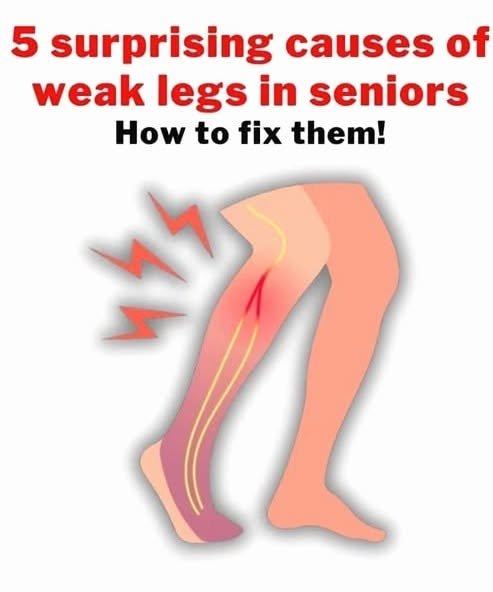
The image above starkly illustrates this common struggle, depicting the lower half of a person’s legs with red, jagged lines radiating from the knee and calf, symbolizing pain, fatigue, and instability. While it is easy to dismiss this weakness as an unavoidable consequence of getting older, doing so can be dangerous.
In reality, weak legs in older adults are often caused by a combination of factors that can be identified, managed, and frequently improved. From age-related muscle loss to hidden side effects of common medications, the reasons behind your legs feeling heavy or unstable may surprise you. This comprehensive guide will explore five of the most surprising and prevalent causes of leg weakness in seniors, explain the underlying physiology, and provide actionable, evidence-based strategies to fix them and restore mobility and confidence.
The Importance of Leg Strength for Older Adults
Before diving into the causes, it is essential to understand why leg strength is so critical for seniors. The legs are the foundation of human mobility. They support our body weight, allow us to navigate our environment, and provide the stability necessary to prevent falls.
When leg strength declines, the risk of falls increases exponentially. According to the Centers for Disease Control and Prevention (CDC), falls are the leading cause of injury-related death among adults aged 65 and older, and they are a major cause of fractures, head injuries, and reduced quality of life. Furthermore, weak legs can lead to a sedentary lifestyle, which in turn exacerbates cardiovascular issues, metabolic problems, and cognitive decline. Maintaining leg strength is not just about being able to walk; it is a fundamental pillar of healthy aging.
Cause 1: Sarcopenia (The Muscle Loss Epidemic)
While the gradual loss of muscle mass is a normal part of aging, when it becomes severe, it is classified as a medical condition called sarcopenia. This is often the most common and direct cause of leg weakness in seniors, yet many people do not realize the extent of the decline until it becomes a major problem.
Why It Happens
Sarcopenia typically begins around the age of 30, with a gradual loss of about 3% to 8% of muscle mass per decade. After age 60, the rate of decline accelerates significantly. This loss is driven by a combination of factors: a decrease in anabolic hormones (like testosterone and estrogen), a decline in the body’s ability to synthesize protein, and a reduction in physical activity.
As muscle mass decreases, the remaining muscle fibers become smaller and less efficient. The fast-twitch muscle fibers, which are responsible for power and quick reactions (crucial for catching yourself during a stumble), are often lost at a faster rate than slow-twitch fibers.
How to Fix It
Resistance Training: The most effective way to combat sarcopenia is through progressive resistance training. Seniors can start with bodyweight exercises (like seated squats or wall push-ups), resistance bands, or light dumbbells. Even simple movements performed in a chair can stimulate muscle growth. Protein Intake: Muscle requires protein to rebuild. Older adults generally need a higher protein intake relative to their body weight than younger adults. Aim for 1.0 to 1.2 grams of protein per kilogram of body weight daily, distributed evenly across meals. Good sources include lean meats, fish, eggs, dairy, beans, and tofu.
Cause 2: Peripheral Artery Disease (PAD)
Another surprising and frequently overlooked cause of leg weakness is a circulatory issue known as Peripheral Artery Disease (PAD). This condition is often mistaken for simple muscle fatigue or a natural part of aging, delaying crucial treatment.
Why It Happens
PAD occurs when the blood vessels that supply the legs and feet become narrowed or blocked by a buildup of plaque (atherosclerosis). This reduces blood flow to the lower extremities, meaning the muscles do not receive enough oxygen and nutrients, especially during physical activity.
Seniors with PAD frequently experience a symptom known as intermittent claudication—a cramping, aching, or heavy feeling in the calf, thigh, or buttocks that occurs during walking or exercise and subsides with rest. Over time, as the disease progresses, weakness may occur even at rest, and the legs may feel cold or look pale.
How to Fix It
Medical Evaluation: If you experience muscle pain or weakness in your legs that consistently appears with walking and disappears with rest, you must see a doctor. They can perform simple tests like the ankle-brachial index (ABI) to diagnose PAD. Supervised Exercise: Paradoxically, walking is one of the best treatments for PAD. A supervised walking program helps train the muscles to use oxygen more efficiently and encourages the growth of new blood vessels (collateral circulation). Medication and Procedures: Doctors may prescribe medications to lower cholesterol and blood pressure, or blood thinners to prevent clots. In severe cases, surgical procedures like angioplasty or bypass surgery may be necessary to restore blood flow.
Cause 3: Medication Side Effects (The Hidden Culprit)
Sometimes, the weakness in your legs is not caused by a disease process, but by the very medications prescribed to treat other conditions. Polypharmacy—the use of multiple medications—is common in seniors, and adverse drug interactions or side effects are a significant cause of muscle weakness.
Why It Happens
Several classes of medications commonly prescribed to older adults are known to cause muscle pain and weakness:
Statins: Used to lower cholesterol (e.g., atorvastatin, simvastatin), statins are a well-known cause of muscle myopathy. This can range from mild aches to severe weakness and, rarely, rhabdomyolysis.
Diuretics (Water Pills): Often prescribed for high blood pressure or heart failure, diuretics can deplete the body of vital electrolytes like potassium and magnesium, leading to muscle weakness and cramps.
Beta-Blockers: These heart medications can reduce heart rate and cardiac output, leading to general fatigue and reduced exercise tolerance.
Corticosteroids: Long-term use of steroids (like prednisone) can cause muscle wasting, particularly in the legs and hips.
How to Fix It
Medication Review: The most important step is to schedule a comprehensive medication review with your doctor or pharmacist. Bring all your prescriptions, over-the-counter drugs, and supplements. Do Not Stop Abruptly: Never stop taking a prescribed medication without consulting your physician, as doing so can cause dangerous complications. Your doctor may adjust the dosage, switch you to a different class of drug, or recommend supplements to offset side effects (like potassium for diuretic users).
Cause 4: Spinal Stenosis and Nerve Compression
A neurological issue in the spine can manifest primarily as weakness in the legs. Lumbar spinal stenosis is a common condition in older adults that can severely impact mobility.
Why It Happens
Spinal stenosis occurs when the spaces within the spine narrow, putting pressure on the spinal cord or the nerves that branch out to the legs. This narrowing is often caused by degenerative changes like arthritis, herniated discs, or thickened ligaments.
When the nerves are compressed, they cannot properly transmit signals between the brain and the muscles. This can cause weakness, numbness, tingling, and a heavy, fatigued feeling in the legs. A classic sign of spinal stenosis is that walking or standing upright worsens the symptoms, while bending forward (such as leaning over a shopping cart) often provides relief.
How to Fix It
Physical Therapy: A targeted physical therapy program can strengthen the core and back muscles, improve posture, and teach you exercises to decompress the spine. Pain Management: Doctors may recommend epidural steroid injections to reduce inflammation around the compressed nerves. Surgical Intervention: If conservative treatments fail and the weakness is severe or progressive, surgery (such as a laminectomy) may be considered to relieve the pressure on the nerves.
Cause 5: Nutritional Deficiencies (Vitamin D and B12)
Muscles and nerves require specific vitamins to function optimally. In seniors, deficiencies in certain key nutrients are surprisingly common and can contribute significantly to leg weakness.
Why It Happens
Vitamin D Deficiency: Vitamin D is essential for calcium absorption and muscle function. As we age, the skin’s ability to synthesize Vitamin D from sunlight decreases, and kidney function (which converts Vitamin D to its active form) declines. Deficiency can lead to muscle weakness, bone pain, and an increased risk of falls.
Vitamin B12 Deficiency: Vitamin B12 is crucial for the health of the nervous system. Seniors often have difficulty absorbing B12 from food due to age-related declines in stomach acid or conditions like atrophic gastritis. A deficiency can cause peripheral neuropathy, leading to tingling, numbness, and weakness in the legs.
How to Fix It
Blood Testing: A simple blood test can determine your Vitamin D and B12 levels. Dietary Changes and Supplements: If you are deficient, your doctor will likely recommend supplementation. For Vitamin D, over-the-counter supplements are highly effective. For B12, oral supplements or injections may be necessary.
Other Contributing Factors: Thyroid, Dehydration, and Deconditioning
While the five causes above are the most significant, other factors can play a role in leg weakness.
Hypothyroidism: An underactive thyroid can cause general muscle fatigue, aches, and weakness.
Dehydration: As we age, the sense of thirst diminishes, making seniors prone to chronic dehydration, which can cause muscle cramps and weakness.
Deconditioning: The “use it or lose it” principle is powerful. A period of illness or a sedentary winter can lead to rapid muscle loss and weakness in the legs.
Comprehensive Strategies to Fix Weak Legs
Fixing weak legs requires a multi-faceted approach that addresses the underlying cause while also building strength and improving safety.
1. Engage in Regular, Targeted Exercise
Strength Training: Use resistance bands, light weights, or bodyweight exercises (like sit-to-stands) two to three times a week.
Balance Exercises: Tai chi, single-leg stands (holding onto a counter for support), and heel-to-toe walking help retrain the body’s balance systems.
Walking: A daily walk, even if broken into 10-minute segments, improves circulation and maintains muscle tone.
2. Optimize Nutrition
Ensure a diet rich in lean proteins, complex carbohydrates, and healthy fats. Prioritize calcium and Vitamin D for bone health. Talk to a doctor about appropriate supplementation.
3. Fall-Proof Your Home
Remove throw rugs and clutter from walkways.
Install grab bars in the bathroom and nightlights in hallways.
Wear supportive, non-slip shoes, even indoors.
4. Prioritize Medical Checkups
Schedule an annual physical with your primary care doctor. Discuss any changes in your leg strength, request a medication review, and ask for blood tests to check for deficiencies or underlying metabolic conditions.
Frequently Asked Questions
Q: Is leg weakness just a normal part of aging? While some loss of muscle mass is normal as we age, significant weakness that impairs mobility and balance is not. It is often a sign of an underlying, treatable condition like sarcopenia, PAD, or medication side effects, and should be evaluated by a doctor.
Q: When should I see a doctor about my weak legs? You should see a doctor if the weakness is sudden, severe, accompanied by pain, numbness, or tingling, or if it interferes with your ability to walk or perform daily activities. A sudden inability to move a limb requires immediate emergency care.
Q: Can physical therapy really help if I am in my 80s? Absolutely. Muscle tissue retains the ability to grow and adapt to exercise at any age. Physical therapy tailored to your abilities can significantly improve strength, balance, and mobility, even for adults in their 80s or 90s.
Q: What are the best exercises for weak legs? Chair-based exercises (like seated leg raises), wall squats, heel raises, and resistance band exercises are excellent starting points. A physical therapist can design a safe and effective program tailored to your specific needs.
Q: Are there specific foods that can help strengthen my legs? Foods rich in high-quality protein (chicken, fish, eggs, Greek yogurt) help build muscle, while leafy greens and dairy provide calcium and Vitamin D for bone health. Staying hydrated is also crucial for muscle function.
Q: Could my blood pressure medication be causing my leg weakness? Yes. Diuretics can deplete potassium, and beta-blockers can cause fatigue and reduced exercise capacity. Statins can cause muscle pain. You should never stop taking these medications, but you should speak with your doctor about your symptoms to see if a dosage adjustment or alternative is appropriate.
Conclusion
Weakness in the legs is a common complaint among seniors, but it is not a diagnosis that should be accepted as an inevitable part of aging. The five surprising causes we explored—from the stealthy progression of sarcopenia and the hidden circulatory issues of PAD to the unexpected side effects of medications and nutritional deficits—highlight the complexity of the human body.
By recognizing that leg weakness is a symptom rather than a normal state of aging, you can take proactive steps to address it. Whether it involves a comprehensive review of your medications, a targeted physical therapy regimen, or a simple change in your diet, there are proven ways to rebuild strength and restore stability. Do not let weak legs dictate your independence. Listen to your body, advocate for your health by consulting with medical professionals, and embrace a proactive approach to mobility and longevity.