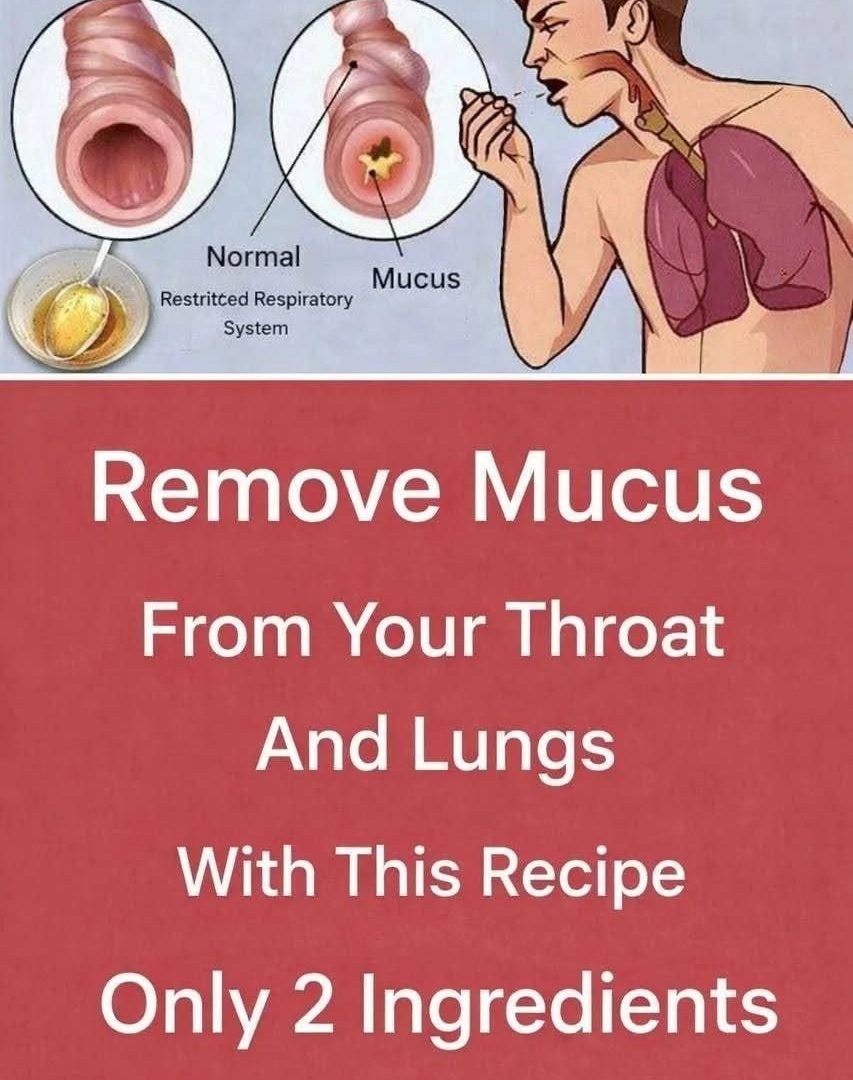
The Simple Trick That May Help Clear Phlegm and Mucus From Your Chest and Throat: What Actually Works?
16. Warning Signs That You Should Never Ignore
Although mucus and coughing are common symptoms, certain warning signs deserve medical attention.
Seek medical advice if you experience:
A cough lasting longer than three weeks.
Repeated episodes of chest congestion.
Persistent fever.
Symptoms that continue getting worse.
Unexplained weight loss.
Persistent wheezing.
Unusual or recurring phlegm production.
Important warning signs
Seek urgent medical assistance if you experience:
Difficulty breathing or significant shortness of breath.
Severe or persistent chest pain.
Coughing up blood.
Rapidly worsening respiratory symptoms.
Blue or gray discoloration around the lips.
Do not rely on a homemade remedy when these symptoms occur.
The CDC recommends medical evaluation for breathing difficulties, bloody mucus, prolonged coughing, and other concerning symptoms. CDC+2
17. A Simple Daily Routine to Support Healthy Airways
Supporting respiratory health does not require expensive products or complicated remedies.
A few consistent habits can help maintain normal airway function.
Morning
Drink water after waking.
Enjoy a warm drink if your throat feels irritated.
Avoid smoke, dust, and other irritants.
Afternoon
Maintain adequate hydration.
Eat a balanced meal containing vegetables and fruits.
Stay comfortably active if you feel well.
Evening
Use saline nasal spray if appropriate for congestion.
Consider a clean humidifier if the indoor air is dry.
Get sufficient sleep.
If you have a respiratory condition, follow the management plan recommended by your healthcare professional rather than relying on a general routine.
18. Conclusion: The Simple Secret to Managing Phlegm and Mucus
That uncomfortable feeling of mucus collecting in your chest or throat can make everyday activities frustrating.
Fortunately, there are several practical ways to support your body’s natural airway-clearing mechanisms.
The huff-cough technique is one recognized approach that can help move mucus toward the throat. Drinking enough water can help maintain normal mucus consistency, while warm drinks, honey, saline nasal sprays, and clean humidifiers may provide additional comfort.
However, there is no single homemade drink or traditional trick that can guarantee the removal of mucus from the lungs.
The most important step is understanding why the mucus is accumulating in the first place.
A temporary cold may improve with rest and supportive care, whereas persistent phlegm may require evaluation for allergies, asthma, bronchitis, or another respiratory condition.
Avoid smoking, maintain good hydration, and pay attention to symptoms that persist or worsen.
Remember: The goal is not to eliminate all mucus. It is to support your body’s natural respiratory defenses and make it easier to clear excess secretions safely.
If breathing becomes difficult or you cough up blood, seek medical attention rather than trying another home remedy.
Frequently Asked Questions
1. What is the easiest way to loosen phlegm in your chest?
Maintaining adequate hydration is a useful first step. Drinking water helps prevent mucus from becoming excessively thick. Controlled coughing, including the huff-cough technique, may also help move mucus toward the throat. The appropriate approach depends on the underlying cause.
2. What is the huff-cough technique?
The huff-cough technique is a controlled breathing method used to help move mucus through the respiratory passages. It involves breathing in comfortably and exhaling with an open-mouth huff rather than repeatedly forcing strong coughs. Respiratory professionals may recommend it as part of an airway-clearance plan.
3. Does honey and lemon water remove mucus from the lungs?
No. Honey and lemon do not physically remove mucus from the lungs. However, a warm drink containing these ingredients may soothe an irritated throat and temporarily relieve coughing. It can also contribute to fluid intake.
4. Why do I have phlegm in my throat every morning?
Mucus can accumulate overnight because of normal respiratory secretions, nasal congestion, allergies, or postnasal drip. People with acid reflux may also experience throat irritation during the night. Persistent morning phlegm should be evaluated if accompanied by other concerning symptoms.
5. Does drinking warm water help with thick mucus?
Warm water contributes to hydration and may soothe throat irritation. Adequate fluid intake helps maintain normal mucus consistency, making secretions easier to clear. However, warm water does not directly dissolve mucus deposits inside the lungs.
6. Is green phlegm always a sign of bacterial infection?
No. Green phlegm can occur during both viral and bacterial infections. Its color alone cannot establish the cause or determine whether antibiotics are necessary. Other symptoms and medical findings are more important.
7. Can allergies cause mucus to collect in the throat?
Yes. Allergies can increase nasal mucus production and cause postnasal drip. This happens when mucus travels down the back of the throat, producing frequent swallowing, coughing, or throat clearing.
8. Is coughing up phlegm a good sign?
Coughing up phlegm is often part of the body’s natural airway-cleaning process. It helps remove excess mucus and trapped particles. However, persistent coughing, blood-stained mucus, or coughing accompanied by breathing difficulties requires medical assessment.
9. How long does chest mucus last after a cold?
Mucus and coughing generally improve as a respiratory infection resolves. Many uncomplicated chest colds improve within a few weeks, although coughing can sometimes continue for three weeks or longer. Persistent or worsening symptoms should be medically assessed.
10. When should I see a doctor about mucus in my chest?
Seek medical advice if you have a cough lasting more than three weeks, recurring chest congestion, persistent fever, or worsening symptoms. Coughing up blood, experiencing severe chest pain, or having difficulty breathing requires urgent medical attention.
Medical References and Further Reading
For additional information about mucus production, respiratory infections, and airway-clearance techniques, consult these reputable medical organizations:
Medical disclaimer: This article is intended for general educational purposes and does not replace professional medical advice, diagnosis, or treatment. The image does not identify the grandmother’s original remedy, so no specific traditional recipe has been attributed to it. The techniques and suggestions discussed here are based on established respiratory health guidance.