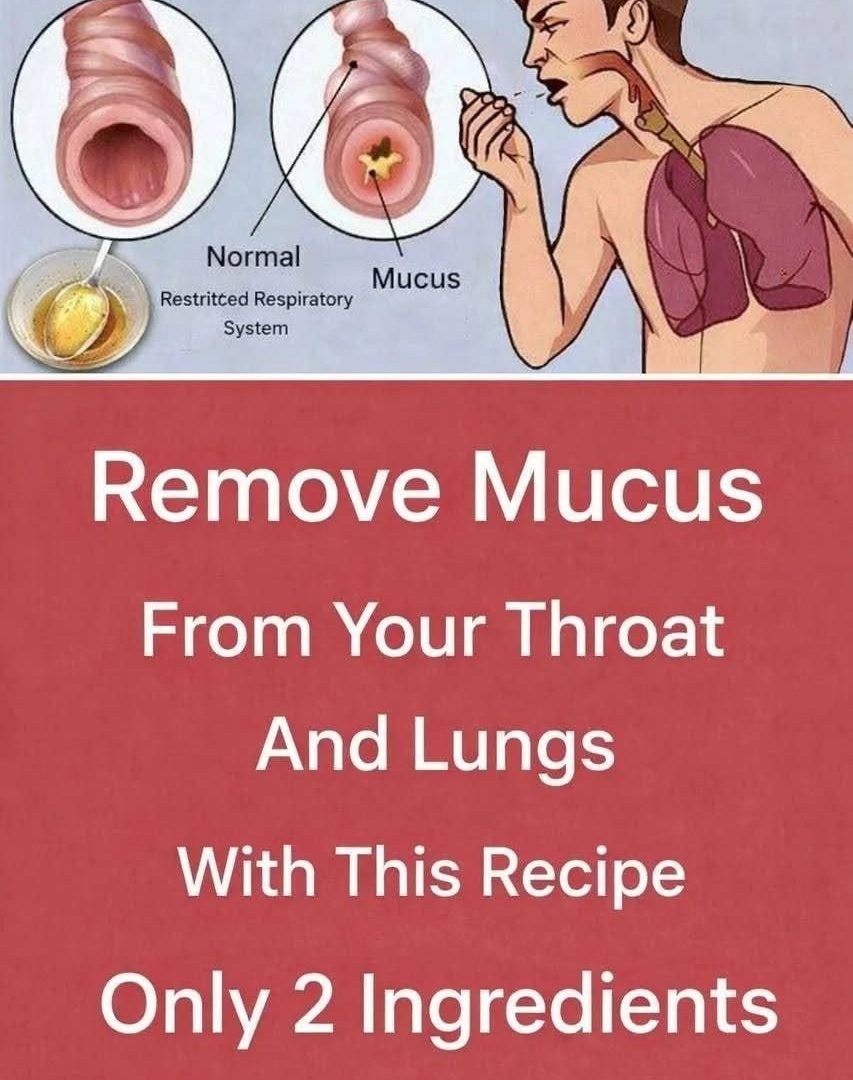
The Simple Trick That May Help Clear Phlegm and Mucus From Your Chest and Throat: What Actually Works?
Mucus is a natural protective substance produced by specialized cells lining various parts of the respiratory system.
It is present in the nose, sinuses, throat, windpipe, and airways leading into the lungs.
Although mucus is often associated with being sick, it performs several essential functions.
Every time you breathe, you encounter microscopic particles in the surrounding environment. These may include dust, pollen, pollution, and microorganisms.
Mucus helps trap these substances before they can travel deeper into the respiratory system.
It also keeps the airway surfaces moist, allowing the delicate tissues responsible for breathing to function properly.
Under normal circumstances, the body continuously produces and clears mucus without you even noticing.
The problem occurs when inflammation increases mucus production, changes its consistency, or interferes with the body’s natural clearance mechanisms.
This is when you may begin experiencing congestion, frequent coughing, or the sensation of having something stuck in your throat.
2. What Is the Difference Between Mucus and Phlegm?
Although the terms mucus and phlegm are frequently used interchangeably, they have slightly different meanings.
Mucus is the general protective secretion produced by mucous membranes throughout the body.
Phlegm usually refers specifically to mucus originating in the lower respiratory passages that is brought up when someone coughs.
For example, someone experiencing allergies may have mucus draining from the nose into the throat.
Someone with bronchitis, on the other hand, may develop increased mucus production inside the bronchial tubes and cough up phlegm.
Understanding this distinction matters because the location of the mucus can influence which treatments are most appropriate.
Not every sensation of throat congestion means mucus is trapped inside the lungs.
3. Why Does Phlegm Accumulate in the Chest and Throat?