The $65,000 Wheel of Fortune Shocker: Why the ‘Farm Belt’ Puzzle Went Viral
Few television game shows have embedded themselves into the cultural fabric quite like Wheel of Fortune. For decades, millions of viewers have tuned in nightly to watch contestants spin the iconic wheel, buy vowels, and attempt to solve word puzzles under the bright studio lights. The show is a comforting staple of American television, a symbol of ordinary people stepping into the spotlight for a chance at life-changing money. But every so often, a moment occurs on the show that transcends the game itself, sparking a wildfire of internet memes, intense debates, and widespread disbelief.
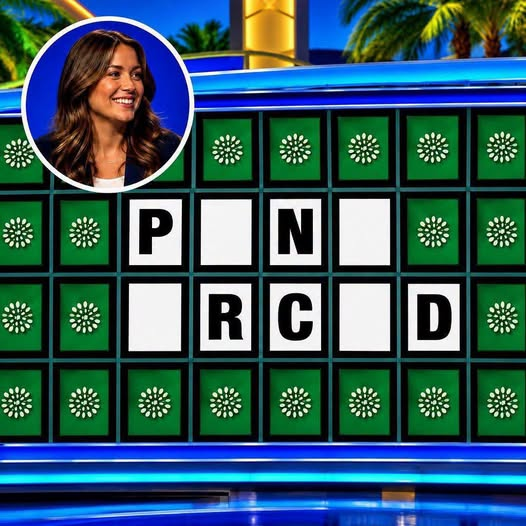
The image above captures one such moment. It shows a seemingly straightforward puzzle board with the letters “_ A R M” on the top line and “_ _ L T” on the bottom line. Above the board is an inset photo of a contestant, smiling radiantly, her hands clasped together in excitement. The caption, “Why This $65,000 Wheel of Fortune Moment Shocked Viewers,” hints at the high stakes and the sheer disbelief that gripped the audience.
When you look at the puzzle board, the answer seems glaringly obvious: “FARM BELT.” It is a common item, fitting neatly into the standard categories of the show. Yet, in a moment of immense pressure, this specific puzzle became the site of one of the most talked-about blunders in Wheel of Fortune history. The contestant, instead of solving the puzzle with the correct phrase, offered a guess that was both completely wrong and utterly perplexing.
This is the story behind that viral moment. It is a deep dive into the psychology of game show contestants, the mechanics of televised pressure, the anatomy of internet virality, and the enduring legacy of a television show that turns simple wordplay into high-stakes drama.
The Anatomy of the Puzzle: The Blunder Heard Round the Internet
To understand why this moment shocked viewers so profoundly, we must first examine the puzzle itself.
The Board Layout
The puzzle featured the letters A, R, and M on the top row, and L and T on the bottom row. The board was partially filled in, a common occurrence in the later rounds of the game. The category was likely a “Thing” or a “Place.” For any seasoned viewer, or indeed anyone familiar with the English language, the solution was practically instantaneous: FARM BELT.
A farm belt is a well-known geographic term used to describe regions with a high concentration of agriculture. It is a phrase composed of common letters and a familiar structure.
The Incorrect Guess
In a moment of inexplicable cognitive blindness, the contestant looked at the board, looked at the remaining letters, and confidently delivered a guess that left host Pat Sajak—and millions of viewers at home—stunned. The contestant guessed “WARM SALT.”
It is a phrase that technically fills in the blanks. W-A-R-M and S-A-L-T. But it makes absolutely no sense. There is no such thing as a “warm salt” in common parlance. It was a guess born out of sheer desperation, a blind leap of faith that bypassed the logical processing centers of the brain and landed squarely in the realm of television infamy.
The Shock Factor
The reason this moment went viral, and the reason it still generates shock to this day, is the sheer contrast between the obviousness of the correct answer and the absurdity of the wrong one. Viewers at home were screaming “Farm Belt!” at their television screens. The pressure of the studio, the ticking clock, and the hundreds of eyes focused on the contestant had induced a spectacular mental block.
The $65,000 Stakes: The True Cost of a Game Show Mistake
The caption emphasizes the “$65,000” figure, which raises the question: how much money is actually on the line in these moments?
The Mechanics of the Prize Money
On Wheel of Fortune, prize money accumulates through multiple rounds. In this specific episode, the contestant had amassed a significant total, potentially reaching the $65,000 mark when combined with the final puzzle’s prize. The “Bonus Round” is where the big money is often won or lost. Contestants spin a smaller wheel to determine their prize category, whether it be cash, a car, or a dream vacation.
The High Stakes of the Bonus Round
If this specific puzzle was the Bonus Round puzzle, the stakes were incredibly high. Contestants in the bonus round are given a limited amount of time and a restricted set of letters to solve a final puzzle. A single mistake, a single brain freeze, can cost them tens of thousands of dollars.
To put this into perspective, the average American worker might take a year or more to earn $65,000. On Wheel of Fortune, that amount is on the line in a matter of seconds. The contestant in the image, smiling brightly, was likely already a winner of the game, but the ultimate prize, the life-changing cash, slipped through her fingers because of two little words: “Warm Salt.”
The Psychology of the Game Show Contestant: Why Smart People Make Dumb Mistakes
Why did a perfectly intelligent, capable adult, who had successfully solved numerous puzzles to reach this point, completely blank on “Farm Belt”? The answer lies in the fascinating world of cognitive psychology and the intense pressure of the game show environment.
The “Choking” Phenomenon
In sports psychology, “choking” is defined as the failure to perform at an optimal level under pressure. It occurs when the conscious mind interferes with the automatic execution of a well-learned skill. On a game show like Wheel of Fortune, contestants are not just playing a word game; they are performing under extreme mental duress.
The studio lights are hot. The cameras are rolling. The studio audience is watching. Pat Sajak and Vanna White are standing just a few feet away. The brain’s fight-or-flight response is activated, leading to a surge of adrenaline and cortisol. This chemical flood can impair the prefrontal cortex, the part of the brain responsible for logical reasoning, working memory, and problem-solving. In other words, the very part of the brain needed to solve a simple word puzzle is temporarily shut down by the stress of the situation.
Cognitive Tunneling
Another psychological phenomenon at play is “cognitive tunneling.” When people are under intense pressure, their attention narrows. They fixate on a single aspect of the problem and become blind to other, more obvious possibilities. The contestant likely fixated on the letters on the board, rather than the overall context of the phrase. She saw the letters, her brain scrambled to fit words into the blanks, and “Warm Salt” was the first combination that triggered a match, however absurd it might seem to the outside observer.
The “Expert’s Blind Spot”
Ironically, sometimes the most dedicated viewers and the most prepared contestants are the most susceptible to this kind of error. They have watched hundreds of hours of the show. They know the patterns, the categories, and the common phrases. However, this familiarity can sometimes backfire. The brain relies on heuristics and shortcuts, expecting the puzzle to follow a certain pattern. When the pattern is slightly different, or when the pressure short-circuits the usual processing, the brain defaults to a strange, nonsensical guess.
The Anatomy of a Viral Moment: Why the Internet Loves a Good Blunder
The “Farm Belt” blunder did not just shock the studio audience; it became an internet sensation. But why? What is it about these moments that captures the collective imagination of the internet?
The Schadenfreude Effect
There is a distinct human emotion called schadenfreude—taking pleasure in the misfortune of others. It sounds cruel, but it is a deeply ingrained social mechanism. When viewers see a contestant on a high-stakes game show make a glaringly obvious mistake, it makes them feel smarter by comparison. The comment sections and social media posts are filled with people declaring, “I can’t believe she didn’t know that!” and “My five-year-old could have solved that!” It is a way for viewers to participate in the show, to feel a sense of superiority, and to bond with others over a shared moment of disbelief.
Relatability and Empathy
Despite the jokes and the memes, there is also a strong element of relatability. Everyone has experienced a moment where they blanked under pressure. We have all forgotten a word, lost our train of thought in a meeting, or given a ridiculous answer to a simple question because our brain just stopped working. Viewers watch these moments and think, “That could be me.” We empathize with the contestant’s visible panic, even as we laugh at the outcome.
The Power of Memes
The internet thrives on short, digestible, and highly shareable pieces of content. A screenshot of the puzzle board, paired with the wrong guess, is a perfect meme template. It has been repurposed countless times, used to poke fun at awkward social interactions, confusing situations, and the general chaos of modern life. The “Warm Salt” incident has joined the pantheon of classic internet memes, standing alongside other legendary television blunders.
The Aftermath: How the Contestant Handled the Moment
While the internet was having a field day, what was the contestant doing?
In most cases, contestants who make highly publicized mistakes on game shows are good-natured about it. They recognize that they were on national television, that the pressure was immense, and that they gave the audience a moment of entertainment. Many of them lean into the joke, posting about it on their own social media accounts.
In this specific moment, the contestant’s reaction on the show was likely one of shock and embarrassment, followed by a sheepish realization of the error. But the smile in the inset photo suggests she was a good sport.
For a contestant, the experience is a blur of adrenaline and nerves. The moment the buzzer sounds and the wrong answer is revealed, the reality of the missed opportunity sinks in. But as many former contestants have noted, the experience of being on the show is worth more than just the prize money. The story they get to tell for the rest of their lives is a unique and valuable prize in itself.
The Evolution of the Game Show and the Enduring Appeal of Wheel of Fortune
This viral moment also highlights the enduring cultural relevance of Wheel of Fortune. The show premiered in 1975, and nearly five decades later, it is still going strong.
A Television Institution
Wheel of Fortune is a staple of the evening television schedule. It is one of the longest-running syndicated game shows in American history, a testament to its simple, engaging format. It has been a part of the cultural conversation for generations, from the era of Pat Sajak and Vanna White to the modern day.
The Transition to a New Era
Recently, the show has undergone a major transition. After decades of hosting, Pat Sajak announced his retirement, and Ryan Seacrest took over the reins as the host. This transition has brought a renewed wave of media attention to the show, with new generations of viewers tuning in to see how the new host handles the iconic wheel. Vanna White, the beloved co-host who has been turning letters since 1982, has remained a constant presence.
Why It Continues to Thrive
The show continues to thrive because it is fundamentally about human connection and the simple joy of solving puzzles. It is a low-stakes, family-friendly entertainment that brings people together. Moments of failure, like the “Warm Salt” incident, humanize the contestants. They remind us that the show is not just about winning money; it is about the unpredictable, often hilarious nature of human behavior under pressure.
Other Infamous Wheel of Fortune Blunders
The “Warm Salt” incident is not the only time the show has gone viral for the wrong reasons. Over the years, there have been several iconic mistakes that have become part of Wheel of Fortune lore.
The “A Streetcar Named Desire” Incident: In 2014, a contestant solved the puzzle with the correct answer, “A Streetcar Named Desire,” but pronounced it “A Streetcar Named Desire” (with a heavy emphasis on the wrong syllable). It was a hilarious moment that highlighted the gap between knowing the answer and delivering it correctly.
The “Mythological Hero Achilles” Incident: Another famous moment involved a contestant who guessed “Achilles” with a hard “ch” sound, leading to a long, awkward pause from Pat Sajak before correcting him.
The “Grocery Store” Incident: A contestant solved the puzzle “Grocery Store” but hilariously pronounced it “Groshery Store.”
These moments, like the “Warm Salt” incident, are cherished by fans. They are a reminder that Wheel of Fortune is a live, unscripted show, and anything can happen.
The Business of Viral Television: How Clips Drive Viewership
In the modern media landscape, viral moments are a vital part of a show’s marketing strategy. When a clip goes viral on YouTube, TikTok, or Twitter, it generates millions of views and brings a massive amount of free publicity to the show.
The Algorithm of Engagement
Television producers know that clip-able moments are gold. They design the pacing of the show and the selection of puzzles to maximize the chance of suspense and dramatic reveals. The buzz generated by a viral clip can lead to increased live viewership, as people tune in to see what happens next.
The Revenue Engine
The money involved in these viral clips is substantial. The advertising revenue generated by millions of views on a YouTube clip can be significant. Furthermore, the clip serves as a gateway for new viewers to discover the show. The “Warm Salt” moment has been viewed millions of times, and every view is a tiny piece of advertising for Wheel of Fortune.
The Mechanics of the Game: Understanding the Puzzle
To fully appreciate the “Farm Belt” blunder, it is helpful to understand the mechanics of how the game works.
The Categories
The show features a wide variety of categories, from “Phrase” and “Thing” to “Person” and “Place.” “Farm Belt” falls into the category of “Place” or “Thing.” When a contestant is looking at a puzzle, they must not only find the right letters but also identify the correct category. This adds a layer of complexity to the mental process.
The Puzzle Process
Puzzles are designed to be challenging but solvable. The show’s puzzle writers carefully craft the puzzles to ensure a mix of difficulty levels. Sometimes, the puzzles are designed to be slightly misleading to increase the suspense. In the case of the “Farm Belt” puzzle, it was likely designed to be a relatively easy solve, which makes the contestant’s mistake all the more impactful.
Lessons Learned from the “Warm Salt” Moment
While it is easy to laugh at the blunder, there are some valuable lessons to be learned from the “Warm Salt” incident.
1. The Importance of Context
The contestant’s mistake was a failure to look at the big picture. She focused on the individual letters rather than the context of the phrase. This is a common mistake in problem-solving. By stepping back and looking at the broader context, we can often find the solution more easily.
2. The Dangers of Overthinking
Sometimes, when we are under pressure, our brains overcomplicate things. We look for complex answers to simple problems. The “Farm Belt” puzzle was simple, but the pressure caused the contestant to look for a complex, nonsensical answer.
3. The Importance of Staying Calm
The most important lesson is the value of remaining calm under pressure. The contestants who perform best on game shows are those who can manage their adrenaline, take a deep breath, and approach the puzzle with a clear mind.
Conclusion
The “$65,000 Wheel of Fortune Moment” is a perfect encapsulation of everything that makes live television so compelling. It is a moment of high stakes, human error, and unexpected comedy. It is a reminder that even the most prepared individuals can fall victim to the intense pressure of the game show environment.
The “Farm Belt” blunder is a story that will be told and retold for years to come. It has become a part of the cultural lexicon, a meme that brings a smile to the faces of millions. It is a testament to the enduring appeal of Wheel of Fortune and its ability to surprise, delight, and occasionally shock its audience. As the show moves into a new era with a new host, it is moments like these that will keep the show relevant and beloved by generations of viewers.
Frequently Asked Questions
Q: Who was the contestant who guessed “Warm Salt”? The viral clip features a contestant who made the incorrect guess of “Warm Salt” instead of the correct answer, “Farm Belt.” The contestant’s name is widely shared online in connection with the clip.
**Q: Was the puzzle really worth $65,000?** The $65,000 figure often referred to in the viral posts is a combination of the contestant’s accumulated earnings and the potential bonus round prize. The specific amount can vary depending on the episode and the prize on the wheel.
Q: Why did the contestant guess “Warm Salt”? There is no definitive answer, but experts suggest it was a result of a “brain freeze” caused by the immense pressure of the studio environment. The contestant likely saw the letters and her brain defaulted to the first combination of words that fit the blanks, completely ignoring the logical context.
Q: Did the contestant win the game despite the mistake? In many of these viral moments, the contestant may have already accumulated enough money to be a winner, or they may have lost the grand prize. The exact outcome depends on the specific episode, but the mistake often cost them the biggest prize of the night.
Q: Is this the worst mistake in Wheel of Fortune history? It is certainly one of the most famous. It consistently ranks among the top viral moments of the show, alongside other blunders like the “A Streetcar Named Desire” pronunciation error.
Q: How long has Wheel of Fortune been on the air? The show first premiered in 1975 and has been a staple of American television for decades. It is one of the longest-running syndicated game shows in history.
Q: Who is the new host of Wheel of Fortune? Following Pat Sajak’s retirement, Ryan Seacrest took over as the host of the show. Vanna White continues to serve as the beloved co-host.
Q: Can contestants use their mistakes to their advantage? While mistakes can be embarrassing, many contestants find that the viral fame that comes with a blunder is a unique and positive experience. It often leads to media appearances and a lasting connection with the show’s fanbase.
Q: How are the puzzles on Wheel of Fortune created? The puzzles are created by a team of writers who carefully design them to be challenging but solvable. They aim to create a mix of easy, medium, and hard puzzles to keep the game engaging for viewers.
Q: What is the highest amount of money ever won on Wheel of Fortune? The highest amount won on the show is $2 million, which was won by a contestant in a special tournament. However, regular nightly winnings can range from thousands to tens of thousands of dollars, depending on the rounds and the bonus wheel.