Stroke Warning Signs You Should Never Ignore—and Why Timing Matters
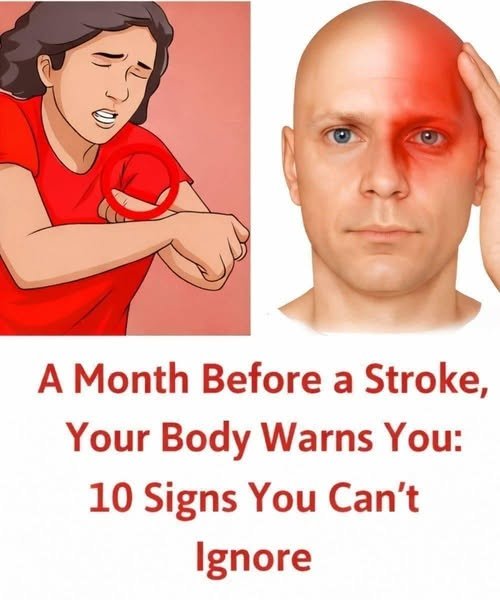
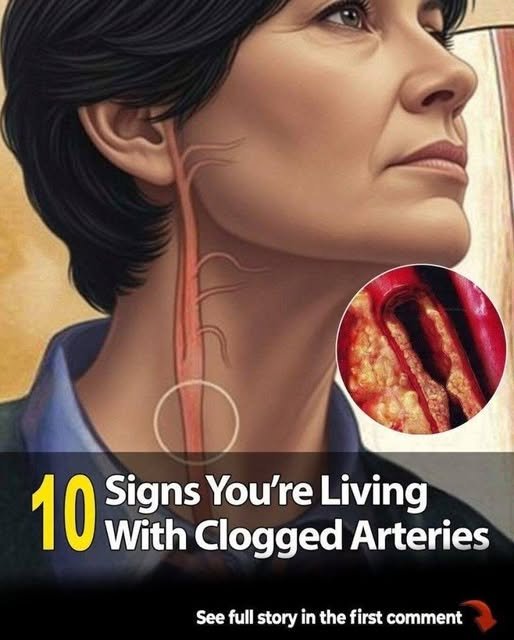
A stroke is a medical emergency that occurs when blood flow to part of the brain is interrupted or when a blood vessel in the brain ruptures. Brain cells begin to die within minutes, which is why rapid recognition and immediate treatment are critical. The image above suggests that the body may warn you “a month before a stroke” through symptoms such as arm pain, facial redness, or other physical changes. That framing can be misleading. Most strokes happen suddenly, without a month-long countdown. However, there is an important warning event—the transient ischemic attack, or TIA—that can occur days or weeks before a major stroke. Recognizing the real signs and acting quickly can save a life.
Why “One Month Before” Is Not a Reliable Timeline
Most ischemic strokes occur when a blood clot suddenly blocks an artery supplying the brain. The symptoms usually appear within seconds to minutes. A person may feel fine one moment and develop facial drooping, arm weakness, or slurred speech the next. There is no reliable set of symptoms that predicts a stroke exactly one month in advance.
A transient ischemic attack, sometimes called a mini-stroke, is different. In a TIA, blood flow to part of the brain is briefly blocked and then restored. Symptoms are identical to those of a stroke but typically resolve within minutes to an hour, sometimes within 24 hours. A TIA is a serious warning sign. Research shows that up to 18% of people who have a TIA will have a major stroke within three months, and nearly half of those strokes occur within two days. That is why a TIA requires emergency evaluation even if symptoms disappear.
The key message is not to wait for a month of vague symptoms. The key message is to recognize sudden neurological changes and act immediately.
The 10 Warning Signs You Should Never Ignore
The following signs are not a month-long checklist. They are symptoms that should prompt emergency action when they appear suddenly. Some may occur together; some may occur alone. Any one of them is reason to call emergency services.
1. Sudden Facial Drooping or Numbness
One side of the face may droop, feel numb, or become difficult to move. The mouth may pull to one side. Ask the person to smile. If one side does not move normally, call emergency services immediately.
2. Sudden Weakness or Numbness in an Arm or Leg
One arm or leg may suddenly feel weak, heavy, or numb. The person may be unable to lift both arms equally, or one arm may drift downward. Weakness usually affects one side of the body and may involve the face, arm, and leg together.
3. Sudden Speech Difficulty
Speech may become slurred, garbled, or difficult to understand. The person may struggle to find words, repeat a simple sentence, or follow a conversation. Ask the person to repeat a simple phrase. If speech is abnormal, treat it as an emergency.
4. Sudden Vision Changes
A stroke can cause sudden loss of vision in one or both eyes, double vision, or blurred vision. Some people describe a curtain coming down over part of their visual field. Sudden visual changes should never be ignored.
5. Sudden Loss of Balance or Coordination
A person may suddenly feel dizzy, stumble, or have difficulty walking in a straight line. They may feel as though the room is spinning or lose coordination in an arm or leg. Sudden balance problems can indicate a stroke in the cerebellum or brainstem.
6. Sudden Severe Headache
A sudden, severe headache with no known cause—often described as the worst headache of one’s life or a thunderclap headache—can be a sign of a hemorrhagic stroke or a ruptured aneurysm. This is a medical emergency.
7. Sudden Confusion or Trouble Understanding
The person may become suddenly confused, disoriented, or unable to understand what others are saying. They may not know where they are or what is happening. Sudden confusion is a neurological red flag.
8. Sudden Numbness or Tingling on One Side
Numbness or tingling that appears suddenly on one side of the body, especially in the face, arm, or leg, can indicate a stroke. It may be accompanied by weakness or loss of coordination.
9. Sudden Difficulty Swallowing
A stroke can affect the muscles used for swallowing. The person may choke, cough, or feel that food or liquid is sticking in the throat. Do not give food or drink if swallowing is impaired.
10. Brief Symptoms That Resolve—A TIA Warning
A TIA can cause stroke-like symptoms that disappear within minutes to hours. The person may feel normal again and assume nothing is wrong. This is dangerous. A TIA is a warning that a major stroke may be imminent. Seek emergency care even if symptoms have resolved.
The FAST and BE FAST Tests
The most reliable way to remember stroke symptoms is the FAST test. BE FAST adds two additional signs.
B — Balance: Sudden loss of balance or coordination.
E — Eyes: Sudden vision changes in one or both eyes.
F — Face: One side of the face droops.
A — Arms: One arm is weak or numb.
S — Speech: Speech is slurred or difficult to understand.
T — Time: Call emergency services immediately and note the time symptoms began.
The time symptoms started is critical because it helps doctors determine which treatments are appropriate. Clot-dissolving medications and mechanical clot removal are highly time-dependent.
What to Do If You Notice These Signs
If you or someone else experiences any of these symptoms, do not wait to see if they improve. Call emergency services immediately. Do not drive yourself to the hospital. Emergency medical personnel can begin assessment and treatment on the way and alert the hospital so a stroke team is ready.
While waiting for help:
Keep the person calm and lying safely on their side if possible.
Do not give food, drink, or medications unless instructed by emergency personnel.
Note the exact time symptoms began.
Do not attempt to drive the person yourself unless there is no other option.
What Not to Do
Do not assume the symptoms are “just a headache,” “just stress,” or “just a pinched nerve.” Do not wait for a month of warning signs. Do not give aspirin unless a medical professional advises it, because some strokes involve bleeding and aspirin could make bleeding worse. Do not ignore symptoms that go away; a TIA is a serious warning.
Risk Factors for Stroke
Knowing your risk factors can help you take preventive action.
High blood pressure is the most significant risk factor.
Smoking damages blood vessels and increases clotting risk.
Diabetes and high cholesterol increase vascular risk.
Atrial fibrillation, an irregular heart rhythm, can cause blood clots that travel to the brain.
A family history of stroke or cardiovascular disease increases risk.
Age increases risk, especially after 55.
A previous TIA or stroke is a major warning sign.
Obesity, physical inactivity, poor diet, and excessive alcohol use contribute to risk.
Prevention: What Actually Reduces Stroke Risk
Stroke prevention is not about watching for a month of vague symptoms. It is about managing risk factors consistently.
Control blood pressure through diet, exercise, and medication if prescribed.
Manage cholesterol and blood sugar.
Quit smoking.
Stay physically active.
Eat a balanced diet rich in fruits, vegetables, whole grains, and lean proteins.
Limit alcohol.
Take prescribed medications for atrial fibrillation or other conditions.
Attend regular medical checkups.
Frequently Asked Questions
Q: Can a stroke really give a one-month warning? No. Most strokes are sudden. A TIA can occur days or weeks before a major stroke, but it is not a reliable one-month warning. A TIA causes sudden symptoms that may resolve, and it requires emergency evaluation.
Q: Is arm pain a sign of an impending stroke? Arm pain alone is not a typical stroke warning sign. Sudden arm weakness or numbness is. Pain in the arm is more often related to muscles, joints, or nerves. Sudden neurological symptoms are the concern.
Q: What does a “thunderclap headache” feel like? It is a sudden, severe headache that reaches maximum intensity within seconds to minutes. It is often described as the worst headache of one’s life and can indicate bleeding in the brain.
Q: If stroke symptoms go away, should I still go to the hospital? Yes. Symptoms that resolve may be a TIA, which is a serious warning sign. Seek emergency care immediately.
Q: What is the difference between a stroke and a TIA? A stroke causes lasting brain injury. A TIA causes temporary symptoms without permanent damage on imaging, but it signals a high risk of a future stroke.
Q: Can young people have strokes? Yes. Although risk increases with age, strokes can occur in younger adults due to genetic conditions, blood clotting disorders, or other causes.
Q: Is aspirin safe to take during a suspected stroke? Do not take aspirin unless emergency personnel or a doctor advises it. Some strokes involve bleeding, and aspirin can worsen bleeding.
Q: What should I note when calling emergency services? Note the time symptoms began, the symptoms observed, the person’s age, and any medications they take. This information helps the medical team.
Q: Can high blood pressure cause a stroke without warning? High blood pressure is a major risk factor and often has no symptoms. Regular monitoring is important because uncontrolled hypertension can lead to stroke over time.
Q: What is the best way to prevent a stroke? Manage blood pressure, cholesterol, and blood sugar; avoid smoking; stay active; eat a healthy diet; limit alcohol; and take prescribed medications. Regular medical care is essential.
Conclusion
The claim that the body gives a clear one-month warning before a stroke is not accurate for most people. Strokes are usually sudden, and the most important warning event is a TIA—a temporary episode of stroke-like symptoms that demands immediate medical attention. The 10 signs described here are not a month-long checklist; they are reasons to call emergency services without delay.
Knowing the signs—facial drooping, arm weakness, speech difficulty, vision changes, balance problems, severe headache, confusion, numbness, swallowing difficulty, and transient symptoms—can save a life. Do not wait to see if symptoms improve. Do not drive yourself to the hospital. Call emergency services, note the time, and act immediately. In stroke care, time is brain.