Only Young Brains Can Find Both Hidden Children: Decoding the Viral Optical Illusion
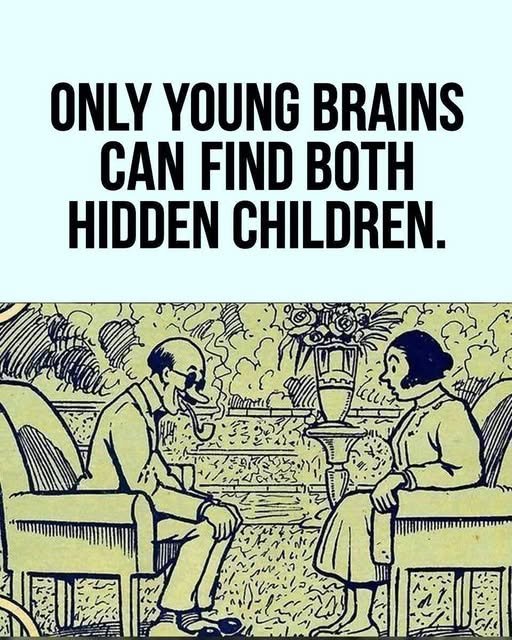
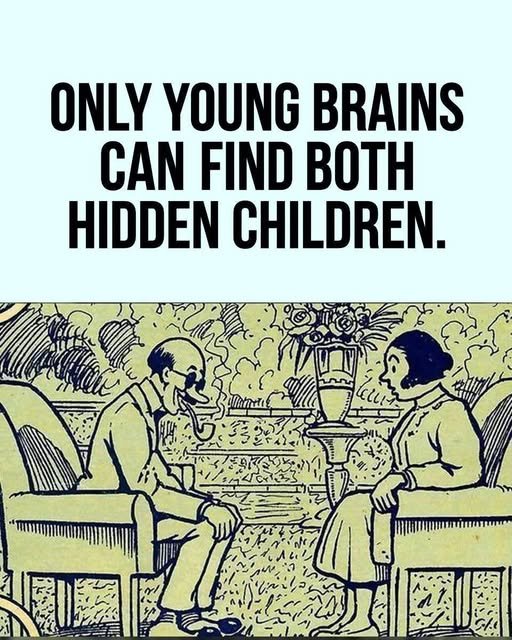
In the vast landscape of social media, few things capture our collective attention quite like a visual puzzle that challenges our perception. A recent viral image has sparked widespread debate, frustration, and ultimately, a satisfying sense of revelation. The image features a vintage-style illustration of an older man and woman sitting in chairs in a garden setting, accompanied by a bold, provocative headline: “ONLY YOUNG BRAINS CAN FIND BOTH HIDDEN CHILDREN.”
This simple claim is a masterclass in internet psychology. It challenges the viewer’s pride, suggesting that failing to find the hidden figures is a sign of cognitive decline, while succeeding proves a sharp, youthful mind. Millions of people have stared at the image, squinting, tilting their screens, and zooming in, desperately searching for the elusive children.
The truth, as with most viral brain teasers, is a fascinating blend of visual science, cognitive psychology, and a little bit of clever clickbait. The children are indeed there, hidden in plain sight, woven into the very fabric of the illustration. Finding them requires us to override our brain’s natural shortcuts and look at the image in a completely different way.
This comprehensive guide will reveal exactly where the two hidden children are located, explore the fascinating neuroscience behind why they are so difficult to spot, debunk the myth that only “young brains” can solve these puzzles, and delve into the history and benefits of visual perception games.
The Reveal: Where Are the Hidden Children?
Before we delve into the psychology, let us solve the mystery. If you are still struggling to find the two children, here is exactly where they are hidden. The secret lies not in looking at the people, but in looking at the negative space and the outlines of the figures.
The First Hidden Child (The Man’s Head)
Direct the focus of your eyes to the head of the older man sitting on the left side of the image. He is depicted in profile, facing the woman, with a bald head, a prominent ear, a mustache, and a pipe in his mouth.
Now, instead of looking at the man, look at the outline of his head and the collar of his jacket.
The Eye: The man’s ear is actually the eye of a hidden child.
The Forehead and Hair: The curve of the man’s bald head forms the forehead and the top of the head of a child.
The Profile: The back of the man’s head and the collar of his jacket create the back of the child’s head and neck.