How to Clean Your Refrigerator Gasket in Just 5 Minutes
How to Clean Your Refrigerator Gasket in Just 5 Minutes
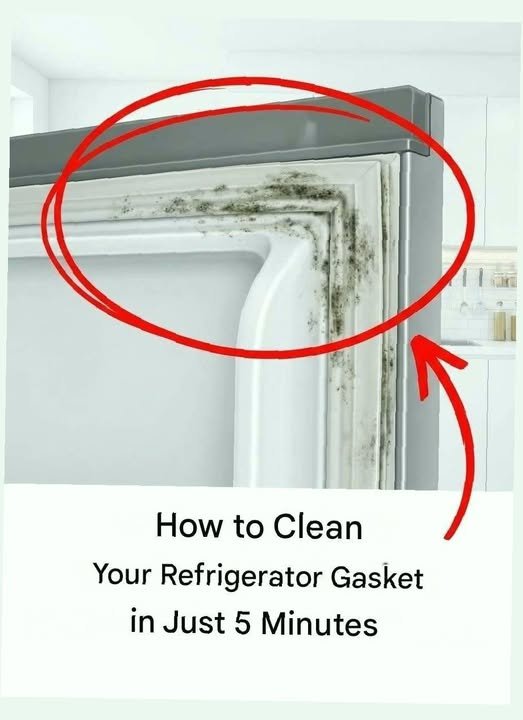
Look closely at the rubber seal around your refrigerator door. If you see dark spots, grime, or black mold hiding in the folds, it’s time for a deep clean.
The refrigerator gasket (the rubber seal) is one of the most neglected parts of the kitchen, yet it’s one of the most important. It traps food particles, spills, and moisture, creating the perfect environment for mold and bacteria to grow. A dirty gasket doesn’t just look bad — it can also prevent your fridge from sealing properly, wasting energy and spoiling food.
Here’s how to clean it in just 5 minutes. 👇
Disclaimer: This post is for informational purposes only. Always unplug your refrigerator before cleaning if you’re using any liquid near electrical components. If the gasket is damaged beyond cleaning, it may need to be replaced.
🔬 Why the Gasket Gets So Dirty
The gasket is made of flexible rubber or vinyl with deep folds and crevices. These folds trap:
Food crumbs and spills
Moisture and condensation
Dust and grease
Mold and mildew spores
Over time, this buildup can cause the gasket to lose its seal, letting cold air escape and warm air in. This makes your fridge work harder and can lead to higher energy bills and spoiled food.
🛒 What You Need
Warm water 💧
Dish soap 🧼
White vinegar or hydrogen peroxide 🧴
Cotton swabs or a small brush (like an old toothbrush)
Microfiber cloth or paper towels
Optional:Baking soda for stubborn stains
👩🍳 Instructions
Unplug the refrigerator if you’re using a lot of liquid, or simply be careful around the electrical components.
Mix a solution of warm water and a few drops of dish soap in a bowl.
Dip a cloth or cotton swab into the solution and wipe down the entire gasket, getting into all the folds.
For stubborn grime, dip a cotton swab or small brush into white vinegar or hydrogen peroxide and scrub gently.
For mold, use a mixture of equal parts water and white vinegar. Spray it on, let it sit for a minute, then wipe clean.
Dry the gasket thoroughly with a clean cloth to prevent moisture from lingering.
For extra protection, wipe the gasket with a small amount of baking soda on a damp cloth to absorb odors.
Repeat every few weeks to keep it clean. 🧼✨
Pro Tip: Run a cotton swab along the inside of the fold to catch hidden grime. You’ll be surprised how much comes out.
❓ Frequently Asked Questions
How often should I clean my refrigerator gasket? Every 2–4 weeks is ideal. If you notice visible grime or mold, clean it immediately.
What causes black mold on the gasket? Moisture, food particles, and lack of airflow create the perfect environment for mold. Regular cleaning prevents it.
Can I use bleach on the gasket? It’s not recommended. Bleach can dry out and damage the rubber over time. Vinegar or hydrogen peroxide is safer.
What if the gasket is torn or damaged? If the gasket is cracked, torn, or no longer seals properly, it should be replaced. You can buy replacement gaskets for most refrigerator models.
How do I know if my gasket needs replacing? Try the “paper test”: close the door on a piece of paper. If it pulls out easily, the seal is weak.
Can a dirty gasket cause my fridge to stop cooling? Yes — a poor seal lets cold air escape, making the fridge work harder and potentially leading to cooling issues.
Is it safe to use vinegar on a refrigerator gasket? Yes — white vinegar is a safe, natural cleaner that kills mold and bacteria.
Can I clean the gasket without removing it? Yes — you can clean it in place with a cloth or cotton swab. Removing it is not necessary for routine cleaning.Look closely at the rubber seal around your refrigerator door. If you see dark spots, grime, or black mold hiding in the folds, it’s time for a deep clean.
The refrigerator gasket (the rubber seal) is one of the most neglected parts of the kitchen, yet it’s one of the most important. It traps food particles, spills, and moisture, creating the perfect environment for mold and bacteria to grow. A dirty gasket doesn’t just look bad — it can also prevent your fridge from sealing properly, wasting energy and spoiling food.
Here’s how to clean it in just 5 minutes. 👇
Disclaimer: This post is for informational purposes only. Always unplug your refrigerator before cleaning if you’re using any liquid near electrical components. If the gasket is damaged beyond cleaning, it may need to be replaced.
🔬 Why the Gasket Gets So Dirty
The gasket is made of flexible rubber or vinyl with deep folds and crevices. These folds trap:
Food crumbs and spills
Moisture and condensation
Dust and grease
Mold and mildew spores
Over time, this buildup can cause the gasket to lose its seal, letting cold air escape and warm air in. This makes your fridge work harder and can lead to higher energy bills and spoiled food.
🛒 What You Need
Warm water 💧
Dish soap 🧼
White vinegar or hydrogen peroxide 🧴
Cotton swabs or a small brush (like an old toothbrush)
Microfiber cloth or paper towels
Optional:Baking soda for stubborn stains
👩🍳 Instructions
Unplug the refrigerator if you’re using a lot of liquid, or simply be careful around the electrical components.
Mix a solution of warm water and a few drops of dish soap in a bowl.
Dip a cloth or cotton swab into the solution and wipe down the entire gasket, getting into all the folds.
For stubborn grime, dip a cotton swab or small brush into white vinegar or hydrogen peroxide and scrub gently.
For mold, use a mixture of equal parts water and white vinegar. Spray it on, let it sit for a minute, then wipe clean.
Dry the gasket thoroughly with a clean cloth to prevent moisture from lingering.
For extra protection, wipe the gasket with a small amount of baking soda on a damp cloth to absorb odors.
Repeat every few weeks to keep it clean. 🧼✨
Pro Tip: Run a cotton swab along the inside of the fold to catch hidden grime. You’ll be surprised how much comes out.
❓ Frequently Asked Questions
How often should I clean my refrigerator gasket? Every 2–4 weeks is ideal. If you notice visible grime or mold, clean it immediately.
What causes black mold on the gasket? Moisture, food particles, and lack of airflow create the perfect environment for mold. Regular cleaning prevents it.
Can I use bleach on the gasket? It’s not recommended. Bleach can dry out and damage the rubber over time. Vinegar or hydrogen peroxide is safer.
What if the gasket is torn or damaged? If the gasket is cracked, torn, or no longer seals properly, it should be replaced. You can buy replacement gaskets for most refrigerator models.
How do I know if my gasket needs replacing? Try the “paper test”: close the door on a piece of paper. If it pulls out easily, the seal is weak.
Can a dirty gasket cause my fridge to stop cooling? Yes — a poor seal lets cold air escape, making the fridge work harder and potentially leading to cooling issues.
Is it safe to use vinegar on a refrigerator gasket? Yes — white vinegar is a safe, natural cleaner that kills mold and bacteria.
Can I clean the gasket without removing it? Yes — you can clean it in place with a cloth or cotton swab. Removing it is not necessary for routine cleaning.