The Emotional Meaning of Shoulder Pain: What Your Body Might Be Trying to Tell You
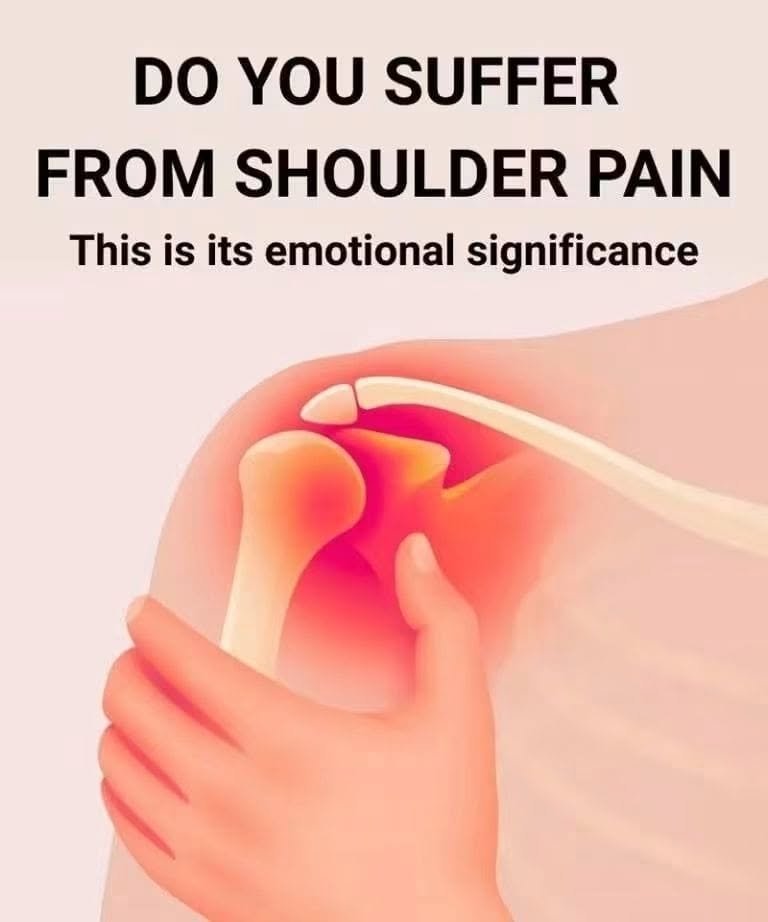
Shoulder pain is one of the most common musculoskeletal complaints worldwide, affecting millions of people and ranking as a leading cause of disability. For many, the pain is easily explained by a physical cause: a strained rotator cuff from lifting, osteoarthritis, or the lingering effects of an old injury. Yet, for a significant number of people, the discomfort persists long after the physical triggers have been treated, or it appears seemingly out of nowhere, defying a straightforward diagnosis. This is where the conversation often shifts from the purely anatomical to the emotional and symbolic. The image of a person clutching their shoulder, with the text “Do you suffer from shoulder pain? This is its emotional significance,” resonates with millions because it touches on a universal human experience: the sense that our bodies are not just mechanical systems, but living archives of our emotional lives.
In the realms of holistic health, mind-body medicine, and traditional healing systems, the shoulders are far more than a complex joint. They are the symbolic cradle of responsibility, the physical embodiment of how we carry our burdens, and the gateway through which we extend ourselves into the world. When the shoulders ache, stiffen, or burn, practitioners of these disciplines view the pain not as a random malfunction, but as a message—an invitation to examine the invisible weight we may be carrying. This article explores the emotional and metaphysical meanings traditionally associated with shoulder pain, distinguishing between left and right sides, examining the psychological research that supports a mind-body connection, and offering practical, holistic approaches to releasing what no longer serves you. It is not a replacement for medical care, but rather a complementary lens through which to understand the stories our bodies tell.
The Shoulders as the Seat of Burden and Responsibility
Across nearly every cultural and healing tradition, the shoulders are universally associated with the act of carrying. We speak of “shouldering a burden,” “carrying the weight of the world on our shoulders,” or “leaning on someone for support.” These are not merely linguistic flourishes; they are energetic realities that reflect how we experience stress and duty in our physical bodies. In the practice of Body Wisdom, each part of the body is connected to a specific life issue, and the shoulders represent “how you carry your burdens” and “the way you carry responsibility”. When there is pain in the shoulders, it is often a sign that a person is feeling burdened or overwhelmed by life.
This connection is echoed by somatic therapists and energy healers who observe that chronic shoulder tension is frequently linked to an overdeveloped sense of duty. A strain in the shoulder can be a sign of “over-giving, of pushing too hard in your career, or of feeling an overwhelming need to protect and provide for everyone around you”. The pain may be a physical manifestation of a deeply ingrained belief that one must “do it all” oneself, carrying responsibilities that were never truly theirs to bear. As one holistic practitioner notes, shoulder pain often asks the question: “What have I decided is entirely my responsibility?”.
This does not mean that every episode of shoulder pain is a sign of emotional overload. It means that, in the absence of a clear structural cause, or when pain becomes chronic despite physical treatment, exploring the emotional landscape of responsibility and burden can be a profoundly useful exercise.
The Silent Language of Left and Right
In many metaphysical and energetic frameworks, the body is understood to have a lateralized language, where the left and right sides correspond to different aspects of our emotional and psychological experience. While these are not rigid rules, they offer a useful map for self-inquiry.
The Left Shoulder: The Feminine, the Emotional, and the Past
The left side of the body is often associated with the feminine principle—the realm of receiving, intuition, and inner life. The left shoulder, in particular, is frequently linked to our emotional burdens, the weight of our relationships, and our capacity to receive love and support.
Emotional Weight and Grief: An ache in the left shoulder can surface when we have “gone numb to our own needs or after a heart-centered loss”. It may be the physical manifestation of carrying the emotional pain of others, or the weight of our own ungrieved sorrows. The pain can be a signal that we are struggling to receive the care and support we need.
The Past and the Feminine: In some belief systems, the left side represents the past, the family, and the feminine principle. Left shoulder pain may be connected to pressures and responsibilities inherited from early family dynamics, particularly from a mother figure whose anxieties or expectations were internalized as a heavy duty.
The Right Shoulder: The Masculine, Duty, and the Future
The right side of the body is traditionally linked to the masculine principle—the realm of action, structure, logic, and outward roles. The right shoulder is therefore associated with the burdens of duty, protection, and the drive to achieve and provide.
Over-Responsibility and Authority: Right-shoulder tightness often appears “in seasons of over-responsibility or with friction with authority”. It can be the body’s way of signaling that the “doing” has become crushing—that the person is pushing too hard in their career or feeling an overwhelming need to protect and provide for everyone around them. It may also relate to “future” concerns, career pressures, or issues involving male figures in one’s life.
The Burden of “Doing”: A client with chronic right shoulder pain, described as a CEO, mother, and caregiver, came to see that her pain was “the physical manifestation of a deeply ingrained belief that she had to do it all herself”. The strain was not a call to abandon her responsibilities, but an invitation to discern which ones were truly hers and to learn the art of receiving help.
Again, these associations are offered as tools for reflection, not as diagnostic absolutes. A holistic practitioner might ask, “What might this ache be asking me to release or receive?” rather than insisting on a fixed meaning.
Grief, Over-Giving, and the Heart-Shoulder Connection
One of the most poignant themes in the emotional literature on shoulder pain is its deep connection to grief and the act of over-giving. The shoulder is described as “an elegant hinge between doing and feeling; it helps us reach, receive, and release”. When the movements of reaching out, receiving love, or releasing what no longer serves us are stalled in life, they can become stalled in the body.
When the Heart’s Reach Is Blocked
Chronic shoulder pain is often described not as a simple tissue problem, but as a “story—one woven from posture, protection, and unspoken emotion”. The ache may run along the “heart line,” creating a sense that something inside is “slightly off, unnamed, and asking to be heard”. This is particularly true when the pain is linked to a broken heart, betrayal by a loved one, or the hurt caused by a close friend or family member.
The Cost of Saying “Yes” When the Body Says “No”
Grief in this context is not limited to bereavement. It can be the subtle, chronic mourning of a lost dream, years of postponing one’s creative life, or “chronically saying ‘yes’ when the body wants ‘no’”. This pattern of over-giving—of extending oneself beyond one’s energetic resources—is a common precursor to shoulder tension. The body, in its wisdom, creates a physical boundary (pain and stiffness) when emotional boundaries have been repeatedly ignored.
In these cases, the pain may even shift from one shoulder to the other during the healing process, a phenomenon that can be disheartening as it prolongs the discomfort, but is viewed as a sign that the body is working through the emotional trauma.
What Psychosomatic Medicine Says About the “Unhappy Shoulder”
While the symbolic and metaphysical interpretations offer rich material for self-reflection, it is important to ground the discussion in established medical and psychological research. The field of psychosomatic medicine studies how psychological factors influence physical health, and it has produced compelling evidence that the mind and shoulder are intimately connected.
A 2022 conceptual review published in the Journal of Clinical Medicine, titled “The Unhappy Shoulder,” provides a comprehensive overview of this research. The authors note that chronic pain is a “multifaceted disorder genuinely entangled with psychic and psychosomatic symptoms”. Their findings are both striking and clinically relevant:
Psychological Predictors: “Pain-specific fears, depression, and anxiety are important predictors of shoulder pain”. This means that emotional distress is not just a reaction to pain, but can be a significant risk factor for its development and persistence.
Trauma and PTSD: Shoulder pain is “generally overrepresented in those with trauma and PTSD”. The experience of trauma can become encoded in the body, manifesting as chronic tension and pain in the shoulder region.
Somatization: A tendency toward somatization—the expression of psychological distress through physical symptoms—is recognized as an associated risk factor for the persistence of neck and shoulder pain. High levels of emotional distress, anxiety, and “pain catastrophizing” are significantly associated with higher pain intensity and disability.
Emotional Repression: Stress, trauma, and repressed feelings like anger, fear, or grief do not simply disappear when ignored. When these emotions become a chronic, unconscious response to stress, they can lead to persistent pain, especially in areas like the neck, shoulders, and lower back.
This research does not suggest that shoulder pain is “all in your head.” Rather, it demonstrates that the mind and body are a single, integrated system. The emotional meaning of shoulder pain is not a mystical abstraction; it is a reflection of how psychological stress, trauma, and unexpressed emotion become physically embedded in the body’s tissues.
Practical Pathways to Release: Healing the Body and the Burden
If shoulder pain can be a message about emotional burden, then the path to relief must address both the physical and the emotional. The following holistic approaches are designed to complement, not replace, medical care.
1. Mindful Breathwork and Meditation
Purposeful breathing is a simple yet powerful way to signal safety to the nervous system and begin to release tension. A recommended practice is a slow, steady, and even breath: inhale for three seconds, exhale for three seconds, for 36 repetitions. This can be repeated multiple times daily, especially for those who tend to overachieve and carry too much.
2. Restoring the Chest-Open Posture
Modern life—hunched over desks, phones, and steering wheels—contributes to a collapsed posture that physically mimics the act of carrying a heavy load. A simple foam roller exercise can help: lie lengthwise along the roller with the spine supported, and gently open the arms out to the sides like a cactus or a “T.” Breathe softly and slowly for two to three minutes to invite the rib cage to lift and the chest to open.
3. Journaling with Intention
Movement should be paired with meaning. After a warm shower or a session on the foam roller, take five minutes to journal without editing. Useful prompts include: “What might this ache be asking me to release or receive? What have I been carrying that isn’t mine? Where am I over-giving or under-receiving? What grief within me is asking to be acknowledged?”.
4. The Gentle Art of Discernment
Healing often requires a radical shift in behavior, not just in posture. This means learning to discern which responsibilities are truly yours and which are born of a conditioned pattern of over-functioning. It is about learning to delegate, to ask for help, and to allow yourself to be supported. As one practitioner describes it, this is “the radical act of receiving”. It is not about abdicating your duties, but about putting down what was never yours to carry.
5. Compassionate Self-Inquiry
Finally, the process should be approached with gentleness, not judgment. These patterns are not your fault. Every pattern has served you in some way—perhaps taking on the weight of the world was a strategy learned in childhood to feel safe or loved. The goal is to notice the tension without judgment, to breathe into it, and to ask, “Beloved, what is this? What part of this is mine, and what is not?”.
When to Seek Professional Help
While exploring the emotional and symbolic dimensions of shoulder pain can be deeply illuminating, it is crucial never to ignore or dismiss physical symptoms. Shoulder pain can be a sign of serious medical conditions, including rotator cuff tears, frozen shoulder, arthritis, or, in rare cases, heart problems.
You should seek immediate medical attention if your shoulder pain is accompanied by chest tightness, shortness of breath, dizziness, or pain that radiates down the arm, as these can be signs of a heart attack. You should also consult a doctor or physical therapist if your pain is severe, persists for more than a few weeks, is accompanied by swelling or redness, or significantly limits your range of motion. A holistic approach to healing is most effective when it is built upon a foundation of accurate medical diagnosis and care.
Conclusion: Listening to the Wisdom of the Body
The emotional meaning of shoulder pain is not a simple formula, but a rich and nuanced invitation to self-awareness. The shoulders, those remarkable joints that allow us to reach, to push, to pull, and to embrace, are also the physical seat of our burdens. When they ache, they may be telling a story—a story of too much responsibility, of unexpressed grief, of the chronic over-giving that leaves no room for receiving.
The research from psychosomatic medicine confirms what poets and healers have long known: the mind and body are one. Depression, anxiety, trauma, and repressed emotion are not abstract concepts; they are physiological realities that can manifest as chronic pain. By approaching shoulder pain with curiosity rather than fear, and by combining appropriate medical care with practices that address the emotional and energetic dimensions of our lives, we can begin to put down the invisible weights we have been carrying. The message of the shoulder may simply be a gentle reminder: you do not have to carry everything alone. It is okay to set some of it down.
Frequently Asked Questions
What is the emotional meaning of shoulder pain?
In holistic and metaphysical traditions, shoulder pain is often associated with carrying burdens, excessive responsibility, and feeling overwhelmed by life’s demands. It can symbolize the weight of duty, the strain of over-giving, or the grief of unmet emotional needs. The specific meaning can vary depending on whether the pain is in the left or right shoulder.
What does left shoulder pain mean emotionally?
The left shoulder is frequently linked to the feminine principle, the emotional realm, and the past. Pain here may reflect emotional burdens, the weight of relationships, unexpressed grief, or a difficulty in receiving love and support. It can also be associated with pressures inherited from family, particularly from maternal figures.
What does right shoulder pain mean emotionally?
The right shoulder is often associated with the masculine principle, action, duty, and the future. Pain on this side may indicate over-responsibility, the strain of pushing too hard in one’s career, friction with authority figures, or an overwhelming need to protect and provide for others. It can be a sign that the burden of “doing” has become too great.
Is there scientific evidence that emotions can cause shoulder pain?
Yes. Research in psychosomatic medicine has shown that psychological factors such as depression, anxiety, pain-specific fears, and a history of trauma or PTSD are significant predictors of shoulder pain. Chronic pain is understood as a multifaceted disorder in which psychological and physical factors are deeply intertwined. Emotional distress can contribute to muscle tension, altered pain perception, and the persistence of pain.
How can I release emotional tension in my shoulders?
Holistic approaches include mindful breathwork (e.g., three-second inhales and exhales for 36 repetitions), gentle chest-opening exercises on a foam roller, journaling to explore the emotional meaning of the pain, and practicing the art of discernment—learning to identify and set down responsibilities that are not truly yours. These practices are best used in conjunction with professional medical care.
Can shoulder pain be a sign of a heart attack?
Yes, in some cases. Shoulder pain, particularly on the left side, can be a symptom of a heart attack, especially when accompanied by chest tightness, shortness of breath, dizziness, or pain radiating down the arm. This is a medical emergency, and you should seek immediate help. Never ignore severe or sudden shoulder pain without a medical evaluation.
What is the “unhappy shoulder” concept?
“The Unhappy Shoulder” is a term used in a 2022 review of psychosomatic research on shoulder pain. It refers to the finding that chronic shoulder pain is often entangled with psychological and psychosomatic symptoms, and that factors like depression, anxiety, trauma, and pain catastrophizing play a significant role in the development and persistence of the condition.
Are left and right shoulder pain meanings the same in all traditions?
No. The specific associations can vary across different cultural and healing traditions. However, a common theme in many Western holistic and metaphysical frameworks is the link between the left side and the feminine, emotional, and past-oriented aspects of experience, and the right side with the masculine, active, and future-oriented aspects. These are offered as tools for self-reflection, not as universal laws.