Hard Bumps on Finger Joints Near the Nails: Causes and Management
Distinguishing From Other Hand Conditions
Accurate diagnosis requires ruling out conditions that mimic Heberden’s nodes. Rheumatoid arthritis typically affects the proximal interphalangeal (PIP) joints and metacarpophalangeal (MCP) joints rather than the DIP joints, and presents with soft, spongy swelling rather than hard bone. Gouty tophi can form near joints but are usually accompanied by acute inflammatory episodes and elevated uric acid levels. Mucous cysts, which also occur at the DIP joint, are fluid-filled sacs that may transilluminate and fluctuate in size, unlike fixed bony nodes. Psoriatic arthritis can cause DIP involvement but typically includes nail pitting, skin plaques, and dactylitis (sausage-like finger swelling). A healthcare provider can distinguish these through physical examination, imaging, and laboratory tests, ensuring appropriate management tailored to the specific diagnosis.
Part 5 of 5
Management Strategies and When to Seek Care
While Heberden’s nodes themselves cannot be reversed, symptom management focuses on preserving function and reducing discomfort. Topical NSAIDs or oral anti-inflammatories can address pain during flare-ups. Splinting the affected DIP joint during activities may reduce mechanical stress and slow further deformity. Hand therapy exercises maintain range of motion and strengthen supporting muscles without aggravating the joint. For severe cases where nodes impair function or cause persistent pain, surgical options like joint fusion or arthroplasty may be considered. Seek medical evaluation if nodes develop rapidly, cause significant functional limitation, or are accompanied by systemic symptoms like fever or unexplained weight loss. Early intervention optimizes long-term hand function and quality of life.
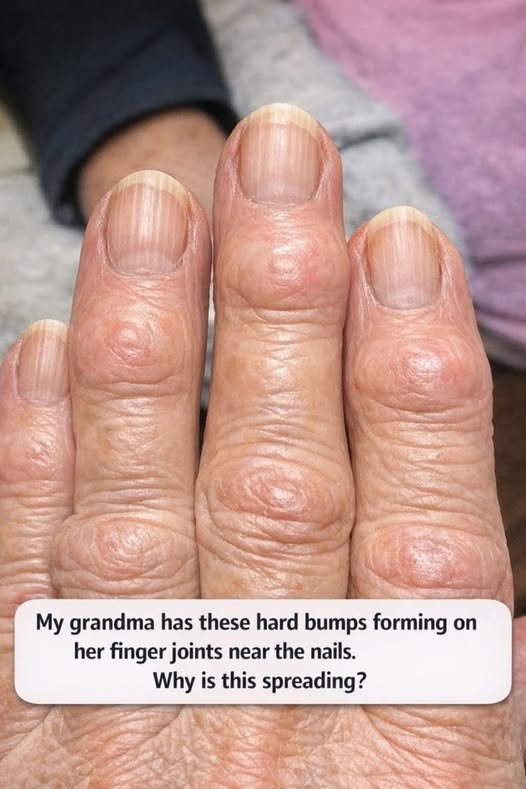
In summary, hard bumps near the fingernails are typically Heberden’s nodes resulting from osteoarthritis. While they indicate joint degeneration, proactive management preserves hand function and minimizes discomfort throughout the aging process.
Frequently Asked Questions
Are Heberden’s nodes painful? They can be tender during active formation but often become painless once fully developed. Pain typically correlates with underlying osteoarthritis inflammation rather than the node itself.
Can these bumps be removed surgically? Surgical removal is rarely recommended unless nodes severely impair function or cause intractable pain. Surgery carries risks and does not halt osteoarthritis progression in other joints.
Do Heberden’s nodes indicate rheumatoid arthritis? No, they specifically indicate osteoarthritis. Rheumatoid arthritis typically spares the DIP joints and presents with different clinical features including symmetric PIP/MCP involvement.
Will the bumps continue growing indefinitely? Nodes typically stabilize after reaching maturity, though new nodes may form in other joints as osteoarthritis progresses. Growth rate varies individually and often slows with age.
Can lifestyle changes prevent new nodes from forming? While genetics play a major role, maintaining healthy weight, avoiding repetitive hand trauma, and managing metabolic health may slow overall osteoarthritis progression and potentially reduce new node development.