Hard Bumps on Finger Joints Near the Nails: Causes and Management
Why the Condition Appears to Spread
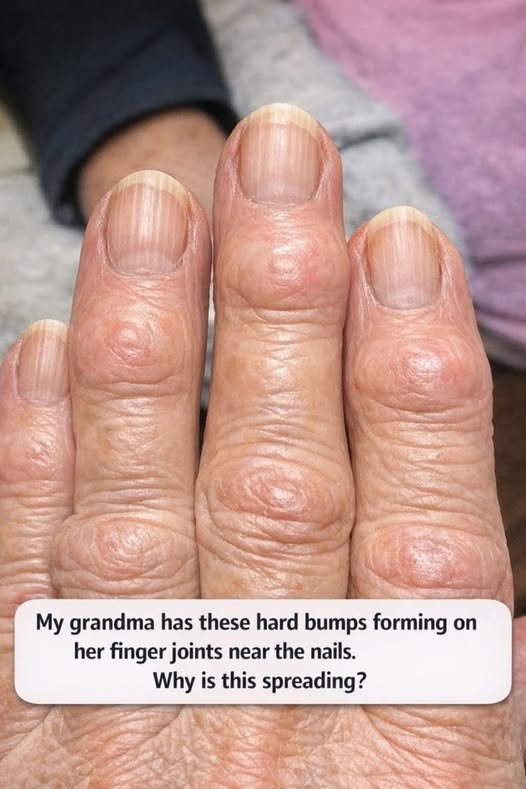
The perception that these bumps are “spreading” stems from the progressive nature of osteoarthritis and genetic susceptibility. Once the pathological process begins in one joint, similar degenerative changes often manifest in adjacent DIP joints or corresponding fingers on the same hand. This bilateral and multi-joint involvement is typical of systemic OA rather than localized injury. Hormonal changes post-menopause can accelerate cartilage breakdown in women, potentially explaining rapid progression in older female patients. Additionally, altered biomechanics caused by an existing node can place abnormal stress on neighboring joints, triggering secondary node formation. While the condition does not spread like an infection, the underlying degenerative process affects multiple joints sequentially, creating the appearance of spreading. Understanding this mechanism helps set realistic expectations for disease progression.