Experts Caution Against Using Air Fryers Instead of Ovens
Blocked Ventilation and the “Heat Trap”
The air fryer requires excellent ventilation. The intense heat and moisture generated during cooking must be expelled through vents, usually located at the back or top of the appliance. When people replace their ovens with air fryers, they often shove the air fryer into a tight corner, under a low-hanging cabinet, or right up against the wall to save counter space.
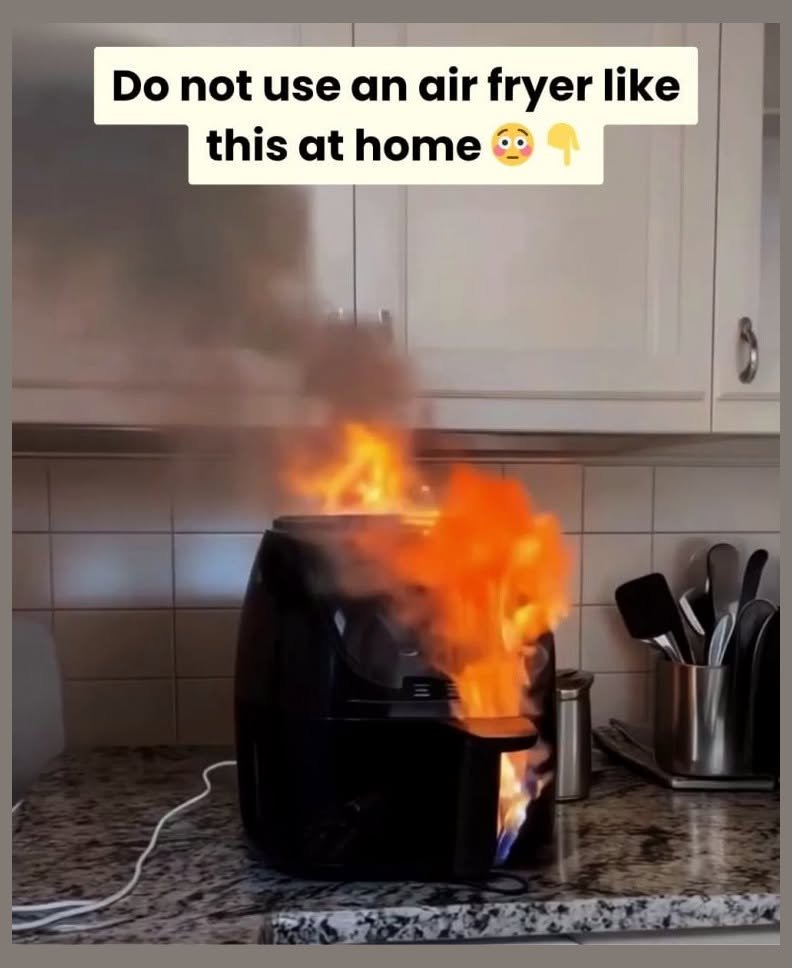
This creates a dangerous “heat trap.” The blocked hot air can cause the exterior casing of the air fryer to melt, scorch the wall, or even ignite the surrounding cabinetry. Appliance safety experts advise leaving at least five inches of clearance on all sides, and ensuring there is absolutely no upper cabinetry directly above the machine.
Grease Fires and Build-Up
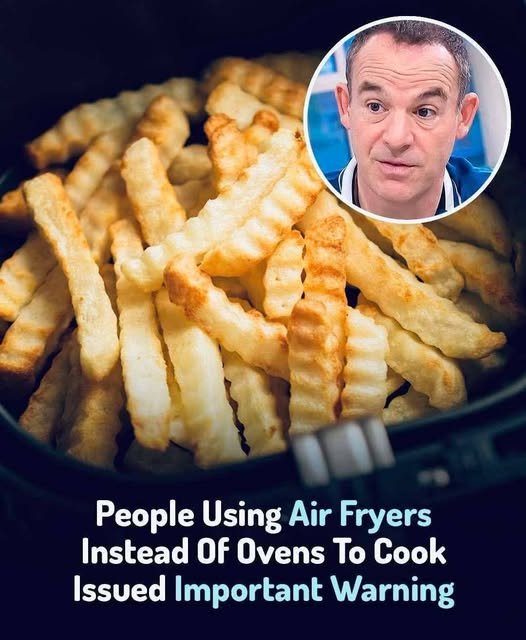
The image of the fries highlights a major culprit: grease. Whether you are cooking frozen fries or fresh bacon, fat will drip to the bottom of the basket. If the air fryer is not cleaned thoroughly after every use, this grease accumulates. The next time you preheat the appliance, the residual grease can smoke, catch fire, or cause the machine to short-circuit. The high wattage of an air fryer (often 1,500 to 1,800 watts) plugged into a shared kitchen circuit can also cause an electrical overload, leading to melted outlets or blown breakers.
Food Safety Blind Spots: The “Set It and Forget It” Fallacy
Because air fryers cook food incredibly fast and are marketed for their convenience, many users fall into the trap of believing they are foolproof. This complacency can lead to serious food safety issues.
The Raw Meat Risk
The intense heat of the air fryer browns the exterior of food extremely quickly. If you are cooking raw chicken breasts or thick cuts of meat, the outside can look perfectly cooked while the inside remains raw. Because the basket limits the space for air to circulate, overcrowding the air fryer is a common mistake, leading to uneven cooking.
Experts warn that relying solely on an air fryer for meat requires careful attention. You cannot just “set it and forget it” like you might with a larger oven where the heat is more ambient and consistent. A food thermometer is absolutely mandatory when using an air fryer for raw meats. The internal temperature of poultry must reach 165°F (74°C) to be safe.
Cross-Contamination
The small size of the air fryer basket can lead to cross-contamination. If you cook raw chicken, the juices drip to the bottom. If you then quickly wipe the basket and toss in a batch of fries (like those in the image), you risk reintroducing bacteria to the food. Experts stress that the basket and the inner tray must be washed thoroughly with hot, soapy water after every single use, especially after cooking raw animal products.
The “Health Halo” Effect: The Nutritional Pitfall
The image of crinkle-cut fries is a stark reminder of a psychological phenomenon known as the “health halo.” Because air frying requires little to no oil, people subconsciously categorize everything that comes out of an air fryer as “healthy.”
The Ultra-Processed Food Trap
The air fryer makes it incredibly easy to cook highly processed, frozen foods—chicken nuggets, mozzarella sticks, frozen fries, and hot pockets. While these foods are crispier and less greasy than if they were deep-fried, they are still highly processed, loaded with sodium, refined carbohydrates, and artificial ingredients.
Nutritionists warn that using the air fryer as a tool to make frozen junk food “healthier” is a dangerous delusion. A frozen French fry is still a processed potato product. The air fryer does not magically add vitamins or remove the empty calories. Relying heavily on an air fryer often leads to a diet lower in fresh, whole foods and higher in ultra-processed convenience items.
The Loss of Nutrients
While cooking vegetables in an air fryer is a great way to enjoy them, the high heat can degrade certain heat-sensitive vitamins, such as Vitamin C and some B vitamins. However, this is a trade-off that also occurs in oven roasting. The key is to avoid burning or charring the vegetables, which not only destroys nutrients but also creates harmful compounds.
The Myth of Appliance Lifespan and Energy Efficiency
One of the main arguments for replacing an oven with an air fryer is that it saves money on the energy bill. While it is true that an air fryer uses less energy to heat up, the experts warn that the math is not always in the consumer’s favor.
The “Multiple Batch” Problem
An air fryer is small. If you are cooking a meal for a family of four, you cannot fit four chicken breasts or a large batch of fries into the basket at once. You have to cook them in multiple batches. If you have to run the air fryer three or four times in a row to cook a full meal, the cumulative energy usage can quickly exceed the cost of heating the large oven just once.
The Longevity Issue
Air fryers are subjected to extreme heat, moisture, and grease on a daily basis. Their internal heating elements, fans, and electronic control boards are not built to last a decade like a traditional oven. The constant thermal cycling stresses the components. Many air fryers begin to lose their heating efficiency, suffer electrical faults, or have their non-stick baskets peel after two to three years of heavy use. Replacing an air fryer every few years is often more expensive than maintaining a high-quality oven.
Culinary Limitations: Why You Still Need Your Oven
Beyond the health and safety issues, culinary experts warn that the air fryer simply cannot replicate the function of a traditional oven for certain types of cooking.
The Baking Problem
If you are baking a cake, a batch of cookies, or a loaf of bread, the air fryer is a poor substitute. The intense, high-speed fan and the small cavity cause baked goods to rise unevenly, creating a lopsided texture. Furthermore, the heating element is often too close to the top of the food, causing the top to burn before the inside is baked through.
The Ambient Heat Requirement
An oven provides ambient, radiant heat that surrounds the food evenly. This is essential for roasting large cuts of meat, like a turkey or a large roast, or for cooking dishes that require slow, even heat, such as casseroles or large sheet-pan dinners. The air fryer’s concentrated, fan-driven heat is ideal for small batches of crispy food, but it is far too intense for delicate or large-scale cooking.
How to Safely Use Your Air Fryer: Expert Recommendations
The warnings do not mean you should throw your air fryer away. They simply mean you should use it with awareness and respect for its limitations. Here are the expert-approved strategies for safe and healthy air frying.
1. Use the Right Temperature and Time
Never crank the air fryer to the maximum temperature unless the recipe specifically calls for it. Lower the temperature slightly to prevent the outside of the food from burning while the inside cooks. Soaking potatoes in water for 15 minutes before air frying can also reduce the formation of acrylamide by removing surface starches.
2. Avoid Overcrowding
Never fill the basket to the brim. The food needs space for the hot air to circulate. If you overcrowd the basket, the food will steam rather than crisp, and it will cook unevenly.
3. Protect the Coating
Never use metal utensils (like tongs or forks) in the air fryer basket. Use silicone or wooden utensils to remove food. Wash the basket with a soft sponge and mild soap. Never use steel wool or abrasive cleaners. If the coating is scratched, replace the basket or the machine.
4. No Loose Parchment Paper
If you use parchment paper, ensure it is specifically designed for air fryers and that it is heavily weighed down by the food. Never preheat the air fryer with a loose piece of parchment paper inside.
5. Maintain Proper Clearance
Place the air fryer on a heat-resistant surface with at least five inches of clearance on all sides, including the top. Never operate it under a cabinet.
6. Clean After Every Use
Grease and food residue left in the basket or on the heating element will smoke and can catch fire. Wash the basket thoroughly after every use and wipe down the inside of the machine once it has cooled.
7. Use a Meat Thermometer
Never rely on visual cues alone to determine if meat is cooked. Always use a food thermometer to ensure the internal temperature has reached safe levels.
Conclusion: A Tool, Not a Complete Replacement
The image of the crispy fries and the concerned expert is a powerful metaphor for the modern kitchen. The air fryer is an incredibly convenient, highly effective tool for creating crispy, delicious food with less oil. However, the warnings issued by experts are clear: it should not be used as a complete replacement for a traditional oven.
The risks of acrylamide formation, the potential degradation of non-stick coatings, the physical fire hazards, and the food safety blind spots are all very real. By understanding the limitations of the appliance, using it safely, and maintaining a balanced diet rich in whole, unprocessed foods, you can enjoy the benefits of the air fryer without falling victim to its hidden dangers.