A Few Places You Should Never Use Your Air Fryer Indoors
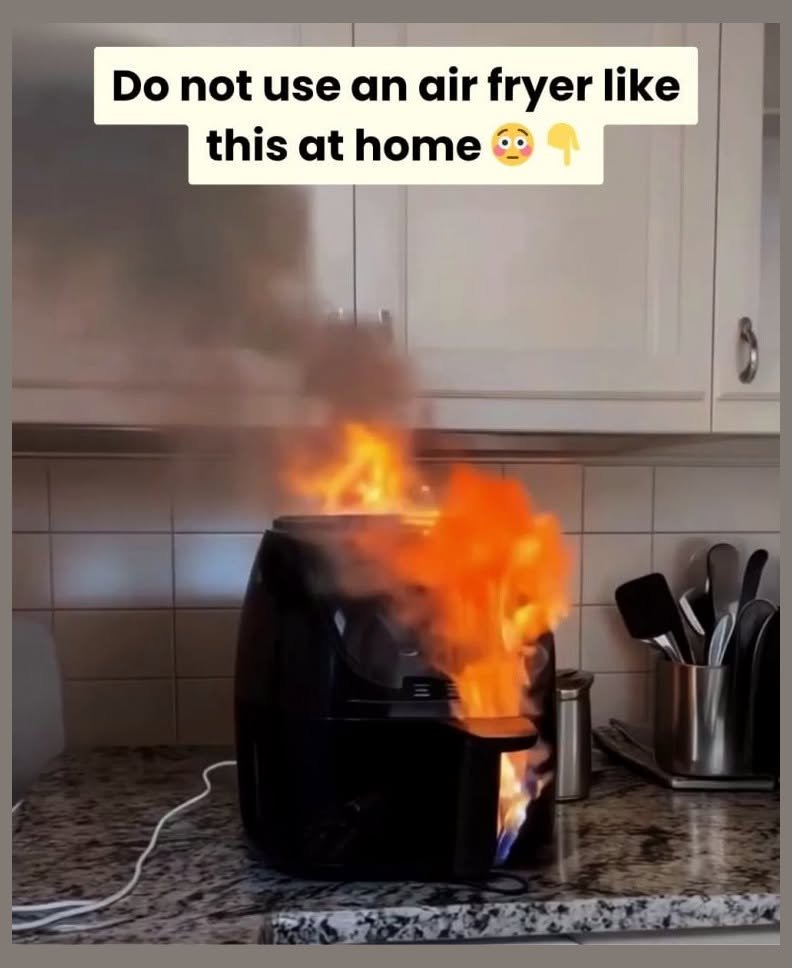
Air fryers have become a staple in modern kitchens, offering a convenient, energy-efficient way to achieve crispy textures with minimal oil. However, the same technology that makes them so effective—rapid, high-temperature air circulation—also makes them a significant fire hazard if used in the wrong location. A viral image showing an air fryer engulfed in flames on a kitchen counter serves as a stark reminder that convenience should never come at the cost of safety.
The warning is clear and urgent: where you place your air fryer matters just as much as how you use it. Fire safety experts and appliance manufacturers consistently highlight that improper placement is a leading cause of air fryer-related incidents. From trapping heat under cabinets to the dangers of stacking appliances, understanding the specific indoor locations to avoid is essential for protecting your home and your family.
This comprehensive guide explores the places you should never use your air fryer indoors, the science behind why these locations are dangerous, and the practical steps you can take to ensure your cooking remains safe and enjoyable.
The Core Principle: Heat Needs to Escape
To understand why certain locations are dangerous, you must first understand how an air fryer works. These appliances are essentially small, powerful convection ovens. They generate intense heat and rely on internal fans to circulate that heat around the food.
Crucially, they expel very hot air and steam through exhaust vents, which are typically located at the back or top of the unit . If these vents are blocked or if the appliance is placed in an environment where heat cannot dissipate, the device will overheat. This trapped heat can melt plastic components, damage internal wiring, and, in the worst-case scenario, ignite a fire .
Never Use Your Air Fryer in a Cupboard or Enclosed Space
This is the most critical warning. You should never operate an air fryer inside a cupboard, cabinet, or any other enclosed space .
Why It Is Dangerous
An enclosed space prevents proper ventilation. The heat generated by the air fryer has nowhere to go, causing the temperature inside the cupboard to rise rapidly. This can lead to the appliance overheating and potentially catching fire. Furthermore, the heat can damage the cabinet itself, warping the wood or melting adhesives . Appliance experts emphasize that even if the cupboard has some ventilation, it is still not safe . The risk of heat buildup is simply too high.
The Solution
Always operate your air fryer on an open, flat countertop. If you must store it in a cupboard when not in use, ensure it is completely cool before putting it away and that the space is not used for operation.
Avoid Placing It Directly Under Overhead Cabinets
Many modern kitchens have upper cabinets that can create a “roof” over the countertop. While not fully enclosed, this space can still trap heat.
The “Heat Trap” Effect
Placing your air fryer directly under a cupboard restricts airflow from the top vents. The rising heat and steam will collect against the bottom of the cabinet, causing the air fryer to work harder and overheat . This not only poses a fire risk but can also cause long-term damage to your cabinets, warping or discoloring the material over time .
The Clearance Rule
Safety experts recommend leaving at least 5 inches (or about 10 to 13 centimeters) of clearance above the air fryer if it is under a cabinet . If your kitchen layout does not allow for this clearance, you should find an alternative location for the appliance.
Do Not Place It Too Close to the Wall
The back of the air fryer is where the primary exhaust vents are usually located. Pushing the appliance flush against the wall blocks this critical ventilation path.
The Risk of Blocked Vents
When the hot air cannot escape, it rebounds back onto the appliance, causing the external casing to become dangerously hot . This can melt the plastic housing and, in severe cases, ignite nearby flammable materials like a backsplash or wall covering .
The Recommended Distance
Manufacturers generally recommend leaving at least 4 to 5 inches of space between the back of the air fryer and the wall . Pulling the appliance forward on the counter ensures that the hot air can dissipate safely into the room.
Never Use It on Top of a Microwave or Other Appliances
Stacking appliances is a common space-saving strategy, but it is a dangerous one when it comes to air fryers.
The Stacking Hazard
Placing an air fryer on top of a microwave is a significant fire hazard for several reasons:
Trapped Heat: The air fryer’s exhaust vents are often on the bottom or back. When placed on a microwave, the heat is directed straight down onto the microwave’s casing, which can melt the plastic and damage the internal electronics .
Weight and Stability: Microwaves are not designed to support the weight and vibration of another heavy appliance. The air fryer’s vibrating fan motor can cause the entire stack to become unstable, increasing the risk of it tipping over .
Dual Heat Sources: Microwaves generate their own heat and rely on their own vents for cooling. Blocking these vents with a hot air fryer can cause both appliances to overheat .
The Solution
Never stack an air fryer on top of a microwave, refrigerator, or any other heat-sensitive appliance . Each appliance should have its own dedicated, stable surface.
Keep It Away from Water Sources and Flammable Materials
Air fryers are electrical appliances, and water is their enemy. They must be kept away from sinks, dishwashers, and other water sources to prevent electrical shock or short circuits .
Equally important is the avoidance of flammable materials. Never place your air fryer on a tea towel, cloth, or any other soft, flammable surface . The heat from the appliance can easily ignite these materials. Keep the area around the air fryer clear of paper towels, curtains, plastic bags, and cooking oils .
Do Not Place It on a Hob or Near Other Heat Sources
A kitchen hob or stove is designed for high heat, but placing an air fryer there is a mistake. The residual heat from a recently used hob can cause the air fryer to overheat, even before it is turned on . Additionally, the unstable surface of a hob grate can cause the appliance to tip. Ensure your air fryer is placed on a flat, stable, heat-resistant surface away from any other heat sources .
What to Do If a Fire Starts
Even with the best precautions, accidents can happen. If your air fryer catches fire, follow these steps:
Do not use water. Water can cause the fire to spread and create a risk of electrocution .
If it is safe to do so, unplug the appliance. This cuts off the power source .
Get out and stay out. Evacuate your home immediately and call the emergency services .
Use a fire extinguisher. If you have a fire extinguisher suitable for electrical fires (Class C or ABC) and it is safe to do so, you may attempt to use it. Otherwise, do not attempt to fight the fire yourself.
Frequently Asked Questions
Q: Can I use my air fryer in a cupboard if I leave the door open? A: No. Even with the door open, the space is too confined. Heat can still accumulate rapidly, and the appliance cannot ventilate properly. It is not a safe practice.
Q: How much space does my air fryer need around it? A: Most experts recommend at least 5 inches (10–13 cm) of clearance on all sides, including above and behind the appliance, to allow for proper airflow .
Q: Is it safe to put my air fryer on a tea towel? A: Absolutely not. Placing an air fryer on any soft, flammable surface like a tea towel, cloth, or paper is a serious fire hazard .
Q: Can I put my air fryer next to the sink? A: No. You should always keep electrical appliances away from water sources to prevent the risk of electrical shock or short circuits .
Q: Why can’t I stack my air fryer on top of my microwave? A: Stacking blocks the ventilation of both appliances, causing them to overheat. It also creates a risk of the microwave’s casing warping or the stack becoming unstable and tipping over .
Q: What should I do if my air fryer starts smoking or smells like burning plastic? A: Unplug it immediately and stop using it. A burning plastic smell indicates a fault and the appliance should not be used until it has been inspected or replaced .
Conclusion
Air fryers are a wonderful addition to any kitchen, but they demand respect. Their powerful heating elements and exhaust systems mean that placement is not a matter of convenience—it is a matter of safety. By avoiding enclosed spaces, maintaining proper clearance from walls and cabinets, and keeping the appliance away from water, flammable materials, and other heat sources, you can dramatically reduce the risk of a fire.
The viral image of a burning air fryer is a powerful warning. Take a moment to evaluate your own kitchen setup. Is your air fryer in a safe location? If it is tucked under a cabinet, pushed against a wall, or sitting on a tea towel, make a change today. A few inches of clear space can be the difference between a delicious meal and a devastating disaster.