Separating Data Transparency from Digital Misinformation
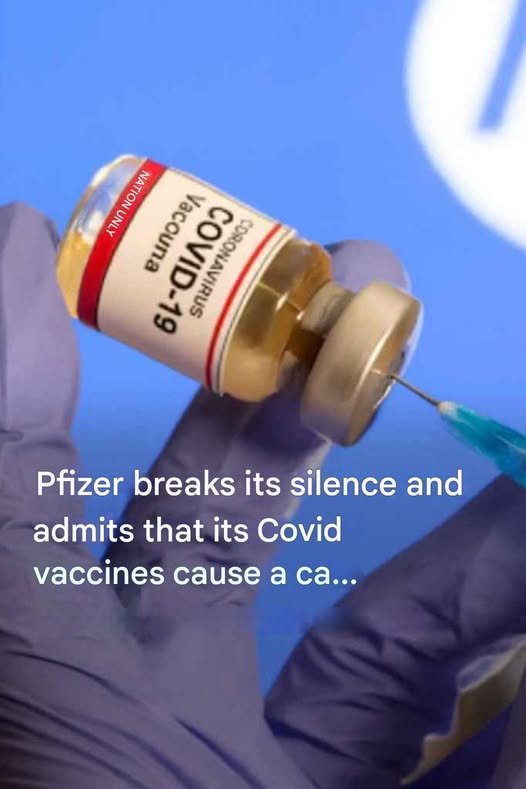
In the vast, rapidly shifting landscape of social media, few topics generate as much intense debate, fear, and polarization as the COVID-19 vaccines. Recently, an image has been circulating that features a gloved hand holding a vial of the Pfizer-BioNTech vaccine, overlaid with the bold text: “Pfizer breaks its silence and admits its Covid vaccine causes a ca…” The sentence is intentionally cut off, a classic engagement-bait tactic designed to leave the viewer in suspense, prompting them to click, comment, or search for the missing word.
The truncated text implies that the pharmaceutical giant has finally admitted to a severe, long-term health consequence—specifically, the word that begins with “ca.” When a claim this dramatic goes viral, it is essential to step back from the immediate shock value and examine the actual context. What is the truth behind this headline? Did Pfizer really make a sudden, shocking admission?
The reality is far more complex than a single, sensationalized sentence. The spread of this image is a masterclass in how legitimate scientific data, regulatory transparency, and complex medical terminology can be chopped up, decontextualized, and weaponized into viral misinformation.
This comprehensive guide will explore the origins of this viral claim. We will delve into the massive data releases from Pfizer, the rigorous safety monitoring systems in place globally, the actual biology of the vaccine, and the critical importance of interpreting regulatory documents with scientific literacy. By examining the full context, we can separate the legitimate, ongoing scientific discourse from the dangerous, fear-inducing digital rumor.
The Context of the Claim: What Did Pfizer Actually Release?
To understand this viral image, we must first understand the massive data release that sparked it.
The FOIA Requests and the Document Dumps
Throughout the COVID-19 pandemic, various organizations and individuals filed Freedom of Information Act (FOIA) requests, demanding full transparency regarding the data Pfizer and BioNTech submitted to regulatory bodies like the U.S. Food and Drug Administration (FDA). As a result, massive troves of documents—millions of pages—were released to the public.
These documents include clinical trial protocols, raw data from the trials, and, most notably, post-marketing adverse event reports. This is where the viral claim originates. When anti-vaccine advocates, independent researchers, or curious social media users downloaded these files, they found thousands of reports of severe health issues, including a condition that begins with “ca.”
The Fundamental Misunderstanding of Adverse Event Reporting
The critical missing context is how these adverse events are collected and what they mean.
When a vaccine is rolled out to millions of people, health authorities mandate that healthcare providers and manufacturers report any adverse event that occurs following vaccination. This is known as pharmacovigilance. In the United States, this is done through the Vaccine Adverse Event Reporting System (VAERS); in the UK, it is the Yellow Card system; and globally, it is the VigiBase system maintained by the World Health Organization.
The Golden Rule of Pharmacovigilance: An adverse event report simply means that a health issue happened after the vaccine was administered; it does not mean that the vaccine caused the health issue. Anyone—a doctor, a patient, or even a lawyer—can file a report to these databases. The reports are unverified, raw data points that are meant to be investigated by scientists, not taken as definitive proof of causation.
Therefore, the presence of an adverse event report for a severe disease in the Pfizer documents is not an “admission” that the vaccine causes that disease. It is a record that someone, somewhere, reported experiencing that illness after receiving the vaccine. Finding these reports and presenting them as evidence of causation is a fundamental statistical and scientific error.
Understanding the Biology: How mRNA Vaccines Work
To truly evaluate whether the vaccine could cause severe long-term cellular changes, we must look at the biology of the mRNA vaccine.
The Temporary Messenger
The Pfizer vaccine is an mRNA vaccine. mRNA stands for messenger ribonucleic acid. It is not DNA; it does not enter the nucleus of the cell and it cannot alter your genetic code. It is essentially a temporary set of instructions.
When the mRNA enters a cell, it instructs the cell’s machinery to produce a harmless piece of the SARS-CoV-2 spike protein. The body’s immune system recognizes this protein as foreign and mounts a defense, creating antibodies and T-cells. Once the immune response is built, the mRNA degrades naturally within a few days and is completely flushed from the body.
The Inability to Alter DNA
Because the mRNA never enters the cell nucleus, it is biologically impossible for it to integrate into human DNA or cause random genetic mutations. The concept that a vaccine alters the human genome is a persistent myth that contradicts basic molecular biology.
The Spike Protein and Cellular Stress
While some viral claims suggest the spike protein is highly toxic and causes widespread cellular damage, regulatory agencies and independent scientists have extensively studied its behavior. The amount of spike protein produced is small, localizes to the injection site and surrounding lymph nodes, and is rapidly cleared. There is no scientific consensus that the spike protein causes the specific severe systemic disease implied by the viral post.
The Regulatory Response: “Breaking Silence” vs. Ongoing Transparency
The idea that Pfizer “broke its silence” is a rhetorical device designed to suggest a cover-up. In reality, Pfizer, like all major pharmaceutical companies, operates under intense regulatory scrutiny.
Continuous Safety Monitoring
Since the beginning of the vaccine rollout, companies like Pfizer have been required to submit monthly safety update reports to the FDA and the European Medicines Agency (EMA). These reports detail all new safety data, including adverse events reported by users and healthcare providers. This is not a “breaking of silence”; it is the standard, mandated process of post-authorization safety surveillance.
The EMA and FDA Reviews
Both the FDA and the EMA have conducted multiple, comprehensive reviews of the real-world data. These reviews involve analyzing millions of patient records, comparing vaccinated populations to unvaccinated control groups, and investigating the incidence rates of various health conditions. To date, these agencies have consistently concluded that the benefits of the vaccines outweigh the risks, while continuing to monitor for rare side effects (such as myocarditis, which has been openly discussed and added to the product labels).
Why the “Admission” Claim Fails
The claim that Pfizer has “admitted” causation fails because a manufacturer submitting a list of reported adverse events is not an admission of causation. It is compliance with regulatory law. If a company failed to report these events, they would be violating FDA regulations. The viral image conflates the act of reporting an event with the scientific proof of that event.
The “Ca…” Tease: The Psychology of the Cut-Off Headline
The text in the image cuts off at a critical moment: “causes a ca…” This is not accidental; it is a deliberate tactic.
The Curiosity Gap
In digital marketing and social media, this is known as the “curiosity gap.” By providing just enough information to alarm the reader but withholding the final word, the creator forces the viewer to engage. They must click the post, read the comments, or Google the phrase to find out what the word is. This boosts the engagement metrics of the post, pushing it to a wider audience through the platform’s algorithm.
Preying on Fear
The words “causes a ca…” trigger immediate alarm. Given the global trauma of the pandemic, people are hyper-vigilant about their health. The implication that a widely administered medical intervention could be causing a devastating illness is a powerful emotional trigger. Fear bypasses logical processing; it makes people share information reflexively to “warn” their loved ones, without first verifying the facts.
The Danger of Incomplete Information
The tragic irony of this tactic is that the actual word, when revealed in the context of a scientific document, often loses its sensational power. An adverse event report is a single data point in a sea of millions. But by cutting off the sentence and removing the context, the creator turns a complex statistical nuance into a terrifying, unproven, and permanent claim.
Navigating the Data: How to Read Scientific Literature
The internet has democratized access to scientific data, which is a wonderful thing. However, raw data without context is like a medical textbook written in a foreign language. It requires careful interpretation.
The Difference Between Correlation and Causation
This is the most fundamental concept in statistics. Correlation means two things happen at the same time. Causation means one thing causes the other.
If 10,000 people get the vaccine and 10 of them subsequently develop a severe illness, there is a correlation. However, in a population of millions, 10 people might have developed that illness anyway, completely independent of the vaccine. To prove causation, scientists must calculate the background rate of the disease (how many people get it normally) and compare it to the rate in the vaccinated population. When this is done, the vast majority of “reported” adverse events are found to occur at the same or lower rates than in the general unvaccinated population.
The Role of Peer Review
When a genuine safety signal is identified—such as the rare risk of myocarditis in young males after the mRNA vaccine—it is investigated rigorously. The data is analyzed, peer-reviewed, and published in reputable medical journals. Regulatory agencies then update the public and the product labels. The viral post bypasses this entire rigorous process, relying instead on raw, unverified spreadsheets.
Contextualizing the “Document Dump”
The millions of pages of documents released to the public are not a curated list of the vaccine’s dangers. They are a massive, unfiltered administrative record. If you searched the medical records of any large group of people for a specific disease, you would find it. The existence of the record does not imply the cause.
The Global Impact of Vaccine Misinformation
The spread of these viral claims is not a harmless internet game. It has severe, real-world consequences.
Erosion of Public Trust
When sensationalized, decontextualized claims go viral, they erode public trust in health authorities. If people believe that Pfizer is hiding a devastating disease, they will be less likely to trust future public health advice, not just for COVID-19, but for other diseases as well.
Declining Vaccination Rates
Vaccine hesitancy driven by misinformation has led to a decline in routine childhood vaccinations in many parts of the world. Diseases that were once nearly eradicated, such as measles, are making a comeback. The viral “ca…” claim contributes to a general atmosphere of fear and suspicion surrounding all vaccines.
The Psychological Toll
For individuals who have received the vaccine, seeing these claims can cause immense psychological distress and anxiety. They may spend months worrying that they are harboring a hidden, fatal illness, leading to a condition known as “cyberchondria”—anxiety caused by online health searches.
Frequently Asked Questions
Did Pfizer admit that its vaccine causes a severe illness?
No. Pfizer did not “admit” causation. The documents released via FOIA requests contain adverse event reports—raw reports of health issues that occurred after vaccination. These are not proof of causation. Reporting an event is a legal requirement, not an admission of guilt.
What was the viral document actually about?
The viral post references documents that list adverse events reported to regulatory bodies (like VAERS or the EMA). These databases contain unverified reports from the public and healthcare providers. They are meant to be investigated by scientists to see if a safety signal exists, not to be taken as definitive proof of harm.
Why did the image cut off the word?
The text was intentionally cut off to create a “curiosity gap.” This is a social media tactic designed to force viewers to click on the post or read the comments to find the missing word. It is a form of clickbait that relies on fear and suspense rather than factual information.
Can the mRNA vaccine alter my DNA?
No. The mRNA in the vaccine never enters the nucleus of your cells, which is where DNA is stored. It delivers a temporary message to your cell’s protein-making machinery, and then it degrades and is removed from the body. It cannot alter your genetic code.
How do we know the vaccine is safe if it is new?
The mRNA technology has been studied for decades, though the COVID-19 vaccines were the first to receive emergency authorization. However, they have been subjected to the largest and most rigorous safety monitoring campaign in human history. Billions of doses have been administered globally, and real-world data from multiple countries consistently show that the benefits of the vaccine far outweigh the risks.
What is VAERS?
The Vaccine Adverse Event Reporting System (VAERS) is a passive surveillance system co-managed by the CDC and FDA. It collects reports of adverse events following vaccination. It is a tool for detecting potential safety issues, but it does not prove that a vaccine caused the event.
Why are there reports of severe illness in the documents?
In any population of hundreds of millions of people, some individuals will unfortunately develop severe illnesses. If a vaccine is administered to that population, some people will inevitably develop an illness shortly after vaccination. This is a coincidence of timing. The documents record these events, but they do not prove a link.
Should I trust the news or the documents?
You should trust the scientific consensus and the evaluations of international regulatory bodies. Regulatory agencies have teams of independent scientists and epidemiologists who analyze the raw data from the documents to determine if a safety signal exists. Relying on a single viral post or a raw data dump from social media can lead to dangerous misunderstandings.
How can I protect myself from health misinformation?
Always verify claims through reliable sources like the WHO, CDC, or major academic medical centers. Avoid sharing content that uses sensationalist, incomplete, or emotionally manipulative language. If a claim seems too dramatic to be true, it often is.
Are there any real side effects of the vaccine?
Yes. Like all medicines, the vaccine can cause side effects. Common side effects include a sore arm, fatigue, headache, and fever, which usually resolve in a few days. Rare side effects, such as anaphylaxis or myocarditis, have been identified and are publicly disclosed by regulatory agencies. The risks are small and well-documented.
Conclusion: The Power of Context in the Digital Age
The viral image of the Pfizer vaccine vial with the cut-off text is a powerful reminder of the dangers of decontextualized information. The claim that the company has admitted its product causes a devastating disease is built on a misunderstanding of regulatory processes, statistical analysis, and the difference between correlation and causation.
The documents that sparked this rumor are not a secret confession; they are a massive, unfiltered administrative record of a global health initiative. The presence of an adverse event report is not a smoking gun; it is a dot in a complex statistical puzzle that scientists are constantly analyzing.
In an era where information is abundant but context is scarce, critical thinking is our most valuable asset. We must learn to look beyond the sensational headline, to seek out the full story, and to rely on the rigorous, peer-reviewed scientific process rather than the viral fear-mongering of a social media post. The truth is rarely as simple as a cut-off sentence, but it is always far more reliable than a rumor designed to spark panic.