Flu and COVID-19 Vaccines 2026: Starting October 13, Who Is Eligible, Where to Get Them, and Are They Free?
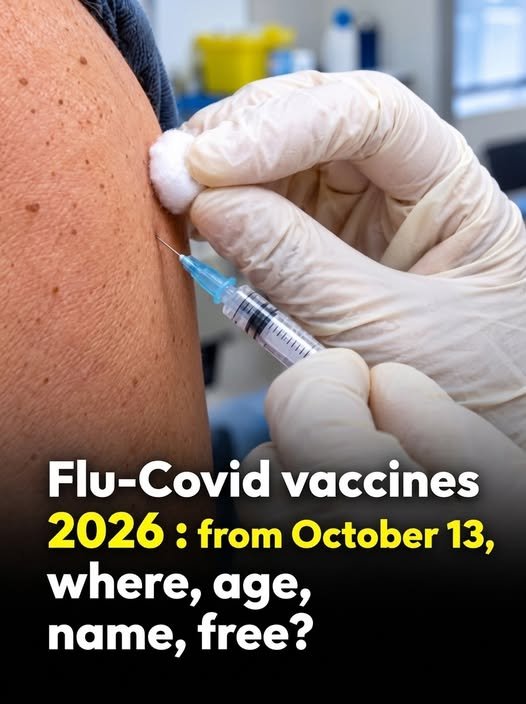
The image above features an injection being administered into a patient’s arm, alongside the text: “Flu-Covid vaccines 2026: from October 13, where, age, name, free?” This refers to the joint vaccination campaign against seasonal influenza and COVID-19, which begins on October 13, 2026, in mainland France .
This article provides a clear overview of the campaign, including who is eligible, how to get vaccinated, and what costs are covered.
When Does the Campaign Begin?
The joint vaccination campaign against influenza and COVID-19 starts on October 13, 2026 in mainland France, as well as in the Antilles and French Guiana . Two territories operate on different schedules: Mayotte began its campaign in September 2026, while La Réunion follows the southern hemisphere calendar .
The campaign is scheduled to end on January 31, 2027 for influenza .
Who Is Eligible?
The vaccination campaign targets the same priority groups for both influenza and COVID-19. These are individuals at higher risk of developing severe forms of either illness.
Priority Groups for Influenza and COVID-19 Vaccination
According to health authorities, the following groups are specifically targeted :
People aged 65 and over
Pregnant women, regardless of the stage of pregnancy
People with certain chronic conditions, including children from 6 months of age. These conditions include:
Respiratory conditions such as asthma, COPD, and chronic respiratory insufficiency
Cardiovascular conditions including severe heart failure, coronary artery disease, and a history of stroke
Type 1 and type 2 diabetes
Severe obesity (BMI of 40 kg/m² or higher)
Chronic kidney or liver disease
Immunodeficiency conditions, including cancer, HIV, and organ transplant recipients
People staying in follow-up care or medico-social accommodation facilities, regardless of their age
The entourage of infants under 6 months at risk of severe influenza and the entourage of immunocompromised individuals
Additionally, the vaccination is recommended for healthcare professionals and those in regular contact with vulnerable individuals to provide indirect protection .
For COVID-19, vaccination is also strongly recommended for people aged 80 and over, immunocompromised patients, and residents of nursing homes (Ehpad) or long-term care units, regardless of age .
Anyone who wishes to be vaccinated, even if they are not in a priority group, can receive a COVID-19 vaccine .
Where Can You Get Vaccinated?
Vaccinations can be administered by several healthcare professionals:
Physicians
Pharmacists (for people aged 5 and over for COVID-19, and 11 and over for influenza prescriptions)
Nurses
Midwives
Medical or pharmacy students (under supervision)
Vaccinations can take place in medical offices, pharmacies, or health centers . For influenza, the vaccine is typically collected from a pharmacy and then administered by a healthcare professional. However, a new measure in 2026 allows physicians, midwives, and nurses in private practice to directly stock and administer both influenza and COVID-19 vaccines during consultations .
Are They Free?
COVID-19 Vaccine
The COVID-19 vaccine is fully covered by French Health Insurance (Assurance Maladie) at 100% for everyone, regardless of whether they are in a priority group . There are no upfront costs.
Influenza Vaccine
Coverage for the influenza vaccine depends on individual circumstances :
For people in priority groups (at risk of severe illness): The vaccine and the injection are covered 100% by Assurance Maladie. Eligible individuals receive a personalized invitation and a voucher (bon de prise en charge) by mail, which serves as a prescription. This voucher allows them to collect the vaccine free of charge from a pharmacy.
For children aged 2 to 17 without chronic conditions: The vaccine is reimbursed at 65% .
For people aged 18 and over who are not in priority groups: The vaccine is not reimbursed by Assurance Maladie. They must pay for the vaccine and the injection, though some private health insurance (mutuelles) may cover part of the cost .
What Vaccines Are Available?
Influenza Vaccines 2026-2027
Five trivalent influenza vaccines are available for the 2026-2027 season :
Vaccine
Type
Age Recommendation
Efluelda
High-dose
65 years and over
Fluad
Adjuvanted
65 years and over
Flucelvax
Standard (cell-based)
All eligible ages
Influvac
Standard
All eligible ages
Vaxigrip
Standard
All eligible ages
For people aged 65 and over, Efluelda and Fluad are preferentially recommended, though standard-dose vaccines can also be used .
COVID-19 Vaccine 2026-2027
The COVID-19 vaccine available for this campaign is Comirnaty XFG, which targets the XFG sub-lineage of the Omicron variant . It is available in two formulations:
Comirnaty XFG 30 micrograms/dose for adults and children aged 12 and over
Comirnaty XFG 10 micrograms/dose for children aged 6 months to 11 years
The vaccine is ready to use without dilution .
Can You Get Both Vaccines at the Same Time?
Yes. Health authorities recommend concomitant vaccination against both influenza and COVID-19 when a person is eligible for both. The two injections can be administered on the same day, in two different sites (for example, one in each arm) .
If the vaccines are not administered at the same time, no minimum delay is required between the two injections .
Important: New Prescription Requirement for Influenza Vaccine
Since July 10, 2026, all influenza vaccines are subject to mandatory prescription. This does not require an additional medical consultation for most people. The prescription can be issued by a physician, midwife, pharmacist, or nurse (for people aged 11 and over). For eligible individuals, the voucher sent by Assurance Maladie serves as the prescription .
For children under 11, a prescription from a physician or midwife is required .
A Note on the Importance of Vaccination
Influenza and COVID-19 can cause serious complications, particularly for vulnerable populations. During the 2025-2026 season, influenza was responsible for approximately 12,140 deaths in France . Vaccination remains the most effective way to reduce the risk of severe illness and hospitalization.