he Anatomy of the Sciatic Nerve and the Agony of Sciatica: A Complete Guide to Relief and Recovery
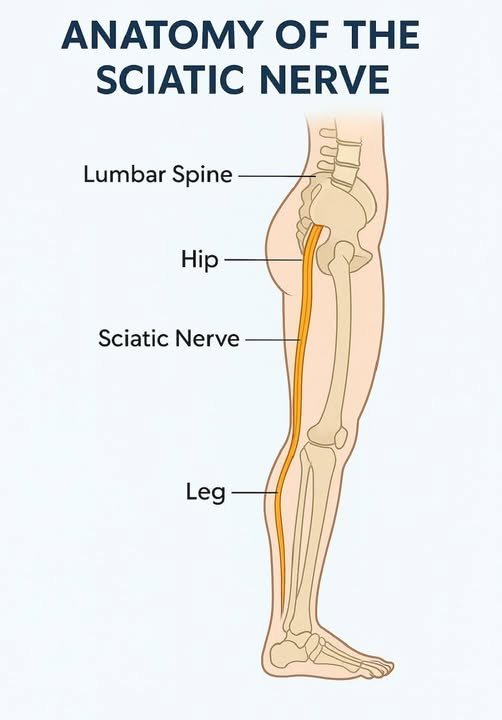
The human body is an intricate network of bones, muscles, and nerves, constantly working in harmony to allow us to move, feel, and function. Among the most vital and fascinating components of this network is the sciatic nerve. As vividly illustrated in the diagram, this remarkable structure begins in the lower back, travels through the hip, and extends all the way down the leg. It is the longest and widest single nerve in the human body. When this nerve functions correctly, we are hardly aware of its existence. But when it becomes irritated, compressed, or inflamed, it can unleash a specific, debilitating type of pain known as sciatica—a condition that millions of people grapple with every year.
Sciatica is not a disease in itself; rather, it is a symptom of an underlying medical condition. The shooting, burning pain that radiates from the lower back down the buttocks and into the leg is often a signal that something is pressing on the sciatic nerve along its extensive pathway. The diagram, showing the Lumbar Spine, the Hip, and the Sciatic Nerve traveling down the Leg, highlights the sheer distance this nerve covers. Because of its length, the source of the pain can originate in the lower back, the deep muscles of the buttocks, or even the pelvis.
This comprehensive guide will explore the complex anatomy of the sciatic nerve, detail the most common causes of sciatica, explain the classic symptoms that differentiate it from general back pain, and provide a step-by-step roadmap for diagnosis, treatment, and long-term prevention. By understanding the mechanics of this crucial nerve, you can better navigate the journey to recovery and reclaim your mobility and quality of life.
The Anatomy of the Sciatic Nerve: A Journey from Spine to Foot
To truly understand sciatica, it is essential to understand the anatomy shown in the image. The sciatic nerve is not a single, solid cord from start to finish. It is actually formed by a bundle of nerve roots.
The Lumbar Spine Origin
The journey begins in the lower back, specifically in the lumbar spine (L4 and L5) and the sacral spine (S1 to S3). The nerve roots exit the spinal cord through small openings between the vertebrae called foramina. These individual nerve roots merge together to form the thick, trunk-like structure we call the sciatic nerve.
Through the Hip and Pelvis
From the lower spine, the sciatic nerve passes deep into the pelvis and exits through a large opening called the greater sciatic foramen. It travels beneath the piriformis muscle, a deep muscle in the buttocks that is crucial for hip rotation. For many people, the sciatic nerve passes directly through this muscle. This anatomical proximity is why issues with the piriformis muscle can cause sciatica.
Down the Leg
Once it enters the back of the thigh, the sciatic nerve continues its journey downward, providing sensation and motor function to the lower leg. Interestingly, around the knee, the sciatic nerve splits into two major branches: the tibial nerve and the common peroneal nerve. These branches continue down the calf and into the foot and toes, which is why sciatica symptoms can often be felt as far down as the sole of the foot or the big toe.
What Exactly is Sciatica? Understanding the Symptom
Sciatica is a term used to describe the symptoms of pain, numbness, tingling, or weakness that radiate along the path of the sciatic nerve. It is important to remember that sciatica is a symptom, not a diagnosis. It is essentially a red alert from your body that the sciatic nerve is being compressed or irritated.
The Mechanism of Pain
The pain associated with sciatica is usually neuropathic, meaning it is caused by damage or dysfunction in the nervous system rather than a direct injury to a muscle or bone. When the nerve is compressed, its blood supply is restricted, leading to inflammation. This causes the nerve to send erratic pain signals to the brain. The pain is often described as sharp, shooting, burning, or electric-like, and it typically affects only one side of the body.
The Root Causes: Why Does the Sciatic Nerve Get Irritated?
The diagram shows the nerve traveling through a narrow, complex anatomical space. There are several points along this pathway where the nerve can be pinched or compressed.
1. Herniated Discs
This is the most common cause of sciatica, particularly in younger and middle-aged adults. Between each vertebra in your spine are gel-filled cushions called intervertebral discs. A herniated disc occurs when the soft inner gel pushes through a tear in the tough outer layer. If this herniation occurs in the lower back (L4-L5 or L5-S1), the extruded material can press directly against the nerve roots that form the sciatic nerve.
2. Lumbar Spinal Stenosis
Spinal stenosis is a condition characterized by the narrowing of the spinal canal. It is most commonly caused by age-related changes, such as the thickening of ligaments or the growth of bone spurs (osteophytes). As the canal narrows, there is less room for the nerves, leading to compression and sciatica. This is more common in older adults.
3. Piriformis Syndrome
The piriformis muscle runs from the lower spine to the top of the thigh and is located deep within the buttocks. If this muscle spasms or becomes tight, it can compress the sciatic nerve that runs directly beneath it. This condition is known as piriformis syndrome and can mimic the symptoms of a herniated disc. It is often seen in runners, cyclists, and people who sit for long periods.
4. Spondylolisthesis
This condition occurs when one vertebra slips forward over the one below it. This slippage can narrow the space for the nerves and compress the sciatic nerve roots. It is often caused by degenerative changes or a stress fracture in the spine.
5. Trauma or Injury
Direct trauma to the lower back or pelvis, such as from a fall or a car accident, can cause inflammation or damage that leads to nerve compression.
Recognizing the Symptoms: The Classic Signs of Sciatica
The symptoms of sciatica are distinct and follow a specific pattern. They typically occur on one side of the body.
Pain: The hallmark of sciatica is pain that radiates from the lower back or buttock down the back of the thigh and into the calf. It can be a mild ache or a sharp, searing, unbearable pain.
Numbness and Tingling: Patients often report a “pins and needles” sensation in the leg or foot, similar to the feeling of a limb falling asleep.
Muscle Weakness: The affected leg may feel weak, making it difficult to walk, stand on tiptoes, or lift the foot. This weakness can lead to a noticeable limp.
Worsening with Movement: The pain is typically aggravated by movements such as coughing, sneezing, sitting for long periods, or bending forward.
Diagnosing Sciatica: How Doctors Find the Source
If you are experiencing the symptoms of sciatica, seeking a proper medical diagnosis is essential. A doctor will typically perform a comprehensive evaluation.
1. Medical History and Physical Examination
The doctor will ask about the nature of your pain, its location, and what makes it worse. They will perform a physical exam, checking your muscle strength, reflexes, and sensation in the affected leg. They may also perform tests like the straight leg raise test, where you lie on your back and the doctor gently raises your leg; if this triggers pain, it suggests nerve irritation.
2. Imaging Tests
X-rays: These can show the bones of the spine and reveal fractures, bone spurs, or spinal instability.
MRI (Magnetic Resonance Imaging): An MRI is the gold standard for diagnosing sciatica. It provides detailed images of the soft tissues, including the discs, spinal cord, and nerves, allowing doctors to see exactly where the nerve is being compressed.
CT Scans: These can provide detailed views of the bones and are sometimes used if an MRI is not possible.
Electromyography (EMG): This test measures the electrical activity of muscles and the speed of nerve impulses. It can help pinpoint the specific nerve root that is affected.
Treatment Options: A Path to Relief
The good news is that the vast majority of sciatica cases (over 90%) resolve with conservative, non-surgical treatment within a few weeks to a few months.
1. Conservative Management
Rest and Activity Modification: While total bed rest is no longer recommended, avoiding activities that aggravate the pain is crucial. Gentle movement is important to prevent stiffness.
Over-the-Counter Medications: NSAIDs (like ibuprofen or naproxen) can help reduce inflammation and pain.
Hot and Cold Therapy: Ice packs can reduce inflammation in the acute phase, while heating pads can help relax tense muscles.
2. Physical Therapy
A physical therapist is your greatest ally in recovering from sciatica. They will design a customized program of stretching and strengthening exercises to relieve pressure on the nerve, improve flexibility, and build core strength to support the spine.
3. Medical Interventions
If conservative measures fail, a doctor may recommend:
Corticosteroid Injections: An injection of a powerful anti-inflammatory medication directly into the epidural space around the nerve roots can provide significant relief.
Muscle Relaxants: To alleviate painful muscle spasms.
Surgery: In rare cases of severe, progressive neurological deficits (like loss of bowel/bladder control) or when conservative treatments fail after several months, surgery (such as a microdiscectomy or laminectomy) may be necessary to remove the source of compression.
Exercises and Stretches to Tame Sciatica
Gentle, targeted movements can be incredibly helpful in relieving sciatic nerve pain. Always consult a professional before starting a new exercise routine.
1. The Knee-to-Chest Stretch
Lie on your back and gently pull one knee toward your chest. Hold for 30 seconds and repeat on the other side. This helps to stretch the lower back muscles.
2. The Piriformis Stretch (Figure Four)
Lie on your back with both knees bent. Cross one ankle over the opposite knee. Reach through and pull the supporting thigh toward your chest. You should feel a stretch in your buttocks. Hold for 30 seconds.
3. Cat-Cow Stretch
On your hands and knees, gently arch your back upward (cat) and then allow it to sag toward the floor (cow). This promotes spinal mobility and relieves tension.
4. Core Strengthening: The Bird-Dog
On your hands and knees, extend one arm and the opposite leg straight out. Hold for a few seconds, maintaining a flat back. This strengthens the core muscles that support the spine.
Preventing Sciatica: Lifestyle Adjustments
Maintain a Healthy Weight: Excess weight, particularly around the abdomen, puts strain on the lower back.
Practice Good Posture: When sitting, ensure your feet are flat on the floor and your lower back is supported. Avoid slouching.
Lift Correctly: When lifting heavy objects, bend at the knees, keep your back straight, and hold the object close to your body.
Stay Active: Regular exercise, especially walking and swimming, keeps the muscles strong and flexible.
When to Seek Emergency Medical Care
While most sciatica is treatable, certain symptoms require immediate medical attention. Seek emergency care if you experience:
Loss of bowel or bladder control.
Numbness in the “saddle” area (the inner thighs and buttocks).
Severe, sudden weakness in one or both legs. These are signs of Cauda Equina Syndrome, a rare but serious medical emergency that requires immediate surgery to prevent permanent paralysis and incontinence.
Conclusion: Understanding the Path to Recovery
The anatomy of the sciatic nerve, as illustrated in the diagram, reveals a long and complex pathway that connects the spine to the tips of our toes. When this vital nerve is compressed, the resulting pain can be debilitating. However, sciatica is not a life sentence. By understanding the root causes, recognizing the symptoms, and pursuing a comprehensive treatment plan, the vast majority of people can find relief. Listen to your body, seek professional guidance, and take proactive steps to strengthen your core and protect your spine. With patience and the right approach, you can tame the sciatic nerve and return to a life free from pain.
Frequently Asked Questions
What is the sciatic nerve?
The sciatic nerve is the longest and widest nerve in the human body. It begins in the lower back (lumbar spine), travels through the buttocks, and extends down the back of each leg to the foot.
What does sciatica pain feel like?
Sciatica pain is typically a sharp, shooting, or burning pain that radiates from the lower back down the buttocks and into the leg. It is often accompanied by numbness, tingling, or muscle weakness.
What is the most common cause of sciatica?
A herniated disc in the lower back (lumbar spine) is the most common cause. It occurs when the soft inner material of a spinal disc pushes out and presses against the sciatic nerve roots.
How long does sciatica take to heal?
In most cases, sciatica improves with conservative treatment (rest, physical therapy, medication) within 4 to 6 weeks. Severe cases may take longer or require surgical intervention.
Can I exercise with sciatica?
Yes, gentle exercise is often beneficial. Stretching and core-strengthening exercises can help relieve pressure on the nerve. However, avoid any activity that causes sharp pain. Consult a physical therapist for a personalized plan.
Is walking good for sciatica?
Walking is generally good for sciatica as it promotes circulation and keeps the muscles active. However, if walking worsens the pain, try shorter distances or rest more frequently.
What is piriformis syndrome?
Piriformis syndrome is a condition where the piriformis muscle in the buttocks spasms or tightens, compressing the sciatic nerve. It causes symptoms very similar to a herniated disc.
When should I see a doctor for sciatica?
You should see a doctor if your pain is severe, does not improve with rest, or is accompanied by severe weakness or loss of bowel/bladder control (which is a medical emergency).
Can sciatica be prevented?
Yes. Maintaining a healthy weight, practicing good posture, lifting correctly, and staying physically active can significantly reduce the risk of developing sciatica.
What is the straight leg raise test?
The straight leg raise test is a physical exam maneuver where you lie on your back and the doctor lifts your leg straight up. If this reproduces the shooting pain down your leg, it is a strong indicator of sciatic nerve irritation.