Normal Blood Pressure Values by Age: What the Numbers Really Mean
Blood pressure is one of the most important indicators of cardiovascular health. It reflects the force exerted by circulating blood against the walls of the arteries. Consistently high blood pressure, known as hypertension, is a leading risk factor for heart attack, stroke, kidney disease, and premature death. Yet the question of what constitutes “normal” blood pressure is often misunderstood. Many people believe that normal blood pressure changes significantly with age and that higher readings are acceptable simply because someone is older. That belief is partially true when it comes to average population values, but it is dangerously misleading when applied to individual health decisions.
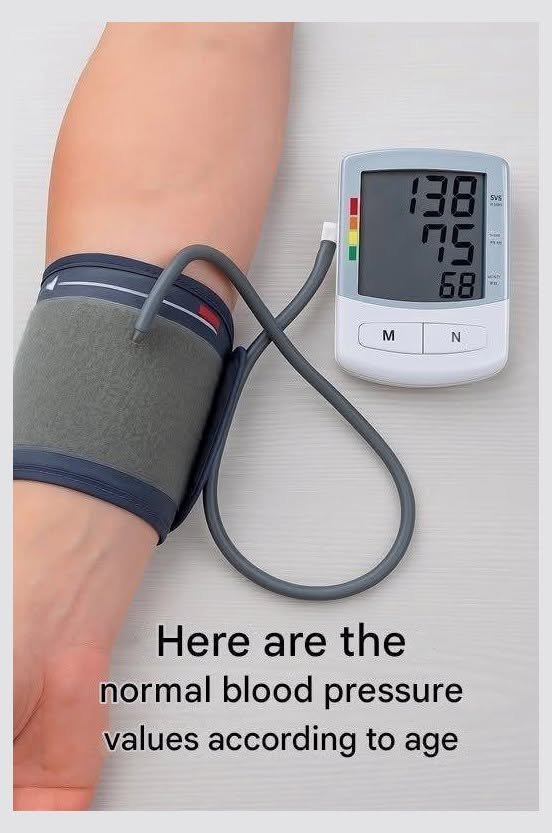
The image above shows a digital blood pressure monitor displaying a reading of 138/75 mmHg with a pulse of 68 beats per minute. For an adult, that reading falls into the category of Stage 1 hypertension under the most widely used American guidelines. However, the same reading might be interpreted differently depending on the person’s age, overall health, and whether the measurement was taken correctly. This article explains what blood pressure is, how normal values are defined, how average readings change across the lifespan, and why the same thresholds apply to most adults regardless of age.
What Is Blood Pressure?
Blood pressure is recorded as two numbers, written as systolic pressure over diastolic pressure. The systolic number is the higher value and represents the pressure in the arteries when the heart contracts and pumps blood. The diastolic number is the lower value and represents the pressure in the arteries when the heart relaxes between beats. Both numbers are measured in millimeters of mercury, abbreviated as mmHg.
A reading of 120/80 mmHg, for example, means a systolic pressure of 120 and a diastolic pressure of 80. The systolic number is often the focus in older adults because arterial stiffness tends to raise systolic pressure, but both numbers matter for assessing cardiovascular risk. A high systolic pressure with a normal diastolic pressure is called isolated systolic hypertension, a common pattern in older adults.
Blood pressure is not a fixed number. It fluctuates throughout the day in response to activity, stress, sleep, temperature, caffeine, and many other factors. A single elevated reading does not necessarily mean a person has hypertension, just as a single normal reading does not guarantee perfect cardiovascular health. Diagnosis requires repeated measurements taken under proper conditions over time.
The Clinical Categories of Blood Pressure
The most widely used classification in the United States comes from the 2017 guideline issued by the American Heart Association and the American College of Cardiology. These categories apply to adults aged 18 and older, regardless of age, sex, or race, with some caveats for specific medical conditions.
Category
Systolic (mmHg)
Diastolic (mmHg)
Normal
less than 120
and
less than 80
Elevated
120–129
and
less than 80
Stage 1 hypertension
130–139
or
80–89
Stage 2 hypertension
140 or higher
or
90 or higher
Hypertensive crisis
higher than 180
and/or
higher than 120
Under these definitions, a reading of 138/75 mmHg falls into Stage 1 hypertension because the systolic pressure is between 130 and 139. The diastolic pressure of 75 is within the normal range, but either an elevated systolic or an elevated diastolic reading is sufficient to classify the reading as hypertension. The pulse of 68 beats per minute is within the normal resting range for adults, typically defined as 60 to 100 beats per minute.
It is important to note that these thresholds are not universally agreed upon. European guidelines, for example, continue to define hypertension as 140/90 mmHg or higher, with a “high-normal” category of 130–139/85–89 mmHg. The differences reflect ongoing debate about the balance between early treatment and the risk of overdiagnosis. For the purpose of this article, the American categories are used because they are widely cited and provide clear thresholds for discussion.
Why Age Matters: How Blood Pressure Changes Across the Lifespan
Although the diagnostic thresholds for hypertension remain the same for all adults, average blood pressure does change with age. Understanding these age-related trends helps explain why older adults are more likely to develop high blood pressure and why monitoring becomes increasingly important over time.
Childhood and Adolescence
Blood pressure in children is not interpreted using the same fixed numbers as in adults. Instead, pediatricians use percentile charts that account for the child’s age, sex, and height. A child is considered to have normal blood pressure if the reading is below the 90th percentile for their age, sex, and height. Readings between the 90th and 95th percentiles are considered elevated, and readings at or above the 95th percentile are classified as hypertension.
Typical average systolic pressures in children are much lower than in adults. For example, a healthy toddler might have a systolic pressure around 90 to 105 mmHg, while an adolescent might average around 112 to 128 mmHg. These values rise gradually as the child grows and the cardiovascular system matures.
Young Adults (Ages 18 to 39)
In young adulthood, blood pressure tends to be at its lowest and most stable. Average readings for men are often around 119/70 mmHg, with a common range of 110–130 systolic over 70–85 diastolic. Women in this age group typically have slightly lower averages, often around 110/68 mmHg, with a range of 100–120 systolic over 60–80 diastolic. The difference is partly attributed to the protective effects of estrogen on blood vessel flexibility.
Even in this age group, however, the diagnostic thresholds for hypertension apply. A young adult with a sustained reading of 130/80 mmHg or higher has Stage 1 hypertension, even if that reading is close to the average for their age.
Middle-Aged Adults (Ages 40 to 59)
As people enter middle age, blood pressure begins to creep upward. This is largely due to gradual stiffening of the arteries and the accumulation of plaque, as well as changes in body weight, diet, and activity levels. Average readings for men rise to approximately 124/77 mmHg, with a common range of 120–140 systolic over 80–90 diastolic. Women in this age group average around 122/74 mmHg, with a range of 110–130 systolic over 70–85 diastolic.
The transition through menopause is particularly important for women. Declining estrogen levels reduce the protective effect on blood vessels, and blood pressure often rises more steeply after menopause. By the late 50s and early 60s, average blood pressure in women may surpass that of men.
Older Adults (Ages 60 and Older)
In older adulthood, systolic blood pressure continues to rise due to increasing arterial stiffness, while diastolic pressure may plateau or even decline slightly. This pattern is why isolated systolic hypertension becomes more common with age. Average readings for men are typically around 133/69 mmHg, with a range of 130–150 systolic over 80–90 diastolic. Women in this age group average around 139/68 mmHg, with a range of 120–140 systolic over 70–85 diastolic.
These averages are not targets. A reading of 150/80 mmHg may be common in an 80-year-old, but it is still associated with increased cardiovascular risk. The fact that high blood pressure is common in older adults does not mean it is normal or harmless. Treatment decisions in older adults are individualized, taking into account overall health, frailty, and the risk of side effects from medication, but the goal remains to bring blood pressure closer to the normal range when it can be done safely.
Why “Normal” Does Not Change With Age for Adults
A common misconception is that the definition of normal blood pressure rises with age. This is not supported by major guidelines. The thresholds for normal, elevated, and hypertension are the same for a 30-year-old and a 70-year-old. What changes is the average reading in the population and the prevalence of risk factors that push blood pressure upward.
The reason for maintaining the same thresholds is that the risks associated with high blood pressure do not disappear with age. Elevated blood pressure at any age increases the risk of stroke, heart attack, heart failure, kidney disease, and cognitive decline. Treating high blood pressure in older adults has been shown to reduce these risks. The decision to treat, however, is not based on age alone. It depends on the person’s overall health, the presence of other conditions, and the potential for side effects.
Interpreting the Reading in the Image
The monitor in the image shows 138/75 mmHg and a pulse of 68. For an adult, this is a Stage 1 hypertension reading under the American guidelines. It is not a hypertensive crisis, and it is not necessarily an emergency. However, it is not a “normal” reading either.
Several factors could influence this single measurement. Blood pressure fluctuates, and a reading taken after coffee, exercise, stress, or without proper rest may be higher than a person’s true baseline. The cuff size and position also matter. A cuff that is too small can produce artificially high readings, and an arm that is not supported at heart level can affect the result.
The appropriate response to a reading like this is not panic. It is to take additional readings at different times under proper conditions, record them, and discuss them with a healthcare provider. If the average of multiple readings remains in the Stage 1 range, a clinician can assess overall cardiovascular risk and recommend lifestyle changes or medication if needed.
How to Measure Blood Pressure Correctly
Accurate measurement is essential for interpreting blood pressure values. A single careless reading can be misleading, leading to unnecessary anxiety or false reassurance. The following steps reflect standard recommendations from the American Heart Association and other health authorities.
Before the Measurement
Avoid caffeine, exercise, and smoking for at least 30 minutes before measuring. Empty your bladder, because a full bladder can temporarily raise blood pressure. Sit quietly for five minutes before taking the reading.
During the Measurement
Sit in a chair with your back supported and both feet flat on the floor. Do not cross your legs. Rest your arm on a table so that the cuff is at the same level as your heart. Use a cuff that fits properly; a cuff that is too small can give a falsely high reading. Do not talk during the measurement.
After the Measurement
Take at least two readings, one minute apart, and record the average. Measure at the same times each day, such as morning and evening, to track patterns. Bring your readings to medical appointments so your clinician can see the trend rather than a single number.
Factors That Affect Blood Pressure
Many factors influence blood pressure, and understanding them helps put individual readings in context.
Age: Arterial stiffness increases with age, raising systolic pressure.
Genetics and family history: A family history of hypertension increases risk.
Weight: Excess body weight, particularly around the abdomen, is a major risk factor.
Diet: High sodium intake, low potassium intake, and excessive alcohol consumption can raise blood pressure.
Stress: Chronic stress can raise blood pressure, and acute stress can cause temporary spikes.
Medications: Some medications, including certain decongestants, nonsteroidal anti-inflammatory drugs, and stimulants, can raise blood pressure.
Medical conditions: Kidney disease, thyroid disorders, sleep apnea, and diabetes can affect blood pressure.
White coat and masked hypertension: Some people have higher readings in a clinical setting (white coat hypertension) or normal readings in the clinic but elevated readings at home (masked hypertension).
When to See a Doctor
A single elevated reading is not a diagnosis. However, certain situations warrant prompt medical attention.
Consistently elevated readings: If home readings are repeatedly 130/80 mmHg or higher, schedule an appointment with a healthcare provider.
Readings of 180/120 mmHg or higher: This is a hypertensive crisis. Wait five minutes and measure again. If the reading remains that high, contact a doctor immediately. If you also have chest pain, shortness of breath, back pain, numbness, weakness, vision changes, or difficulty speaking, call emergency services.
Symptoms of severe hypertension: Severe headache, chest pain, shortness of breath, dizziness, or vision changes should be evaluated urgently.
Low blood pressure with symptoms: Readings below 90/60 mmHg with dizziness, fainting, or fatigue may indicate a problem, especially in older adults.
Prevention and Management
For most people, lifestyle changes are the first line of defense against high blood pressure. These changes can also reduce the need for medication or enhance the effectiveness of prescribed drugs.
Follow a heart-healthy diet: The DASH diet, rich in fruits, vegetables, whole grains, and lean proteins, is specifically designed to lower blood pressure. Reduce sodium intake, ideally to less than 2,300 milligrams per day, with an ideal target of 1,500 milligrams for people with hypertension.
Exercise regularly: Aim for at least 150 minutes of moderate-intensity aerobic activity per week, plus strength training.
Maintain a healthy weight: Losing even a modest amount of weight can lower blood pressure.
Limit alcohol: Moderate drinking is defined as up to one drink per day for women and two for men, but less is better for blood pressure.
Quit smoking: Smoking damages blood vessels and raises blood pressure.
Manage stress: Relaxation techniques, adequate sleep, and social support can help.
Take medications as prescribed: If lifestyle changes are not enough, medication may be necessary. Do not stop or change medications without consulting a healthcare provider.
Frequently Asked Questions
Q: Is 120/80 still considered normal blood pressure? Under the 2017 American Heart Association and American College of Cardiology guidelines, normal blood pressure is less than 120/80 mmHg. A reading of exactly 120/80 is classified as “elevated,” not normal. This change was made because even mildly elevated blood pressure increases cardiovascular risk over time.
Q: Does normal blood pressure change with age? The diagnostic thresholds for hypertension do not change with age. The same categories apply to all adults. However, average blood pressure in the population tends to rise with age, especially systolic pressure. It is important not to confuse population averages with individual health targets.
Q: What is a normal blood pressure for a 70-year-old? The same thresholds apply. Normal is less than 120/80 mmHg. Many older adults have higher readings, but that does not mean the higher readings are normal or without risk. Treatment decisions are individualized based on overall health.
Q: Is 138/75 a high blood pressure? Yes, under the American guidelines, 138/75 mmHg falls into Stage 1 hypertension because the systolic pressure is between 130 and 139. A single reading is not a diagnosis, but repeated readings in this range warrant a conversation with a healthcare provider.
Q: What is isolated systolic hypertension? Isolated systolic hypertension is a pattern in which systolic pressure is elevated (130 mmHg or higher) while diastolic pressure is normal (less than 80 mmHg). It is common in older adults due to arterial stiffness and is associated with increased cardiovascular risk.
Q: How often should I check my blood pressure? If you have normal blood pressure, checking at routine medical visits is generally sufficient. If you have elevated readings or a diagnosis of hypertension, home monitoring is often recommended. Your doctor can advise on the frequency and target range.
Q: Can stress cause high blood pressure? Acute stress can cause temporary spikes in blood pressure. Chronic stress can contribute to sustained high blood pressure, often through unhealthy coping behaviors such as poor diet, inactivity, and alcohol use.
Q: What should I do if my blood pressure is 180/120? Wait five minutes and measure again. If it remains that high, contact a healthcare provider immediately. If you have symptoms such as chest pain, shortness of breath, weakness, vision changes, or difficulty speaking, call emergency services.
Q: Can children have high blood pressure? Yes. Blood pressure in children is assessed using percentile charts based on age, sex, and height. A child with a reading at or above the 95th percentile for their age is considered to have hypertension and should be evaluated by a pediatrician.
Q: Are home blood pressure monitors accurate? Home monitors can be accurate if they are validated devices and used correctly. Choose a monitor with a properly fitting cuff, follow the measurement instructions, and bring the device to a medical appointment to compare readings with the clinic’s monitor.
Conclusion
Normal blood pressure values by age are a common source of confusion. The key distinction is between population averages and clinical thresholds. Average blood pressure does tend to rise with age, particularly systolic pressure, due to arterial stiffening and accumulated risk factors. However, the definition of normal blood pressure—less than 120/80 mmHg—does not change for adults. A reading of 130/80 mmHg or higher is hypertension at any age, even if it is close to the average for a person’s age group.
The reading in the image, 138/75 mmHg, is a Stage 1 hypertension reading under the American guidelines. It is a prompt to measure again under proper conditions, record the results, and discuss them with a healthcare provider. It is not a reason for panic, but it is not a reading to ignore.
Blood pressure is one of the most modifiable risk factors for cardiovascular disease. Regular monitoring, accurate measurement, a heart-healthy lifestyle, and appropriate medical care can help keep blood pressure in a safer range. Understanding the numbers—and what they mean at every age—is an important step toward protecting long-term health.