Meta Description: Bake the ultimate Hungarian Christmas Walnut Roll (Diós Bejgli). This comprehensive guide covers the soft yeasted dough, rich walnut filling, and secrets to a perfect, crackly crust.
Primary Focus Keyword: Hungarian Christmas Walnut Roll
Search Intent: Informational and Transactional (users want to learn about the cultural significance of the pastry and find a reliable, step-by-step recipe to bake it).
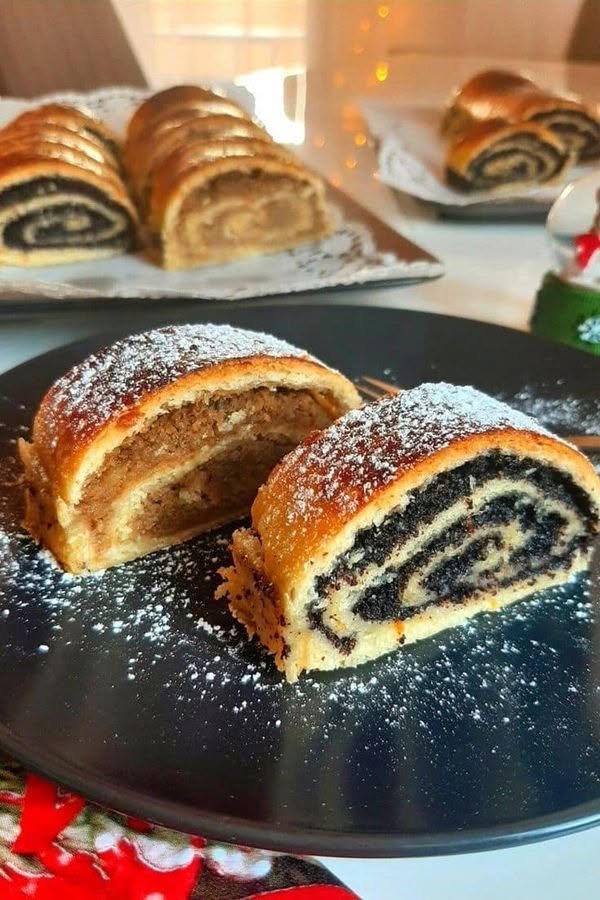
Suggested Featured Image Alt Text: Sliced Hungarian Christmas Walnut Roll (Diós Bejgli) dusted with powdered sugar on a black plate, revealing the spiral walnut filling inside a golden-brown crust.
Introduction
The Hungarian Christmas Walnut Roll, known locally as Diós Bejgli, is the undisputed king of the Hungarian holiday dessert table. For generations, the aroma of sweet, spiced walnuts and buttery, yeasted dough baking in the oven has signaled the arrival of the festive season. This iconic pastry is a centerpiece of Hungarian culinary tradition, a labor of love that is meticulously crafted in home kitchens across the country every December.
Unlike a quick bread or a simple pastry, Diós Bejgli is a masterpiece of texture and flavor. It features a tender, rich dough—often enriched with egg yolks, butter, and sour cream—wrapped tightly around a generous, dense filling of finely ground walnuts, sugar, and warm spices. The result is a stunning spiral of flavor in every slice, encased in a glossy, golden-brown crust. While social media captions often promise “5-minute” recipes, the truth is that making authentic Bejgli requires patience, precision, and a little bit of time. However, the reward is a pastry that literally melts in your mouth, delivering a comforting, nostalgic taste that is deeply rooted in Central European heritage.
This comprehensive guide will walk you through the entire process of creating this beloved pastry at home. We will explore the rich cultural history of the walnut roll, provide detailed, step-by-step instructions for achieving the perfect dough and filling, and share professional tips to ensure your Bejgli has the signature crackly crust and perfect spiral. Whether you are continuing a family tradition or starting a new one, this recipe will help you bring a taste of an authentic Hungarian Christmas into your home.
Number of Servings: Makes 2 large rolls (about 16–20 slices)
Difficulty Level: Intermediate
Cooking Method: Baking
Cuisine: Hungarian
Course: Dessert, Snack
Estimated Calories per Serving: Approximately 250–300 kcal per slice (estimate only; actual values will vary based on slice size and exact ingredients).
What is a Hungarian Christmas Walnut Roll (Diós Bejgli)?
D Diós Bejgli is a traditional rolled pastry that is a staple of the Hungarian Christmas table. It is a type of sweet bread or nut roll, distinct from a strudel because it uses a rich, yeasted dough rather than a paper-thin, unleavened pastry. The dough is rolled out into a rectangle, covered with a thick, sweet walnut paste, and carefully rolled into a log. The log is then baked until the crust is a beautiful, shiny golden brown.
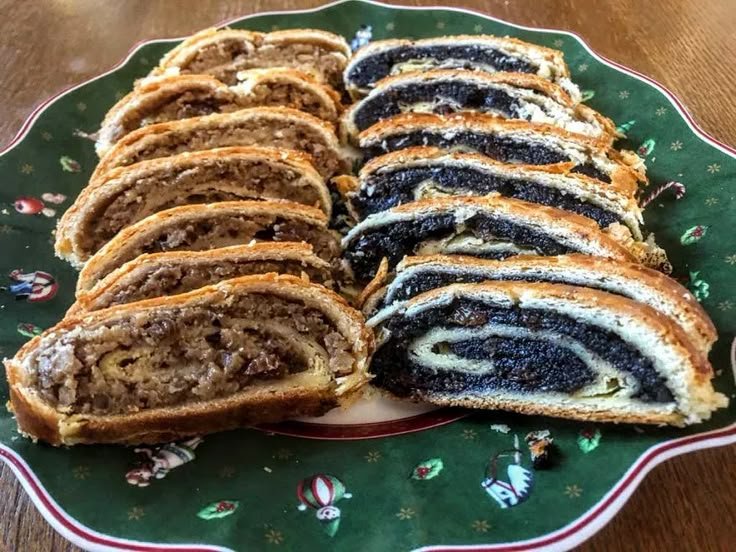
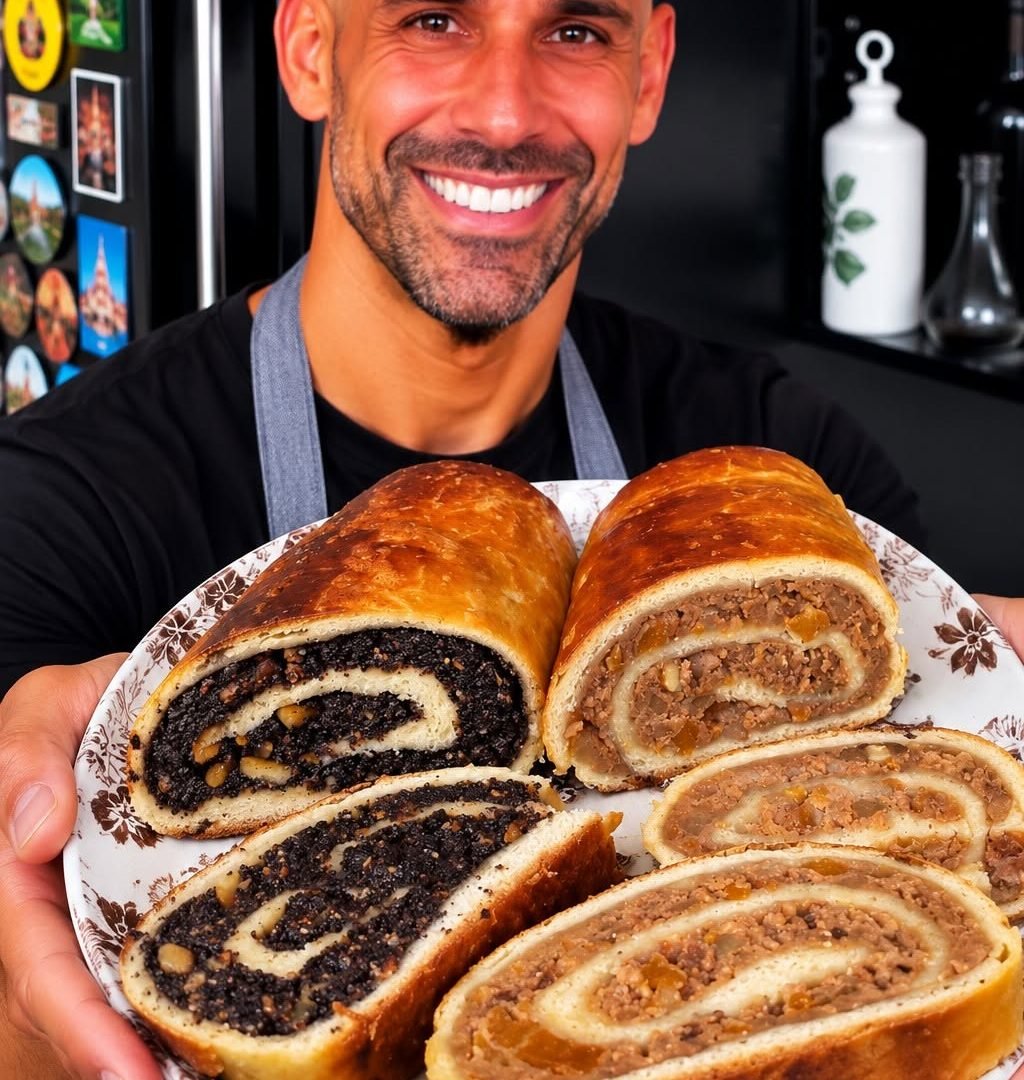
The defining characteristics of a perfect Diós Bejgli are its high filling-to-dough ratio and its texture. The dough should be soft and slightly tender, yielding easily to the tooth, while the walnut filling should be rich, slightly grainy, and aromatic with cinnamon and vanilla. Unlike American nut rolls, which can sometimes be overly sweet and doughy, the Hungarian version balances the sweetness of the filling with the subtle richness of the dough. The pastry is traditionally sliced into rounds, revealing a beautiful spiral pattern, and is often served alongside its sister pastry, the Poppy Seed Roll (Mákos Bejgli), as seen in the background of the image.
Hungarian Culinary Background
The tradition of baking Bejgli is deeply woven into the fabric of Hungarian culture. While the pastry is now considered a quintessential Hungarian Christmas treat, its origins are actually rooted in neighboring regions. The name is believed to derive from the German word Beugel (meaning a crescent or horseshoe shape), and it likely arrived in Hungary via Austrian and German settlers in the 19th century. The first known recipe appeared in a Hungarian cookbook in 1830, and over time, Hungarian bakers perfected the dough and the filling, making it their own.
In Hungary, the holiday season is synonymous with the scent of Bejgli. It is a pastry that represents family, togetherness, and hospitality. In many homes, the process of making it is a multi-generational event: grandparents might prepare the walnut filling, parents roll out the dough, and children help with the egg wash or the final dusting of powdered sugar.
There is also a bit of culinary folklore attached to the walnut roll. Walnuts are a symbol of abundance and fertility, making them a fitting ingredient for a holiday celebrating the end of the year and the hope for a prosperous new one. The pastry is often baked in advance, as it actually improves in flavor after a few days, making it the perfect make-ahead dessert for the busy holiday season.
Ingredients You Will Need
This recipe yields two large, generous Diós Bejgli rolls. It is essential to use a kitchen scale for the best results, as baking is a science, especially when working with yeasted doughs.
For the Dough (Tészta)
4 cups (500 g) all-purpose flour: Provides the structure for the pastry.
1 cup (225 g) unsalted butter, cold and cubed: The key to a rich, tender crumb. Keep it cold until the last minute.
1/2 cup (60 g) powdered sugar: Adds subtle sweetness to the dough without making it overly sweet.
2 large egg yolks: Adds richness and color.
1 packet (7 g) active dry yeast: Essential for leavening the dough. Ensure it is fresh.
1/2 cup (120 ml) whole milk, warmed to 110°F (45°C): To activate the yeast.
1 teaspoon granulated sugar: To feed the yeast.
1/2 teaspoon salt: Enhances the flavor of the dough.
1 teaspoon vanilla extract: For aroma.
Zest of 1 lemon (optional): Adds a bright, fresh note to the dough.
For the Walnut Filling (Diós Töltelék)
1 1/2 cups (200 g) walnuts, finely ground: Use fresh, high-quality walnuts. Avoid pre-ground walnuts that may be bitter.
1/2 cup (100 g) granulated sugar: Adjust to taste, but this amount provides a classic level of sweetness.
1/2 cup (120 ml) whole milk: To bind the filling into a spreadable paste.
1/4 cup (40 g) raisins (optional): Traditional in some regions, adding a chewy texture and sweetness.
1 teaspoon ground cinnamon: Essential for that warm, holiday flavor profile.
Zest of 1/2 lemon: Cuts through the sweetness of the filling.
1/2 teaspoon vanilla extract: Enhances the nutty flavor.
1 tablespoon honey (optional): Adds depth and helps keep the filling moist.
For the Glaze and Finish
1 large egg, separated: The yolk is used for a rich, golden crust, and the white helps create the signature crackled appearance.
1 tablespoon milk: Mixed with the egg yolk for the wash.
Powdered sugar: For dusting the finished rolls.
Ingredient Notes:
Walnuts: The quality of the walnuts dictates the flavor of the roll. Taste a walnut before you use it; if it tastes bitter, the whole roll will be bitter. Toasting them lightly before grinding can enhance their flavor, but be careful not to burn them.
Butter: The butter must be cold when rubbed into the flour to create a tender, flaky texture. If the butter melts before baking, the dough will be tough and greasy.
Yeast: Proofing the yeast in warm milk with a little sugar is essential to ensure it is active. If the mixture does not become frothy after 10 minutes, the yeast is dead and you must start again.
Choosing the Best Ingredients
The quality of your Diós Bejgli is directly tied to the quality of your ingredients. Here is what to look for:
Walnuts: Choose plump, light-colored walnut halves. Avoid walnuts that look shriveled or have a dark, rancid smell. For the best texture, grind them yourself in a food processor just before making the filling. Pulse them until they are finely ground but still have some texture; do not process them into a paste.
Flour: Standard all-purpose flour works perfectly. For an even more tender dough, you can substitute a few tablespoons of the flour with cornstarch.
Butter and Dairy: Use unsalted, high-quality butter. The milk should be whole milk for richness. Some traditional recipes also add a tablespoon of sour cream to the dough, which adds a slight tang and extra moisture.
Spices: Use fresh cinnamon and pure vanilla extract. The spices are what give the roll its signature holiday aroma.
Yeast: Always check the expiration date on your yeast. Fresh yeast (if available) yields the best flavor, but active dry yeast is a reliable and convenient alternative.
Kitchen Equipment
Mixing Bowls: For the dough and filling.
Pastry Blender or Fingertips: To cut the cold butter into the flour.
Stand Mixer with Dough Hook (Optional): Convenient for kneading, but the dough can also be kneaded by hand.
Rolling Pin: To roll the dough into rectangles.
Pastry Brush: For applying the egg wash.
Baking Sheets: Lined with parchment paper.
Wire Cooling Rack: For cooling the baked rolls.
Fork or Skewer: To pierce the dough before baking.
Plastic Wrap: For chilling the dough.
Small Saucepan: For cooking the walnut filling.
Step-by-Step Cooking Instructions
Step 1: Activate the Yeast (The “Proof”)
In a small bowl or measuring cup, combine the warm milk (110°F / 45°C) and the teaspoon of granulated sugar. Stir gently to dissolve the sugar.
Sprinkle the active dry yeast over the surface of the milk. Do not stir.
Let the mixture sit undisturbed for 5–10 minutes. It should become frothy and bubbly on top. This indicates that the yeast is alive and ready to leaven the dough.
Step 2: Make the Dough
In a large mixing bowl, combine the all-purpose flour, powdered sugar, salt, and lemon zest (if using). Whisk together to distribute the ingredients evenly.
Add the cold, cubed butter to the flour mixture. Use a pastry blender or your fingertips to rub the butter into the flour until the mixture resembles coarse breadcrumbs. There should be no large chunks of butter remaining.
Make a well in the center of the flour mixture. Add the egg yolks, vanilla extract, and the frothy yeast mixture.
Using a wooden spoon or your hands, gradually incorporate the dry ingredients into the wet ingredients until a rough dough forms.
Turn the dough out onto a lightly floured surface and knead gently for 2–3 minutes, just until the dough comes together into a smooth, soft ball. Do not over-knead, or the pastry will be tough.
Divide the dough in half. Flatten each piece into a disc, wrap tightly in plastic wrap, and refrigerate for at least 1 hour, or up to overnight. Chilling the dough firms up the butter and makes it much easier to roll out later.
Step 3: Prepare the Walnut Filling
While the dough is chilling, make the filling. In a small saucepan, combine the milk, granulated sugar, and raisins (if using). Heat over medium-low, stirring constantly, until the sugar is completely dissolved and the milk is hot (but not boiling).
Remove the saucepan from the heat and stir in the ground walnuts, cinnamon, lemon zest, and vanilla extract. Mix until well combined.
Return the saucepan to low heat and cook for 3–5 minutes, stirring frequently, until the mixture thickens into a thick, spreadable paste. Be careful not to let it burn on the bottom.
Remove from the heat and stir in the honey (if using). Transfer the filling to a bowl and let it cool completely to room temperature before using. It will thicken further as it cools.
Step 4: Roll, Fill, and Shape
Preheat your oven to 350°F (175°C). Line two large baking sheets with parchment paper.
Remove one disc of dough from the refrigerator. On a lightly floured surface, roll it out into a rectangle approximately 10 x 12 inches (25 x 30 cm) and about 1/8 inch (3 mm) thick. Try to keep the edges as straight as possible.
Using a pastry brush, lightly brush the edges of the dough with a little water. This helps seal the roll later.
Spread half of the cooled walnut filling evenly over the dough, leaving a 1-inch (2.5 cm) border around the edges.
Starting from one of the longer sides, roll the dough up tightly into a log, tucking the edges in slightly as you go to enclose the filling. Pinch the seam firmly to seal it.
Place the roll seam-side down on the prepared baking sheet. Tuck the ends under slightly for a neat finish. Repeat with the second disc of dough and the remaining filling.
Step 5: Glaze, Rest, and Bake
In a small bowl, beat the egg yolk with 1 tablespoon of milk. Brush this mixture generously over the entire surface of both rolls. This will create a beautiful, shiny crust.
Loosely cover the rolls with greased plastic wrap and let them rest at warm room temperature for about 30–40 minutes. They will puff up slightly.
Brush the rolls again, this time with the beaten egg white. This is the secret to achieving the classic crackled appearance of Bejgli.
Place the rolls in the refrigerator for 15–20 minutes to firm up the dough. This helps prevent them from spreading in the oven.
Before baking, use a fork or a skewer to pierce the dough all over—on the top and sides—at 1-inch intervals. This is a crucial step! It allows steam to escape during baking, preventing the rolls from bursting open.
Bake in the preheated oven for 30–40 minutes, or until the crust is a deep, glossy golden brown. If the crust is browning too quickly, loosely tent it with aluminum foil.
Remove from the oven and transfer the rolls to a wire cooling rack. Allow them to cool completely before slicing.
Important Cooking Tips
Keep Everything Cold: The most common reason for tough Bejgli is warm dough. Work with one piece of dough at a time and keep the other in the refrigerator. If the dough becomes sticky while rolling, pop it back in the fridge for 10 minutes.
The Double Egg Wash: The traditional technique is to brush the dough with egg yolk first, let it rest, and then brush with egg white. The yolk gives color and shine, while the white creates the beautiful crackly texture.
Don’t Skip the Piercing: Piercing the dough with a fork is essential. Without it, steam builds up inside the roll and causes large, unsightly cracks or causes the filling to burst out.
Cool Completely: Resist the temptation to slice the Bejgli while it is warm. The filling needs time to set, and slicing too early will result in a crumbly, messy mess. Let it cool completely at room temperature.
Resting the Dough: The dough needs time in the refrigerator to relax the gluten. If you try to roll it out immediately, it will shrink back and be difficult to work with.
Common Mistakes to Avoid
Killing the Yeast: If your milk is too hot (above 120°F / 49°C), it will kill the yeast, and the dough will not rise. Use a thermometer to ensure the milk is at 110°F (45°C).
Over-Kneading the Dough: Kneading develops gluten, which makes bread chewy. Bejgli should be tender. Mix the dough just until it comes together.
Filling Too Wet: If the walnut filling is too wet, it can make the dough soggy and cause the roll to burst. Cook the filling until it is thick and paste-like, and let it cool completely before using.
Not Sealing the Seam: If the seam is not sealed properly, the filling will leak out during baking. Pinch the seam firmly and place the roll seam-side down on the baking sheet.
Slicing While Hot: As mentioned, slicing hot Bejgli will ruin the presentation. Let it cool completely for at least 2–3 hours.
Variations and Substitutions
Poppy Seed Bejgli (Mákos Bejgli): As seen in the background of the image, the poppy seed version is equally famous. Simply replace the ground walnuts in the filling with ground poppy seeds. You may need to adjust the sugar slightly depending on your taste.
Different Nuts: While walnuts are traditional, ground hazelnuts or pecans also make a delicious variation.
Chestnut Filling (Gesztenyés Bejgli): A popular variation in some regions, using sweetened chestnut puree.
Gluten-Free: You can substitute the all-purpose flour with a 1:1 gluten-free flour blend. The texture will be slightly more crumbly, but it will still be delicious.
Dairy-Free: Use a high-quality vegan butter and a plant-based milk alternative. Ensure your yeast is dairy-free. The dough may be slightly more delicate, but it will work.
Add-Ins: For extra flavor, add a splash of dark rum to the walnut filling, or substitute the lemon zest for orange zest.
What to Serve with Diós Bejgli
A Cup of Coffee or Tea:Bejgli is the perfect accompaniment to a strong espresso or a soothing cup of black tea. The bitterness of the drink balances the sweetness of the pastry.
A Glass of Dessert Wine: A sweet Tokaji Aszú, Hungary’s famous dessert wine, is a classic and luxurious pairing.
Hot Chocolate: For a comforting treat, serve a slice of Bejgli with a rich, steaming mug of hot chocolate.
On a Holiday Cookie Platter: Serve it alongside other Hungarian favorites like Hókifli (walnut crescents) and Linzer cookies for a festive dessert spread.
A Glass of Milk: A simple, classic pairing that is loved by both children and adults.
How to Store and Reheat Leftovers
Storage: The good news is that Diós Bejgli actually tastes better after a day or two! Store the cooled rolls in an airtight container at room temperature for up to 5–7 days. The flavors will meld and the pastry will become even more tender. Place parchment paper between the slices to prevent sticking.
Refrigeration: For longer storage, you can refrigerate the rolls, but allow them to come to room temperature before serving for the best texture.
Freezing:Bejgli freezes exceptionally well. Wrap the whole roll or individual slices tightly in plastic wrap and then in foil. Freeze for up to 3 months. Thaw at room temperature before serving.
Reheating:Bejgli is best enjoyed at room temperature. If you prefer it warm, you can gently reheat slices in a 300°F (150°C) oven for 5 minutes.
Make-Ahead and Meal-Preparation Tips
Make the Dough Ahead: The dough can be prepared and refrigerated for up to 2 days in advance.
Make the Filling Ahead: The walnut filling can be cooked and stored in the refrigerator for up to 3 days. Bring it to room temperature before using.
Freeze the Shaped Rolls: You can shape the Bejgli and freeze them unbaked. Once frozen, wrap them tightly and store them in a freezer bag. When you are ready to bake, thaw them in the refrigerator overnight, then glaze and bake as directed.
Bake in Advance:Bejgli is the ultimate make-ahead holiday dessert. Bake it a week before Christmas, store it in an airtight container in a cool room, and it will be perfect on the big day.
Troubleshooting Guide
Q: My dough is too crumbly and won’t come together. A: This can happen if the butter is too cold or the flour is very dry. Add a tablespoon of milk at a time and gently knead until the dough comes together.
Q: My Bejgli burst open in the oven. A: This usually means the filling was too wet, the seam was not sealed properly, or the dough was not pierced with a fork. Ensure the fillings are thick and cooled, seal the seam well, and always pierce the dough before baking.
Q: My Bejgli is dry and hard. A: This is likely due to overbaking. Bake just until the crust is golden brown. Also, make sure your oven temperature is accurate, and do not over-knead the dough.
Q: The crust is not shiny or crackled. A: The secret to a shiny, crackled crust is the double egg wash (yolk first, then white) and the chilling step before baking. Make sure to follow these steps closely.
Q: Can I use a different type of yeast? A: Yes, you can use instant yeast or fresh yeast. If using instant yeast, you can mix it directly into the flour. If using fresh yeast, dissolve it in the warm milk as directed.
Nutritional Information
Please note: The following values are estimates per serving (based on 1 slice, yielding 16 slices per roll) and will vary depending on the exact ingredients and portion sizes used.
Calories: ~280 kcal
Protein: ~5 g
Carbohydrates: ~30 g
Fat: ~16 g
Saturated Fat: ~7 g
Fiber: ~2 g
Sugar: ~12 g
Sodium: ~60 mg
Frequently Asked Questions
1. What does the name “Bejgli” mean? The name is thought to derive from the German word Beugel, meaning a crescent or horseshoe shape, referring to the pastry’s original form before it became the log shape we know today.
2. Is Diós Bejgli the same as a nut roll? Yes, Diós Bejgli is a specific type of Hungarian nut roll. It is distinct from other nut rolls because of its rich, yeasted dough and its traditional preparation, which often involves a double egg wash and piercing the dough before baking.
3. Can I use a different type of filling? Yes, while walnut is the star of this recipe, the poppy seed version (Mákos Bejgli) is equally traditional. You can also use ground hazelnuts, chestnuts, or even a thick fruit jam.
4. How do I get the filling to stay inside the roll? Fold over the edges of the dough before rolling, seal the seam well, and place the roll seam-side down on the baking sheet. Also, make sure the filling is not too wet.
5. Can I make the dough ahead of time? Yes, the dough can be made and refrigerated for up to 2 days before baking. You can also freeze the shaped, unbaked rolls for up to 3 months.
6. Why is my dough so sticky? The dough can be sticky, especially if the butter is warm. Chilling it thoroughly is essential. If it is still too sticky to handle after chilling, lightly flour your hands and the work surface.
7. How long does Bejgli stay fresh? Stored in an airtight container at room temperature, it will stay fresh for about 5–7 days. In fact, many believe it tastes best after 2–3 days.
8. Are these pastries suitable for freezing? Yes, they freeze very well. Freeze them whole or in slices, wrapped tightly, for up to 3 months.
9. What is the best way to grind walnuts for the filling? Use a food processor and pulse the walnuts until they are finely ground but not turned into a paste. Be careful not to over-process, or they will become oily.
10. Can I make Bejgli without a stand mixer? Absolutely. The dough can be made by hand using a pastry blender or your fingertips to cut in the butter, and then kneaded gently on a floured surface.
Final Recipe Summary
The Hungarian Christmas Walnut Roll, or Diós Bejgli, is a true celebration of Central European baking. With its tender, buttery dough and rich, aromatic walnut filling, it is a pastry that embodies the warmth and tradition of the holiday season. While it requires some time and patience, the process is deeply rewarding, and the resulting rolls are a stunning centerpiece for any festive table. Whether you enjoy it with a cup of coffee or as part of a holiday spread, Diós Bejgli is a delicious way to connect with Hungarian culinary heritage and to share a taste of tradition with your loved ones.
Printable Recipe Card
Hungarian Christmas Walnut Roll (Diós Bejgli)
Description: A traditional Hungarian rolled pastry with a tender yeasted dough and a rich, spiced walnut filling, baked to a golden-brown finish.
Dough: 500 g flour; 225 g cold butter; 60 g powdered sugar; 2 egg yolks; 7 g active dry yeast; 120 ml warm milk; 1 tsp sugar; 1/2 tsp salt; 1 tsp vanilla; lemon zest (optional).
Walnut Filling: 200 g ground walnuts; 100 g sugar; 120 ml milk; 40 g raisins (optional); 1 tsp cinnamon; lemon zest; 1/2 tsp vanilla; 1 tbsp honey (optional).
Glaze: 1 egg, separated; 1 tbsp milk.
Instructions:
Activate yeast in warm milk with sugar. Mix flour, sugar, salt, and lemon zest. Cut in cold butter. Add egg yolks, vanilla, and yeast mixture; knead into a dough. Chill for 1 hour.
Prepare walnut filling by heating the milk and sugar, pouring over ground walnuts, and stirring in spices. Cool completely.
Roll dough into rectangles. Spread filling, roll into logs. Place seam-side down on baking sheets.
Brush with egg yolk wash, rest for 40 minutes, brush with egg white, and chill for 15 minutes. Pierce with a fork.
Bake at 350°F (175°C) for 30–40 minutes until golden brown. Cool completely before slicing.
Storage: Store in an airtight container for up to 7 days. Freezes well.
Internal Linking Suggestions
Anchor Text: “traditional Hungarian Christmas desserts” -> Link to a category page featuring other holiday treats like Hókifli and Mákos Bejgli (Poppy Seed Roll).
Anchor Text: “how to make yeasted dough” -> Link to a foundational baking guide.
Anchor Text: “Hungarian walnut recipes” -> Link to other recipes using walnuts, such as Hókifli (Walnut Crescent Cookies).
Anchor Text: “the history of Hungarian cuisine” -> Link to an article exploring the influences on Hungarian food.
Anchor Text: “savory Hungarian pastries” -> Link to recipes like Pogácsa or Hortobágyi Palacsinta.
External Source Suggestions
For Food Safety: Refer to the USDA or FDA guidelines for safe egg handling and baking temperatures.
For Historical Context: Cite reputable culinary history sources or the Hungarian Museum of Trade and Tourism for the history of Bejgli and its German origins.
For Traditional Recipes: Refer to authentic Hungarian sources like TasteAtlas or classic Hungarian cookbooks for traditional ratios and methods.