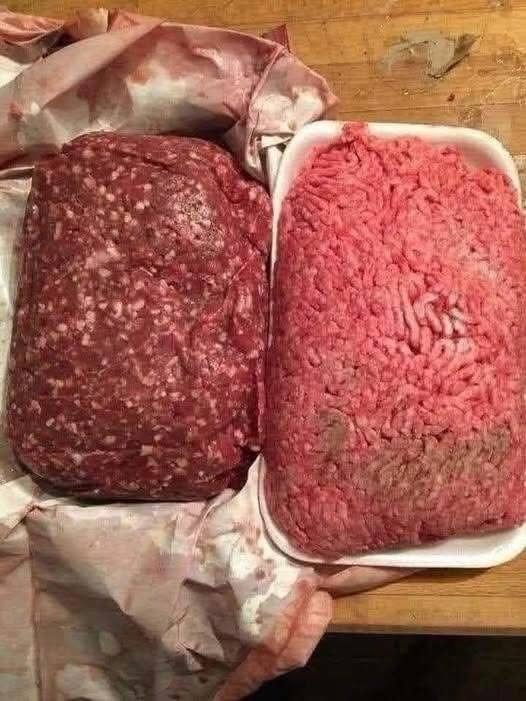
The color of ground meat is determined by a protein called myoglobin, which is similar to the hemoglobin found in blood. Myoglobin reacts with oxygen to change color. When it is exposed to air, it forms oxymyoglobin, which gives meat its bright cherry-red appearance. When oxygen is not present, it converts to metmyoglobin, which has a brown or greyish color .
This means that the bright red color on the surface of ground meat is a result of oxygen exposure, while the brown or purplish color in the middle occurs because oxygen has not reached the center of the package . This is a normal phenomenon and not an indication of spoilage.
The Role of Packaging
Ground meat is often packaged in a way that allows oxygen to pass through the film, which keeps the surface of the meat looking bright red. The interior of the meat, however, remains in a low-oxygen environment, which causes the color to remain dark . If the meat is left to sit, the color may change further, but this does not necessarily mean it is unsafe to eat.
Addressing the “Fooling” Claims
There is a common belief that supermarkets use carbon monoxide in packaging to keep meat looking red for longer periods, potentially masking spoilage. While it is true that some packaging systems use small amounts of carbon monoxide to maintain color, this practice is regulated and does not allow for the sale of spoiled meat .
The use of carbon monoxide in meat packaging is designed to eliminate oxygen and prevent oxidation, which can degrade the color and quality of the meat. The FDA has classified this use as “generally recognized as safe,” and meat packaged this way is clearly labeled with a “use by” date and a statement that “color is not an accurate indicator of freshness” .
How to Tell If Meat Is Safe
Color alone is not a reliable indicator of freshness. The most reliable signs of spoilage are an off smell, a tacky or slimy texture, or a surface that is brown or grey all the way through . If the meat has been properly refrigerated and is within its use-by date, the color variation in the middle is a normal occurrence and the meat should be safe to eat.
Conclusion
The brown color in the center of ground meat is a natural chemical reaction to oxygen, not a sign of spoilage or deception by supermarkets. Understanding this process can help you make more informed decisions when shopping and preparing food.