3 Exercises to Relieve Sciatica Leg Pain: Practical and Effective
Understanding the Anatomy: Why Does Sciatica Happen?
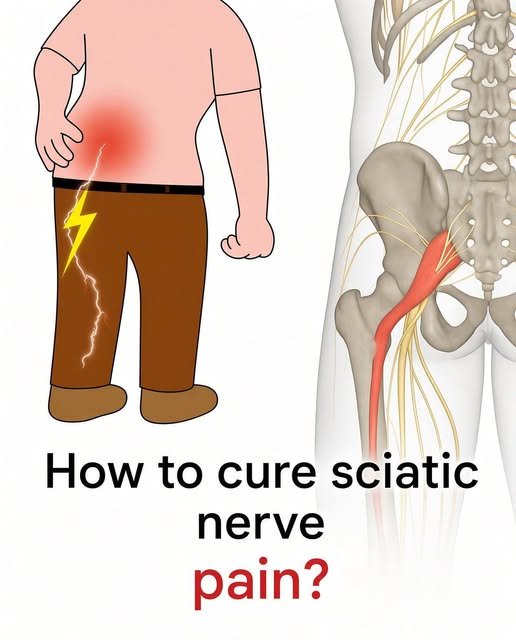
Before you begin stretching, it is crucial to understand what is happening inside your body. The sciatic nerve is the longest and widest nerve in the human body. It originates from the lumbar spine and sacral plexus (L4-S3), travels through the pelvis, passes under the deep piriformis muscle in the buttock, and runs down the back of each leg all the way to the foot.
The Two Main Culprits
Sciatica is a symptom, not a diagnosis. The pressure on the nerve usually comes from one of two places:
Spinal Compression (e.g., Herniated Disc): A disc in the lower back bulges or ruptures, pressing directly on the nerve root. This often causes pain that worsens with bending forward, coughing, or sneezing.
Muscular Compression (Piriformis Syndrome): The piriformis muscle, located deep in the buttock, becomes tight or spasms, clamping down on the sciatic nerve that runs directly beneath it. This is the focus of many stretching routines.
The Golden Rule of Sciatica Exercises
Before starting, remember the golden rule: Never push through sharp, radiating pain. If an exercise causes the pain to shoot further down your leg or into your foot, stop immediately. A good exercise should produce a gentle stretch or a mild, centralized ache in the lower back or buttock, not a sharp electric shock.
Exercise 1: The Supine Figure-4 Piriformis Stretch
If the pain originates from the buttock and is exacerbated by sitting (a hallmark of piriformis syndrome), this is the most important stretch you can do. It targets the deep gluteal muscles, releasing the clamp on the sciatic nerve.
Step-by-Step Instructions:
Lie Down: Lie flat on your back on a firm, comfortable surface like a yoga mat or a carpeted floor.
Bend Your Knees: Bend both knees and place your feet flat on the floor, hip-width apart.
Cross the Ankle: Lift your right foot and cross your right ankle over your left knee, resting it there. Your right knee should naturally fall open to the side, forming a “figure-4” shape.
Thread the Needle: Reach both hands through the gap between your legs. Interlace your fingers behind your left thigh. (Alternatively, you can grasp your left shin).
The Pull: Gently pull your left thigh toward your chest. You should immediately feel a deep stretch in your right buttock and hip.
Hold and Breathe: Hold this stretch for 30 to 45 seconds. Breathe deeply, and with every exhale, try to relax the muscles in your right hip, allowing the leg to come slightly closer.
Switch Sides: Release slowly, return to the starting position, and repeat on the opposite side.
Why It Works:
By externally rotating the hip while pulling the thigh toward the chest, you are lengthening the piriformis muscle. Releasing this muscle takes the physical pressure off the sciatic nerve, often providing immediate relief from the lightning-bolt pain down the leg.
Exercise 2: The Seated Sciatic Nerve Glide (Flossing)
Unlike the other exercises, this is not a muscle stretch; it is a movement designed to gently “floss” or glide the nerve itself. When a nerve is irritated, it can become adhered to surrounding tissues. Gliding it helps reduce friction, improve blood flow to the nerve, and restore its ability to slide smoothly through the leg.
Step-by-Step Instructions:
Sit Tall: Sit on a sturdy chair with your feet flat on the floor and your back straight. Do not lean against the backrest.
Extend the Leg: Extend your right leg straight out in front of you, resting your heel on the floor.
The Floss (Phase 1): Flex your foot by pulling your toes up toward your face. Simultaneously, tuck your chin down toward your chest. You should feel a gentle pulling sensation behind your knee or in your calf.
The Floss (Phase 2): Now, point your toes away from you (like stepping on a gas pedal) and simultaneously look up toward the ceiling. You should feel the sensation shift.
The Movement: Continue alternating between these two positions in a smooth, fluid, rhythmic motion for 10 to 15 repetitions.
Switch Sides: Repeat the sequence with your left leg.
Why It Works:
This movement creates a “tug-of-war” effect on the nerve. When you flex your foot and look down, the nerve is pulled from the top (spine). When you point your toes and look up, it is pulled from the bottom. This gentle sliding motion releases nerve adhesions without over-stretching the nerve, which can cause further irritation.