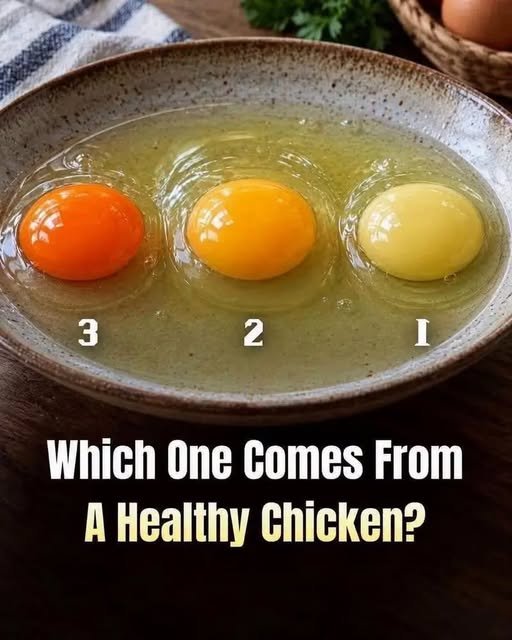
Which Egg Yolk Color Actually Means a Healthy Chicken? Debunking the Viral Quiz
If you spend any time on social media, you have likely encountered a version of this viral image: a photograph of three cracked eggs in a bowl, each with a distinctly different yolk color. The yolk on the left is a deep, vibrant orange (labeled 3). The middle yolk is a medium, sunny orange-yellow (labeled 2). The yolk on the right is a pale, buttery yellow (labeled 1). Beneath the image, the text asks: “Which One Comes From A Healthy Chicken? 90% Get It Wrong!” The caption promises a shocking answer in the comments, a classic engagement-bait tactic designed to fuel debate and drive interaction.
The image taps into a deeply rooted consumer belief: that a darker, richer yolk is the ultimate hallmark of a healthy, happy chicken and a superior, more nutritious egg. It is a belief that has been cultivated by generations of folklore, marketing, and the visual appeal of a bright orange yolk in a breakfast skillet. Consequently, the “expected” answer to this viral quiz is almost always the dark orange yolk (Number 3). The pale yellow yolk (Number 1) is often assumed to be the product of a sick, factory-farmed, or poorly nourished bird.
However, the truth about egg yolks is far more fascinating, complex, and scientifically nuanced than a simple multiple-choice question. The reality is that all three of these eggs could easily come from perfectly healthy chickens. The color of a yolk does not indicate a chicken’s overall health; it is a direct reflection of the specific pigments the hen consumed in her diet.
This comprehensive guide will dive deep into the science of poultry biology, the agricultural practices of egg production, and the nutritional differences between egg types. We will dismantle the viral myth, explain exactly what causes yolk color variation, and reveal what actually constitutes a healthy chicken. By the end of this article, you will have a complete understanding of why looking at a yolk is not a reliable indicator of a bird’s health, and you will know how to make truly informed choices about the eggs you buy.
The Biology of Yolk Color: It’s All About the Diet
To understand why the three yolks in the viral image look so different, we have to look at the science of avian biology. The color of an egg yolk is entirely determined by the presence of pigments called carotenoids, specifically a subclass known as xanthophylls. These are naturally occurring yellow, orange, and red pigments found in plants.
Chickens, like many birds, cannot synthesize these pigments on their own. They must ingest them through their diet. Once consumed, the carotenoids are absorbed into the hen’s bloodstream and deposited into the developing yolk. Therefore, the color of the yolk is a direct, biological record of what the chicken has been eating.
What Changes Yolk Color?
There are several dietary factors that influence yolk color:
Grass and Foraging: Chickens that roam freely on pasture consume a variety of grasses, weeds, and insects. These plants are rich in xanthophylls, particularly lutein and zeaxanthin. This is why truly pasture-raised eggs often have deep, vibrant orange yolks.
Corn and Alfalfa: In commercial feed, yellow corn and alfalfa meal are the most common sources of pigments. A diet high in yellow corn will produce a rich yellow-orange yolk.
Synthetic Pigments: Commercial egg producers often add synthetic or extracted natural pigments (like marigold extract or paprika oleoresin) to the feed of indoor-housed hens. This is done specifically to mimic the dark orange yolks that consumers associate with high quality, even if the hens have never seen the outdoors.
Wheat and Barley: If the commercial feed is based on wheat or barley rather than corn, the yolks will be significantly paler. A hen can be in perfect health, laying strong-shelled eggs, but if she is eating a wheat-based diet, her yolk will be a pale yellow.
Analyzing the Three Yolks: A Closer Look
Now that we understand the biology, let’s apply it to the three eggs in the viral image.
Egg Number 3 (Deep Orange)
This yolk is the darkest. The hen that laid it consumed a diet exceptionally high in carotenoids. The most likely scenarios are:
She is a pasture-raised hen with access to a wide variety of green grasses and insects.
She is fed a premium commercial diet heavily supplemented with natural pigments like marigold or alfalfa.
She is fed a diet that includes synthetic pigments designed to create this specific color. Verdict: This hen may be very healthy and have a highly varied diet, or she may be an indoor commercial hen fed a carefully pigmented diet. Yolk color alone cannot tell you which.
Egg Number 2 (Medium Orange/Yellow)
This yolk is likely from a hen on a standard commercial diet. The feed probably contains a moderate amount of yellow corn or a standard base of synthetic pigments to achieve the “average” yolk color that most grocery store shoppers expect. The hen might be cage-free or have limited outdoor access, but she is well-fed and producing a highly standard commercial egg.
Egg Number 1 (Pale Yellow)
This is the yolk that often causes alarm in consumers. However, a pale yellow yolk simply means the hen’s diet was low in carotenoids. This is typical of a conventional, indoor-raised hen eating a feed based on wheat or barley rather than corn. Despite the pale color, the feed is nutritionally formulated to meet all of the hen’s dietary requirements. She is likely receiving excellent veterinary care, clean water, and a balanced diet. The lack of pigment does not mean she is sick or malnourished.
The Myth of the “Healthy” Yolk: Why the Quiz is Flawed
The viral quiz relies on a fundamental misunderstanding of animal husbandry. The question “Which one comes from a healthy chicken?” is a trick question because it conflates diet with health.
A chicken’s health is determined by a complex set of factors, including:
Veterinary Care: Regular check-ups, vaccinations, and access to clean water.
Environment: Freedom from stress, protection from predators, clean living conditions, and freedom from disease.
Genetics: A chicken’s genetic makeup determines its overall vitality and lifespan.
Diet Quality: A nutritionally balanced diet that provides all essential nutrients (amino acids, vitamins, minerals) for maintenance and egg production.
A hen living in a sterile, climate-controlled indoor facility with a perfectly balanced diet of wheat and soy, access to clean water, and zero exposure to parasites is arguably healthier than a free-range hen that is infested with worms and suffering from exposure to extreme weather. Yet, the indoor hen will lay a pale yellow egg, while the free-range hen may lay a dark orange one.
Therefore, yolk color is a measure of diet composition, not veterinary health. The viral quiz is a misleading oversimplification. All three eggs could easily come from healthy, well-cared-for chickens.
Do Darker Yolks Mean More Nutrition?
While yolk color is not a direct indicator of health, it is often correlated with certain nutritional benefits—but the relationship is nuanced.
Because a dark orange yolk usually comes from a hen with access to pasture, and pasture-raised eggs have been consistently shown in studies to have a superior nutritional profile. According to a 2010 study by Mother Earth News (and supported by subsequent academic research), eggs from hens raised on pasture had:
Up to 2/3 more vitamin A
2 times more omega-3 fatty acids
3 times more vitamin E
7 times more beta carotene
However, it is crucial to note that the color itself does not contain these nutrients. The dark color is a proxy for the plant-based diet. If a commercial producer adds marigold extract to the feed to make the yolks dark orange, that does not magically add omega-3s or vitamin E to the egg. The nutritional value of the egg depends on the entire diet of the hen, not just the pigment.
The Industry Manipulation of Yolk Color
Egg producers know exactly what consumers want. They know that shoppers visually equate a deep orange yolk with health and quality. To meet this demand, the industry uses a standardized color scale (often called the DSM YolkFan) to measure yolk color. Many commercial farmers add natural pigments (like paprika and marigold extract) or synthetic colorants (like canthaxanthin) to the feed to achieve the desired shade, regardless of whether the chickens are indoors or outdoors. This means that an incredibly brightly colored yolk in a supermarket carton does not automatically mean the chicken saw the light of day.
What Actually Indicates a Healthy Chicken?
If the color of the yolk isn’t the answer, what is? To truly determine the health of a chicken and the quality of the egg, you need to look beyond the color of the yolk.
1. The Eggshell
A healthy chicken produces a strong, thick eggshell. The shell’s color (white or brown) is determined by the breed of the chicken, not its health. A strong shell is a sign that the hen is absorbing enough calcium and vitamin D from her diet. Thin or brittle shells can indicate nutritional deficiencies or illness.
2. The Egg White (Albumen)
Crack the egg onto a plate. A fresh, healthy egg will have a thick, viscous egg white that stays close to the yolk. The white will have a distinct inner ring (the thick albumen) and an outer, thinner layer. As an egg ages, the white breaks down and becomes runny.
3. The Yolk Membrane
The yolk of a fresh egg is suspended in a strong, slightly elastic membrane (the vitelline membrane). A healthy egg will have a round, firm yolk that stands up proudly when cracked. A weak, flat, or easily broken yolk is a sign of an older egg or a stressed hen.
4. The Air Cell
At the wide end of the egg, there is a small air pocket. In a very fresh egg, this air cell is tiny. As the egg ages, moisture escapes through the pores in the shell, and the air cell grows larger. A large air cell indicates an older egg.
5. The Diet (If You Can Verify It)
If you truly want to know what your chicken is eating, you need to look at the farming system. A pasture-raised chicken (which has access to a varied, natural diet) is generally considered to have the highest welfare standards and produces the most nutrient-dense eggs. However, this is based on farming practices, not just a visual inspection of the yolk.
Decoding the Egg Carton Labels
To make the most informed choice at the grocery store, you need to understand what the labels on the carton actually mean.
Label
What It Actually Means
Impact on Yolk Color
Conventional
Hens are housed indoors, often in cages, with a controlled diet.
Can be pale yellow or artificially colored dark orange.
Cage-Free
Hens are not in cages, but are housed indoors in a large barn.
Variable; often standard yellow.
Free-Range
Hens have access to the outdoors, but the duration and quality of outdoor space vary wildly.
Can be darker, but often supplemented with feed.
Pasture-Raised
Hens spend their lives outdoors on a pasture, foraging for plants and insects.
Usually deep orange, due to a natural, varied diet.
Organic
Hens are fed an organic, non-GMO diet, and have outdoor access (though requirements vary).
Can be any color, but usually natural yellow-orange.
Debunking the “Shocking Answer”
The viral image claims that “90% get it wrong.” The shocking answer, according to the viral post, is usually one of two things:
The pale yolk (Number 1) is actually the healthiest, because it hasn’t been manipulated with synthetic pigments (a common claim by some wellness influencers).
The dark yolk (Number 3) is the healthiest, representing a truly free-range bird.
Neither of these answers is universally true. The truth is a nuanced, complex biological reality: The color of the yolk tells you what the chicken ate, not whether the chicken is healthy. A pale yolk comes from a wheat-based diet. A dark yolk comes from a corn, grass, or supplemented diet. Both can be laid by a healthy, well-cared-for chicken.
The Culinary Difference: Does Color Affect Taste?
From a purely culinary perspective, does the color of the yolk actually matter? The answer is yes, but it is subjective.
Many chefs and food enthusiasts insist that eggs with dark orange yolks, especially those from pasture-raised chickens, have a richer, creamier texture and a more robust, “eggy” flavor. This is likely due to the higher fat content and the varied diet of the hen.
However, in blind taste tests, the difference is often subtle. The most important factor in the taste and texture of an egg is its freshness. A pale-yolked egg that is a day old will taste significantly better than a dark-yolked egg that has been sitting in a supermarket cooler for a month.
How to Choose the Best Eggs for You
If you want to buy eggs that align with your values and nutritional goals, here is a practical guide:
Prioritize Freshness: Look for the furthest-out expiration date. If you have a local farmers’ market, buy eggs there. They are often the freshest you can get.
Look for “Pasture-Raised” if you want nutrition: If you are looking for the highest levels of omega-3s and vitamins, pasture-raised is the best choice, even if it costs more.
Don’t Fear Pale Yolks: If you are on a budget, conventional eggs are still a highly nutritious, protein-packed food. A pale yellow yolk is perfectly safe and provides excellent nutrition.
Ignore the “90% Get It Wrong” Clickbait: Use your critical thinking skills. Don’t let a social media quiz dictate your grocery purchases.
Conclusion: Beyond the Color Wheel
The viral image of the three yolks is a fascinating piece of internet content, but it is a poor guide to poultry health. It preys on consumer anxieties and a visual bias that equates “darker” with “better.” The reality is that the color of an egg yolk is a simple biological response to dietary pigments. A pale yolk is not a sign of a sick chicken, and a dark orange yolk is not a guarantee of a healthy one.
Whether you choose a pale, sunny yellow egg or a deep, rich orange one, you are choosing a nutritional powerhouse. Eggs are one of nature’s most complete foods, packed with high-quality protein, essential vitamins, and minerals. The next time you crack an egg into a pan, look at the color with curiosity, not concern. Know that the color tells a story about the hen’s diet, but the true measure of quality lies in the freshness of the egg and the care taken by the farmer. All three yolks can come from a healthy, happy chicken, and that is a truth worth knowing.
Frequently Asked Questions
Does a darker yolk mean the chicken is healthier?
Not necessarily. Yolk color is determined by the presence of pigments (carotenoids) in the chicken’s diet. A dark orange yolk means the hen ate a diet rich in these pigments (like grass or corn). A pale yellow yolk means she ate a diet low in these pigments (like wheat). Both diets can be perfectly healthy.
Why are some egg yolks pale yellow?
Pale yellow yolks are typically from hens fed a commercial diet based on wheat or barley rather than corn or grass. The feed is still nutritionally complete, but it lacks the natural pigments that make the yolk darker.
Can a sick chicken lay a dark orange egg?
Yes. If a sick chicken is still consuming a diet high in pigments, she will continue to lay dark yolks. Yolk color is a reflection of diet, not veterinary health. A chicken can be suffering from illness, parasites, or stress and still lay an egg with a deeply colored yolk.
Are pale yolks less nutritious?
Not significantly. While pasture-raised eggs (which often have dark yolks) have been shown to have higher levels of certain nutrients like omega-3s and vitamin E, the color itself does not determine the nutritional value. A pale yolk from a well-fed hen is still highly nutritious.
What do the numbers 1, 2, and 3 mean in the viral image?
They are just arbitrary labels used by the person who created the image. There is no universal standard that correlates these numbers to a specific level of health. The image is designed as a trick question to generate engagement.
Do supermarkets add color to eggs?
They do not add color to the egg itself, but commercial egg producers frequently add pigments (such as marigold extract or paprika) to the chicken feed. This is done to make the yolks appear darker and richer, meeting consumer expectations for a premium egg.
What is the healthiest egg to buy?
The healthiest egg for you is one that is fresh and fits your budget. If you want the most nutrient-dense egg, look for labels that say “Pasture-Raised.” However, conventional eggs are still an excellent source of protein and nutrients.
How can I tell if an egg is fresh?
The best way to check an egg’s freshness is to crack it onto a plate. A fresh egg will have a thick, firm egg white that stays close to a round, high-standing yolk. As the egg ages, the white becomes runny and the yolk becomes flat.