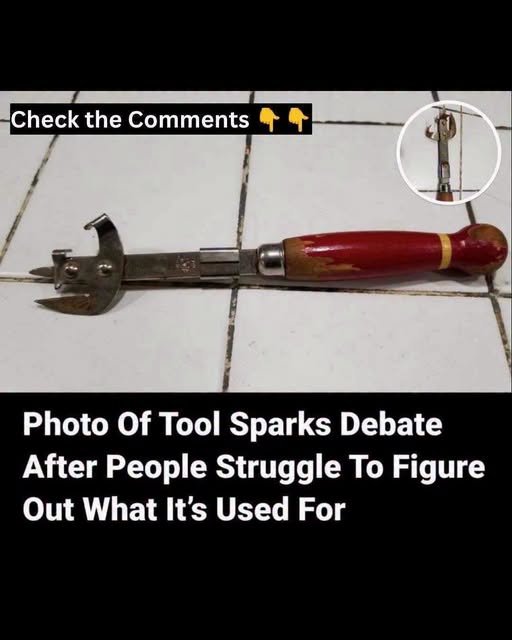
What Is This Strange Old Metal Tool? The Internet Is Still Trying to Solve the Mystery
The Modern Revival: Why Gen Z is Buying Vintage Cheese Slicers
The most fascinating twist in this story of generational divide is what is happening right now. While viral posts poke fun at younger people for not knowing what this tool is, the younger generation is actively buying them.
The Rise of Thrifting and Traditional Cooking
Driven by a desire for sustainability, a rejection of disposable plastic goods, and the rise of movements like the farm-to-table and sourdough trends, Millennials and Gen Z are scouring thrift stores and estate sales for these very same tools.
They are discovering what their grandparents knew all along: these vintage tools are built to last a lifetime. They are made of solid cast iron and stainless steel, not flimsy plastic. They don’t need electricity. And they provide a tangible connection to the past. The simple act of slicing a block of cheese with a vintage wire cutter is a small act of rebellion against the overly processed, pre-packaged world.
Conclusion: A Simple Tool with a Big Impact
The story of the wire cheese slicer is a reminder that some of the most brilliant inventions are the simplest. It was born from a carpenter’s frustration and a moment of insight, evolving into a kitchen staple that has stood the test of time. While the viral image might have presented it as a mystery, the tool is a familiar friend to millions of people who grew up with one in their kitchen drawer.
The next time you see one of these T-shaped tools at a flea market or in an old family kitchen, you will not be stumped. You will recognize it for what it is: a humble, ingenious, and enduring piece of culinary history.
Frequently Asked Questions
What is the strange metal tool in the picture?
The tool is a vintage hand-held wire cheese slicer. It features a T-shaped metal frame, a handle, and a thin wire stretched between the arms to cut cheese.
Who invented the cheese slicer?
The original cheese slicer (the cheese plane) was invented in 1925 by Thor Bjørklund, a carpenter from Lillehammer, Norway. He was inspired by the design of a carpenter’s plane.
How does a wire cheese slicer work?
A thin, taut wire is pressed down through a block of cheese. The wire exerts high pressure over a small area, allowing it to cleanly slice through the cheese. A cylindrical roller on the frame helps guide the tool and prevents the cheese from sticking.
What is the difference between a wire cheese slicer and a cheese plane?
A wire slicer uses a thin wire and is best for softer, semi-soft cheeses like Havarti or Mozzarella. A cheese plane uses a solid, angled blade and is designed for hard cheeses like Parmesan or aged Cheddar.
Are vintage wire cheese slicers valuable?
While most are not extremely valuable, they are collectible items. Many people seek them out for their sturdy construction, retro aesthetic, and nostalgic value. Prices can range from a few dollars at a flea market to $20-$50 for a unique or branded model online.
Can I still use a vintage cheese slicer?
Yes, generally. The main thing to check is the wire. If it is rusted or broken, it can be easily replaced. Replacement wires are available online, and the tool can be restored to full working condition.
Why does the tool have a roller?
The roller serves two purposes: it acts as a guide to ensure an even slice thickness, and it provides a smooth surface that prevents the cheese slice from sticking to the metal frame as it is cut.
Is it safe to put a vintage cheese slicer in the dishwasher?
It is generally best to hand wash vintage metal cheese slicers. Harsh dishwasher detergents and high heat can damage the finish, cause corrosion, and dull the metal over time.