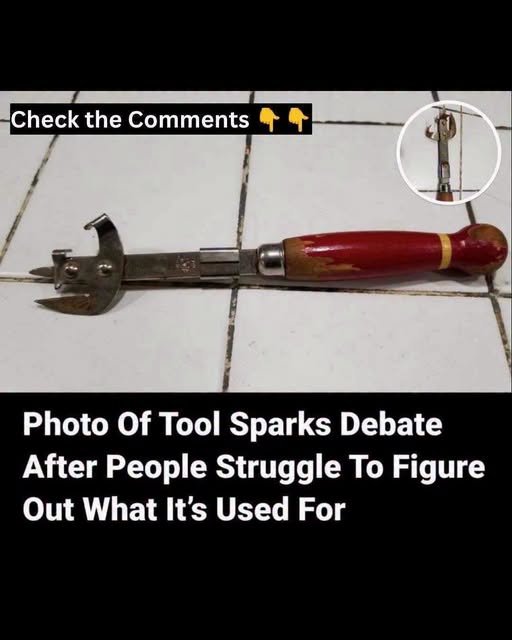
Mystery Tool Identified: Solving the Internet’s Latest Vintage Hardware Puzzle
The image above captures a phenomenon that has become increasingly common in the digital age: a photograph of an obscure, rusted metal object sparking a wildfire of speculation across social media platforms. The tool in question, with its distinctive red wooden handle, adjustable metal shaft, and peculiar hooked jaw, has left thousands of commenters baffled, offering guesses ranging from “vintage can opener” to “specialized plumbing wrench” or even “antique medical device.” This collective confusion highlights a growing disconnect between modern consumers and the mechanical heritage of previous generations. As manufacturing shifts toward disposable plastics and integrated electronics, the tangible, repairable tools of the past are becoming alien artifacts, their specific functions lost to time and the erosion of trade knowledge.
This comprehensive article aims to cut through the noise of internet speculation and provide a definitive identification of this mysterious implement. We will explore the history of adjustable hand tools, examining how design variations often point to specific trades like upholstery, fencing, or electrical work rather than general household use. By analyzing the mechanical features visible in the photo—the pivot point, the blade geometry, and the handle construction—we can deduce its likely purpose with high confidence. Beyond just solving this specific puzzle, we will discuss why preserving knowledge of vintage tools matters for sustainability, historical appreciation, and the growing maker movement. Whether you are a collector, a DIY enthusiast, or simply curious about the object gathering dust in your grandfather’s shed, understanding these forgotten implements reconnects us with the ingenuity of manual craftsmanship.