What Happens to the Body After Gallbladder Removal? 3 Conditions That May Follow and How to Reduce Risk
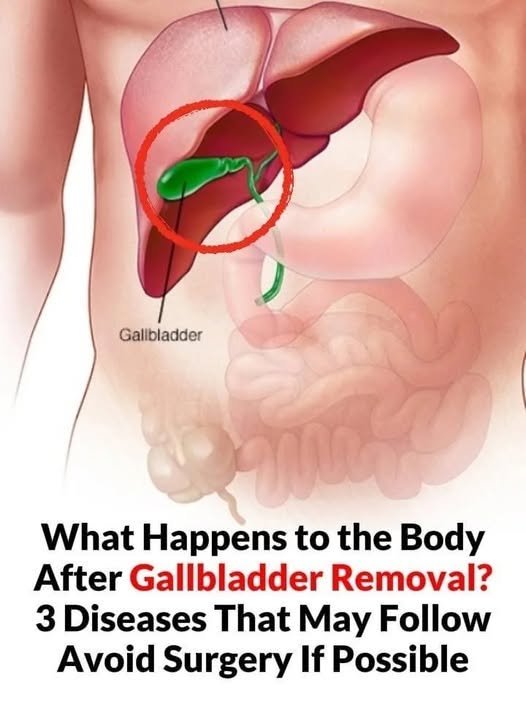
The gallbladder is a small, pear-shaped organ tucked beneath the liver. It stores and concentrates bile, a digestive fluid produced by the liver, and releases it into the small intestine after meals—especially fatty meals—to help break down fats. When gallstones, inflammation, infection, or other gallbladder problems cause pain and complications, doctors often recommend cholecystectomy, the surgical removal of the gallbladder. It is one of the most commonly performed operations worldwide, and most people recover well and resume normal life.
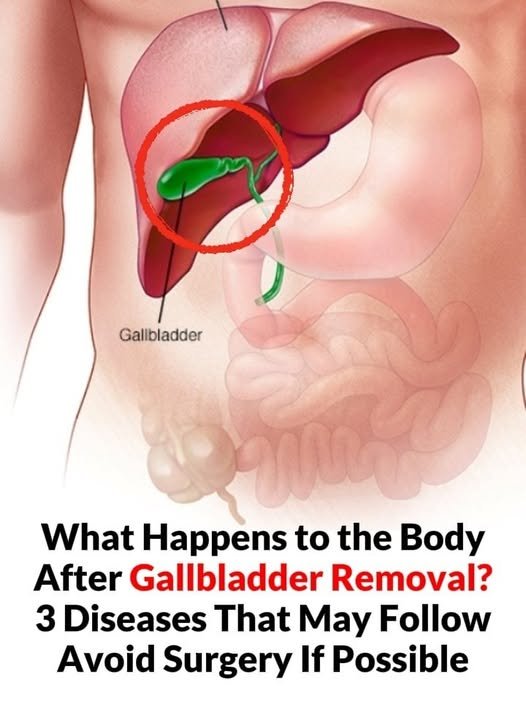
The image asks a direct question: “What happens to the body after gallbladder removal? 3 diseases that may follow. Avoid surgery if possible.” That question deserves a careful answer. Gallbladder removal is not cosmetic surgery, and it is not usually recommended unless there is a good medical reason. For many people with symptomatic gallstones, repeated attacks, cholecystitis, pancreatitis, or bile duct obstruction, surgery is the definitive treatment and can prevent serious complications. But removal does change digestion, and a minority of patients develop ongoing symptoms or related conditions afterward.
This guide explains what changes after gallbladder removal, three conditions that may follow, how they are recognized and managed, and when surgery can reasonably be delayed or avoided—and when it should not be.
What the Gallbladder Does—and What Changes Without It
The liver produces bile continuously. Between meals, bile flows into the gallbladder, where it is stored and concentrated. When you eat, especially fat, the gallbladder contracts and sends a concentrated burst of bile into the duodenum to emulsify fats and support digestion.
After the gallbladder is removed, the liver still produces bile, but there is no storage reservoir. Bile now flows more continuously into the small intestine. Most people adapt to this change without major problems. The bile ducts may enlarge slightly, and the digestive system adjusts. But because bile delivery is no longer timed to meals, some people notice changes in bowel habits, digestion of fatty foods, or abdominal discomfort.
The key point is that the gallbladder is helpful but not essential. You can live a normal life without it. The goal is not to frighten anyone away from necessary surgery, but to understand the possible aftereffects and manage them well.
3 Conditions That May Follow Gallbladder Removal
1. Post-Cholecystectomy Syndrome
Post-cholecystectomy syndrome (PCS) is a term used for persistent or new abdominal symptoms after gallbladder removal. It is not one single disease. It describes a pattern that may include indigestion, bloating, gas, nausea, upper abdominal discomfort, or changes in bowel habits. Symptoms may appear soon after surgery or months later.
PCS can have several causes. In some cases, a gallstone remains in the bile duct. In others, the sphincter of Oddi—the muscular valve that controls bile flow—may malfunction or become sensitive. Some patients have coexisting conditions such as acid reflux, irritable bowel syndrome, or pancreatitis. Sometimes the exact cause is not found.
Management depends on the cause. Doctors may use blood tests, ultrasound, CT scan, MRCP, or endoscopy to look for retained stones or bile duct problems. Treatment may include dietary changes, medications for pain or spasm, bile acid binders, or an endoscopic procedure if a stone is blocking the duct. Most people improve with time and appropriate care, but persistent symptoms should be evaluated rather than dismissed.
2. Bile Acid Diarrhea and Irritable Bowel Syndrome–Type Symptoms
After gallbladder removal, bile flows into the intestine more continuously. In some people, excess bile acids reach the colon and act as a laxative. This can cause bile acid diarrhea: loose, urgent, watery stools, sometimes with cramping or fecal urgency. It may occur after meals, especially fatty meals.
Some patients also develop irritable bowel syndrome–type symptoms after gallbladder surgery. The gut–brain axis, changes in bile flow, and shifts in the gut microbiome may all play a role. Symptoms can include bloating, abdominal pain, gas, and alternating bowel habits.
Bile acid diarrhea is often manageable. Doctors may prescribe bile acid binders such as cholestyramine, colestipol, or colesevelam. Dietary changes can help: smaller meals, moderating very fatty or fried foods, limiting caffeine and alcohol, and increasing soluble fiber gradually. Probiotics may help some people, but responses vary. Persistent diarrhea, weight loss, blood in the stool, or nighttime symptoms should be evaluated.
3. Retained or Recurrent Bile Duct Stones
Gallstones can sometimes remain in the common bile duct after surgery, or new stones can form in the bile ducts later. This is uncommon but important. A retained stone can cause upper abdominal pain, nausea, vomiting, jaundice (yellowing of the skin or eyes), dark urine, pale stools, or fever.
Diagnosis may involve ultrasound, CT, MRCP, or endoscopic ultrasound. Treatment is usually ERCP (endoscopic retrograde cholangiopancreatography), a procedure that can locate and remove stones from the bile duct. In some cases, surgery or other interventions may be needed. Anyone with jaundice, fever, severe abdominal pain, or signs of infection after gallbladder removal needs urgent medical care.
Other Changes Some People Notice
Beyond the three main conditions, some people report fatty food intolerance, bloating, or looser stools after gallbladder removal. These symptoms often improve as the body adapts. Eating smaller meals, reducing very high-fat meals, and increasing fiber gradually can help. Most people do not need a lifelong restrictive diet, but paying attention to how your body responds is useful.
Can Gallbladder Surgery Be Avoided?
The phrase “avoid surgery if possible” is understandable, but it needs context. Surgery is not always avoidable, and delaying necessary surgery can be dangerous.
When Surgery May Be Delayed or Individualized
For people with asymptomatic gallstones—stones found incidentally that have never caused pain or complications—doctors may choose watchful waiting rather than immediate surgery, depending on the person’s age, health, and risk factors. Some asymptomatic stones never cause problems.
For people who cannot undergo surgery because of severe medical conditions, doctors may consider temporary or alternative measures. These may include medications to dissolve cholesterol stones in selected patients, but this takes months to years, works only for some stones, and stones can recur. Shock-wave lithotripsy is rarely used and is suitable only for selected cases. These options are not equivalent to surgery and require specialist evaluation.
When Surgery Should Not Be Delayed
Surgery is often the safest option when gallstones cause recurrent pain, cholecystitis, pancreatitis, bile duct obstruction, or infection. Delaying surgery in these situations can lead to serious complications. A doctor should assess urgency based on symptoms, imaging, and overall health.
The decision is not “surgery always” or “surgery never.” It is a risk–benefit discussion. The goal is to treat the problem with the least risk while preventing dangerous complications.
Recovery and Diet After Gallbladder Removal
Most people recover from laparoscopic gallbladder removal within a few weeks. Some have soreness, fatigue, or temporary digestive changes. A sensible approach includes:
Eat smaller meals more often rather than large, heavy meals.
Moderate high-fat and fried foods initially, then reintroduce healthy fats gradually.
Increase fiber gradually from vegetables, fruits, whole grains, legumes, and seeds.
Stay hydrated throughout the day.
Limit alcohol and caffeine if they trigger loose stools or discomfort.
Move gently and follow your surgeon’s activity instructions.
Ask about bile acid binders if diarrhea persists.
Keep follow-up appointments and report persistent symptoms.
Red Flags After Gallbladder Removal
Seek medical care promptly for fever, severe abdominal pain, jaundice, dark urine, pale stools, persistent vomiting, signs of infection, or diarrhea that is severe, bloody, or accompanied by weight loss. These symptoms may indicate a retained stone, infection, or another complication.
Conclusion
Gallbladder removal changes bile flow, and most people adapt well. A minority may experience post-cholecystectomy syndrome, bile acid diarrhea or IBS-type symptoms, or retained/recurrent bile duct stones. These conditions are manageable, but they should be evaluated rather than ignored. The phrase “avoid surgery if possible” is reasonable only in the context of medical risk assessment. For symptomatic gallbladder disease, surgery is often the safest and most definitive treatment. The best path is an informed conversation with a doctor about symptoms, alternatives, and timing.
Frequently Asked Questions
What happens to digestion after gallbladder removal?
Bile flows continuously instead of being stored and released in bursts. Most people digest food normally, but some notice looser stools, bloating, or fatty food intolerance, especially early after surgery.
What are the three conditions that may follow gallbladder removal?
Post-cholecystectomy syndrome, bile acid diarrhea or IBS-type symptoms, and retained or recurrent bile duct stones. These are possible, not inevitable.
Can you live normally without a gallbladder?
Yes. The gallbladder is helpful but not essential. The liver still produces bile, and most people live normal lives after removal.
Can gallbladder surgery be avoided?
Sometimes. Asymptomatic gallstones may be monitored. But surgery is often necessary for recurrent pain, inflammation, infection, pancreatitis, or bile duct obstruction. Delaying necessary surgery can be dangerous.
What is post-cholecystectomy syndrome?
It is a pattern of persistent abdominal symptoms after gallbladder removal, such as indigestion, bloating, nausea, or pain. Causes vary and may include retained stones, sphincter problems, or coexisting digestive conditions.
What is bile acid diarrhea?
It is loose, urgent diarrhea caused by excess bile acids reaching the colon after gallbladder removal. It can often be treated with bile acid binders and dietary adjustments.
When should I see a doctor after gallbladder removal?
See a doctor for persistent diarrhea, severe or recurrent abdominal pain, fever, jaundice, dark urine, pale stools, vomiting, or unexplained weight loss.
Does everyone need a special diet after gallbladder removal?
No. Most people can return to a normal balanced diet. Some find it helpful to eat smaller meals and moderate very fatty foods initially.