What Does It Mean When You Have Visible Veins on Your Hands? The Science Behind Prominent Veins
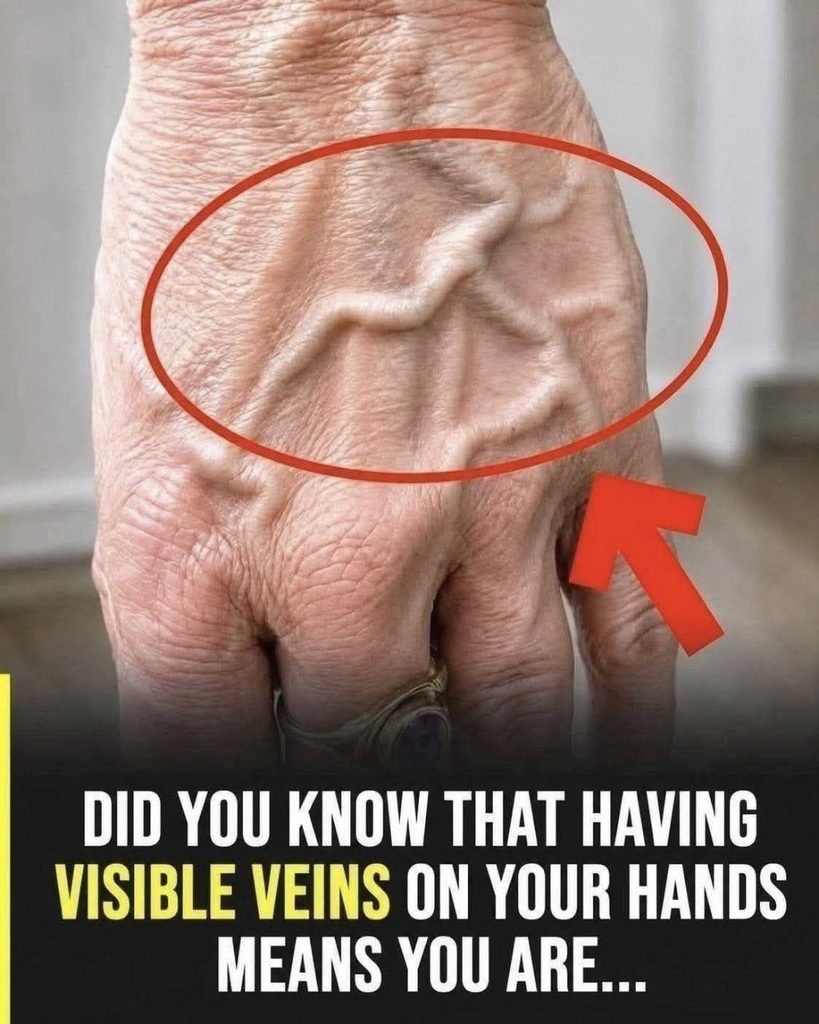
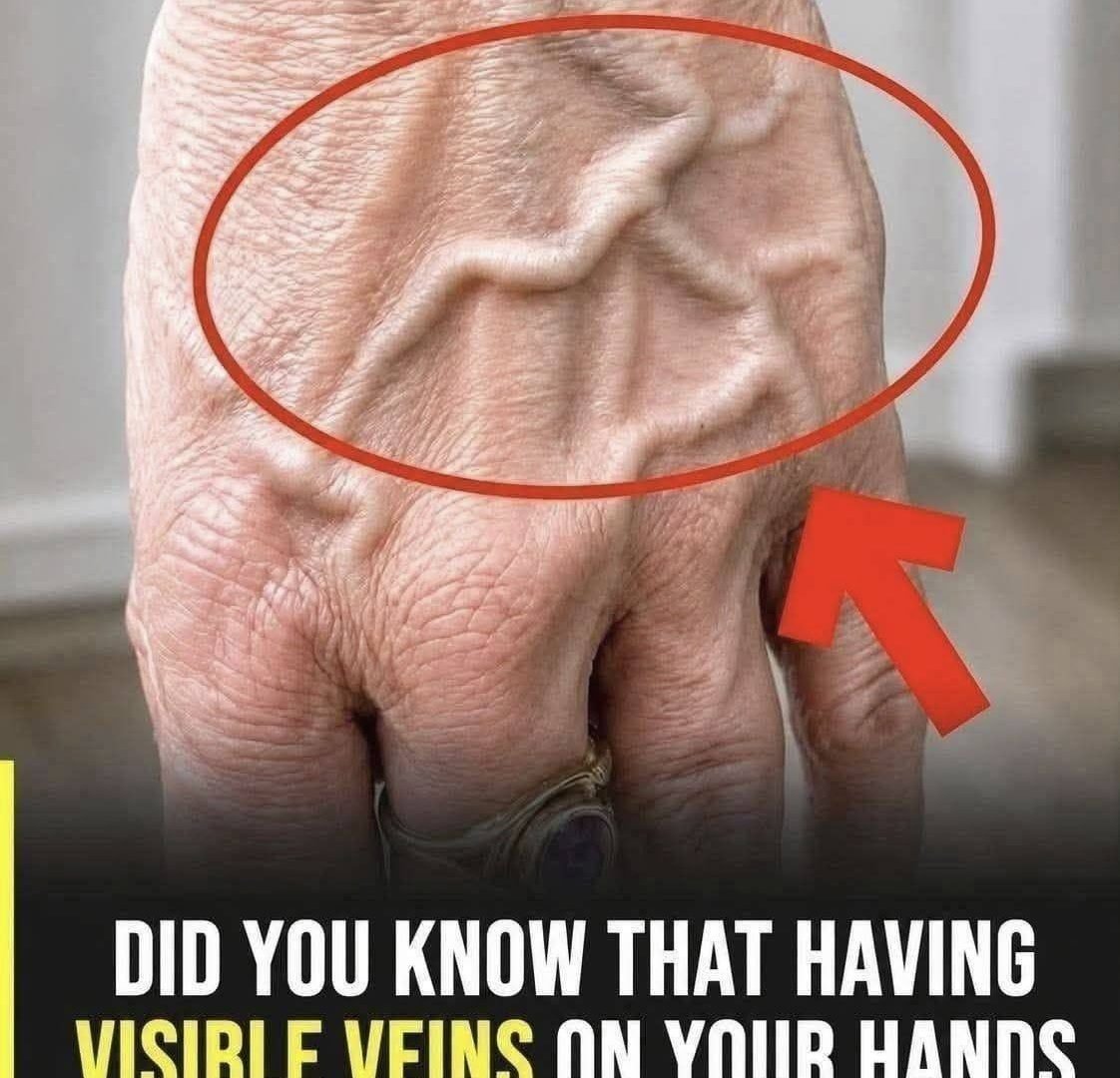
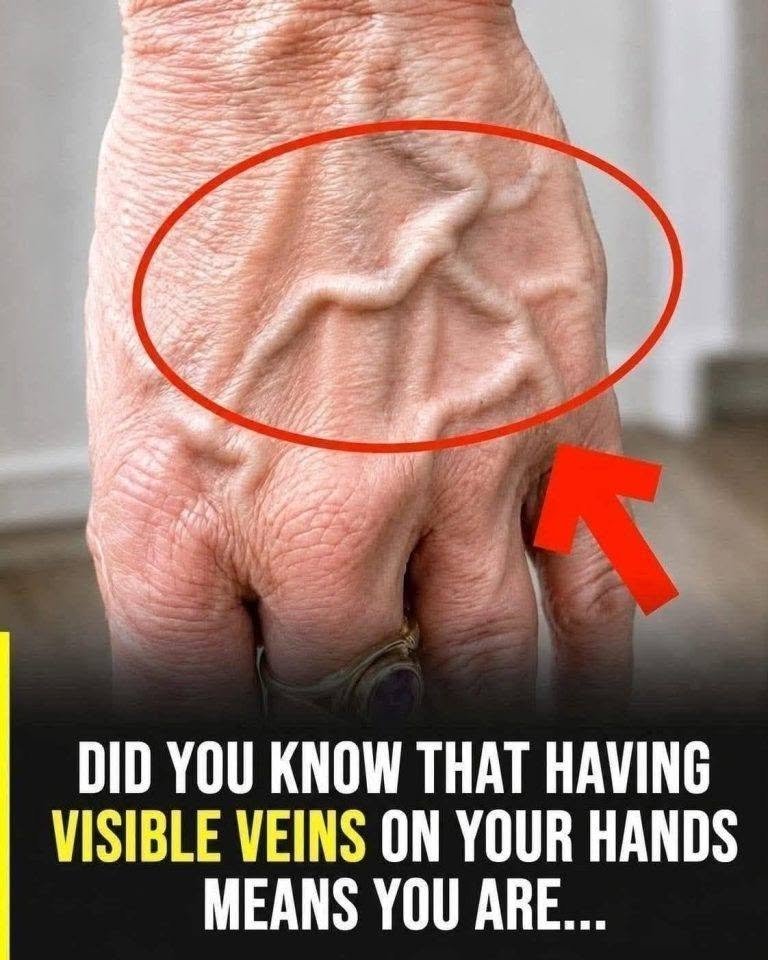
If you have ever looked down at your hands and noticed a network of prominent, bulging veins winding across the back of your hand, you might have wondered what exactly it means. A viral social media graphic featuring a close-up of an older adult’s hand with highly visible veins poses the question: “Did you know that having visible veins on your hands means you are…” The prompt is designed to spark curiosity and, often, anxiety. In the world of online health trends, visible veins are frequently and incorrectly associated with hidden health dangers or dramatic physiological revelations.
The truth, however, is rooted in fascinating anatomy, the natural aging process, and individual body composition. For the vast majority of people, having prominent veins on the hands is a completely normal, benign physiological trait. It is rarely a sign of a serious underlying medical condition. In fact, in many cases, it is a sign of healthy circulation, low body fat, or simply the natural loss of skin elasticity that comes with age.
This comprehensive guide will explore the medical and anatomical reasons behind visible hand veins, explain the factors that influence their appearance, highlight the specific instances where prominent veins might indicate a health issue, and provide practical strategies for managing their appearance if they cause you concern.
The Anatomy of Hand Veins: Why Do They Stand Out?
To understand why veins become visible, you must first understand what veins are and how they function. The circulatory system is made up of arteries, veins, and capillaries. Arteries carry oxygen-rich blood away from the heart to the extremities, while veins carry deoxygenated blood back to the heart.
Thin Walls and Low Pressure
Veins are structurally different from arteries. They have much thinner walls, as they do not need to withstand the high pressure generated by the heart’s pumping. Because blood in the veins is moving against gravity to return to the heart, veins rely on a system of one-way valves and the contraction of surrounding skeletal muscles to push the blood upward.
The Superficial Venous System
The veins you see on the back of your hands are part of the superficial venous system. They lie just beneath the skin, separated from the outside world by only a thin layer of skin and subcutaneous fat. Because their walls are thin and the blood inside is deoxygenated, they often appear blue or green. This color is due to the way light penetrates the skin; the red light is absorbed, while the blue light is scattered back to your eyes (a phenomenon known as Rayleigh scattering).
The Main Causes of Visible Hand Veins
There is no single reason why hand veins become prominent. The appearance of your hands is the result of a complex interplay of genetic, environmental, and lifestyle factors.
1. The Natural Aging Process
If you look at the hand in the viral image, you will notice it belongs to an older adult. Aging is the most common and natural cause of visible hand veins. As we grow older, the skin undergoes significant changes. The body produces less collagen and elastin, the proteins that keep the skin thick, tight, and elastic. Furthermore, the subcutaneous fat layer beneath the skin—which acts as a plush cushion—begins to diminish. Without this thick layer of skin and fat to cover them, the veins become much more visible.
2. Low Body Fat and Physical Fitness
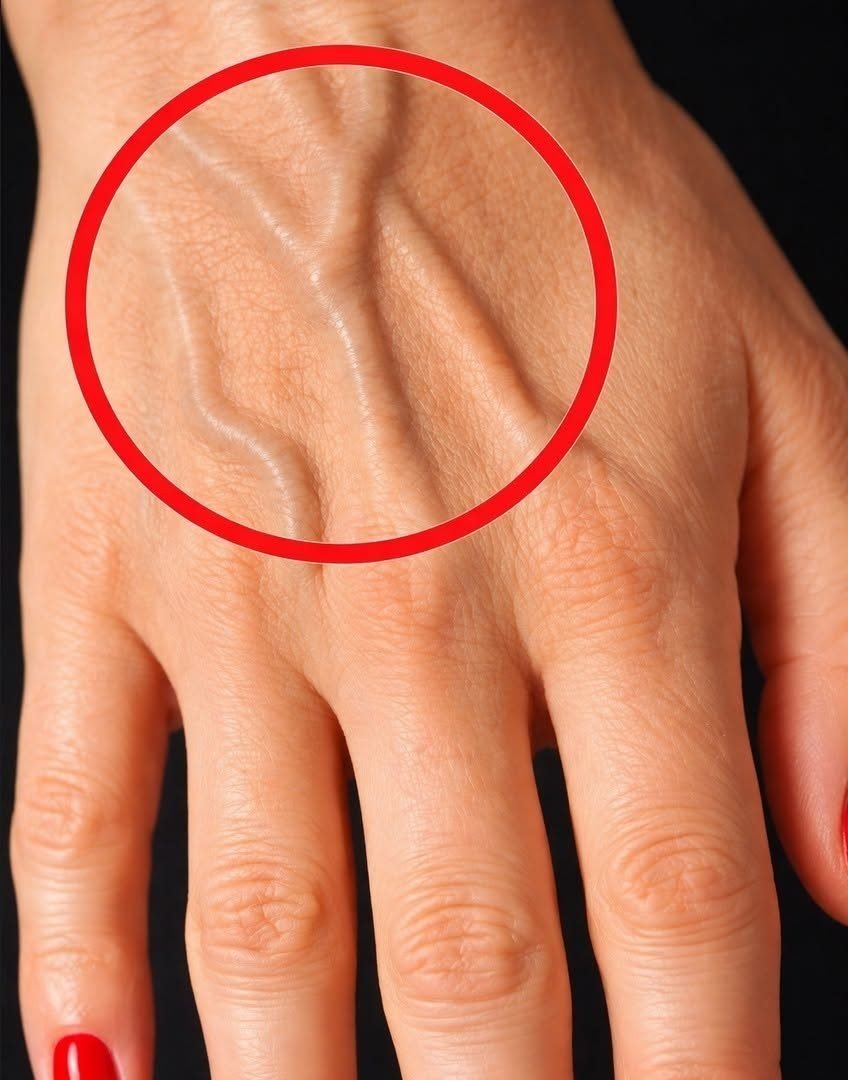
In younger individuals, prominent veins are often a sign of low body fat. Bodybuilders and fitness enthusiasts often strive for “vascularity,” which is the medical term for highly visible veins. When body fat percentages are very low, there is less fat padding between the skin and the veins, making them pop out. Therefore, visible veins can sometimes indicate that a person is physically fit and lean.
3. Genetics
Genetics play a major role in how your hands look. If your parents and grandparents had prominent hand veins, there is a very high likelihood that you will too. Some people are genetically predisposed to have thinner skin on their hands or larger superficial veins.
4. Temperature Regulation (Vasodilation)
Veins are highly responsive to temperature. When your body is hot, the blood vessels near the surface of the skin dilate (widen) to bring more blood to the surface and release heat, a process called vasodilation. This is why your hands and veins may look much more prominent during a hot summer day, after a hot shower, or during a workout.
5. Physical Activity and Blood Flow
During exercise, your heart pumps faster and harder to deliver oxygen to working muscles. The increased blood flow causes the veins to bulge to accommodate the extra volume. Even simply hanging your hands down by your side for a few minutes can cause blood to pool in the veins of your hands, making them temporarily bulge due to gravity.
6. Dehydration
When you are dehydrated, your body’s overall fluid volume decreases. The skin can become slightly less plump and elastic, making veins appear more visible. However, severe dehydration can also cause blood pressure to drop, which might actually make veins harder to find in medical emergencies.
When Should You Be Concerned About Visible Hand Veins?
While prominent hand veins are overwhelmingly benign, there are specific medical conditions that can affect the veins. It is important to recognize the difference between normal, aesthetic prominence and signs of vascular disease.
Normal Prominent Veins
They appear on both hands symmetrically.
They bulge more when it is hot or after exercise.
They are soft to the touch and compress easily.
They do not cause pain, though they may look prominent.
Signs to See a Doctor
You should consult a healthcare professional if you experience any of the following symptoms:
Pain or Tenderness: If the vein itself is painful, hard, or sensitive to the touch, it could be a sign of superficial thrombophlebitis, which is a blood clot in a superficial vein.
Redness and Warmth: If the skin over the vein is red, warm, or inflamed.
Sudden Changes: If the veins suddenly become hugely swollen or change color drastically without an obvious cause.
Hand or Finger Numbness: If the bulging veins are accompanied by tingling, numbness, or weakness in the hand.
Skin Ulcers: In very rare cases of severe venous insufficiency, the skin can break down.
Note: Unlike the legs, where prominent or twisted veins (varicose veins) can indicate chronic venous insufficiency, the hands are less prone to these specific diseases because they do not bear the same constant downward gravitational pressure. Hand veins are mostly superficial and aesthetic.
Debunking the Myths: What Visible Hand Veins Do Not Mean
Social media posts often use the “Did you know?” format to spread unfounded health fears. Here are the most common myths debunked.
Myth 1: Visible veins mean you are having a heart attack. False. Prominent hand veins have no direct correlation with an impending heart attack. A heart attack is caused by a blocked coronary artery.
Myth 2: Visible veins mean you have high blood pressure. False. Hypertension is usually symptomless. If anything, prominent veins might indicate lower blood pressure or normal circulation.
Myth 3: It means you have “bad blood” or “toxins.” False. This is a common pseudoscience trope. The blood in your veins is simply deoxygenated; it is not toxic.
Myth 4: Visible veins mean you are unhealthy. False. As mentioned, it is often a sign of being lean, athletic, or simply aging normally.
The “Nurse’s Best Friend”: The Practical Side of Visible Veins
Interestingly, having visible veins is not always a negative thing. In the medical field, prominent veins are a massive advantage. When a patient needs an intravenous (IV) line, a blood draw, or medication, medical professionals need to access a vein quickly and accurately.
If you have prominent, easily accessible veins, you are often referred to as an “easy stick.” This makes procedures like blood donation or receiving IV fluids significantly less painful and faster for both the patient and the healthcare provider. So, those bulging veins are a sign of excellent, easily accessible superficial circulation.
How to Reduce the Appearance of Hand Veins (If You Want To)
If you are bothered by the appearance of your hand veins for cosmetic reasons, there are several options available, ranging from lifestyle tweaks to professional medical procedures.
1. Improve Hydration
Ensuring you drink plenty of water throughout the day can help keep your skin plump and elastic, which can mask the underlying veins. Adequate hydration also supports healthy circulation.
2. Maintain a Healthy Weight
If you have very low body fat, gaining a small amount of weight can increase the subcutaneous fat layer under the skin of your hands, making the veins less visible. (This should only be done if you are underweight; otherwise, do not force weight gain for aesthetic reasons).
3. Skin Care (Firming Creams)
While no cream can magically erase veins, retinoid creams (like retinol) can help stimulate collagen production in the skin, making it thicker and more resilient over time. Moisturizing daily also improves the appearance of the skin.
4. Dermal Fillers
This is a popular cosmetic procedure for the hands. A dermatologist or plastic surgeon can inject hyaluronic acid-based fillers directly under the skin of the hands. This replaces the lost volume and fat, plumping the skin and hiding the veins beneath.
5. Sclerotherapy
In this procedure, a doctor injects a special solution into the vein, causing it to collapse and eventually fade away. However, this is more commonly used for varicose veins in the legs and is rarely done on the hands due to the complex network of superficial veins.
Frequently Asked Questions
Q: Do visible hand veins mean I have high blood pressure? No. There is no direct link between the visibility of superficial veins in the hands and high blood pressure. Hypertension is often asymptomatic and requires a blood pressure cuff for diagnosis.
Q: Why do my hand veins bulge when I exercise? During exercise, your heart pumps more blood to your muscles. The superficial veins dilate to handle the increased blood flow and help regulate your body temperature, making them bulge temporarily.
Q: Is it normal for one hand to have more visible veins than the other? Yes, it is entirely normal. Human bodies are not perfectly symmetrical. One hand may have slightly different skin thickness, fat distribution, or underlying venous anatomy than the other.
Q: Can dehydration cause visible veins? Yes. Dehydration can cause the skin to lose volume and elasticity, making superficial veins appear more prominent. Drinking water often reduces their appearance.
Q: Are bulging hand veins a sign of a blood clot? Usually not. However, if a specific vein becomes hard, painful, red, and warm to the touch, it could be superficial thrombophlebitis. You should consult a doctor if you have these symptoms.
Q: Can I get rid of visible hand veins without surgery? You can reduce their appearance through proper hydration, skin care, and maintaining a healthy weight. For significant cosmetic changes, minimally invasive procedures like dermal fillers are the most common and effective option.
Q: What is vascularity? Vascularity is the term used to describe the visible appearance of veins on the body. It is highly sought after by bodybuilders and fitness models and is usually a result of low body fat and high muscle definition.
Conclusion
The viral image posing the question of what visible hand veins mean is a perfect example of how common, natural physical characteristics can be turned into medical mysteries by internet clickbait. The reality is that prominent veins on your hands are overwhelmingly normal. They are a testament to the natural aging process, your genetic makeup, your body’s efficient temperature regulation, or perhaps a sign of a lean and active lifestyle.
While it is always good to be aware of your body and seek medical advice if you experience pain, redness, or sudden changes, there is no need to panic over the blue and green lines visible on the back of your hands. They are simply a beautiful, visible map of the magnificent circulatory system that keeps your body functioning. Embrace them as a natural part of your anatomy, and rest assured that for the vast majority of people, prominent hand veins are nothing more than a fascinating biological trait.