Vitamin B12 Deficiency Is Nothing to Joke About: The 10 Surest Signs and the Science Behind Them
The Neurological Signatures: When the Spine and Nerves Speak
The red markers on the brain and spinal cord in the image are not exaggerated. Neurological involvement is among the most feared consequences of B12 deficiency because it can become permanent if not treated promptly. The classic neurological manifestation is subacute combined degeneration of the spinal cord, a progressive demyelination of the dorsal columns (which carry sensory information about vibration and position) and the corticospinal tracts (which control movement).
Paresthesia: The Pins and Needles That Do Not Fade
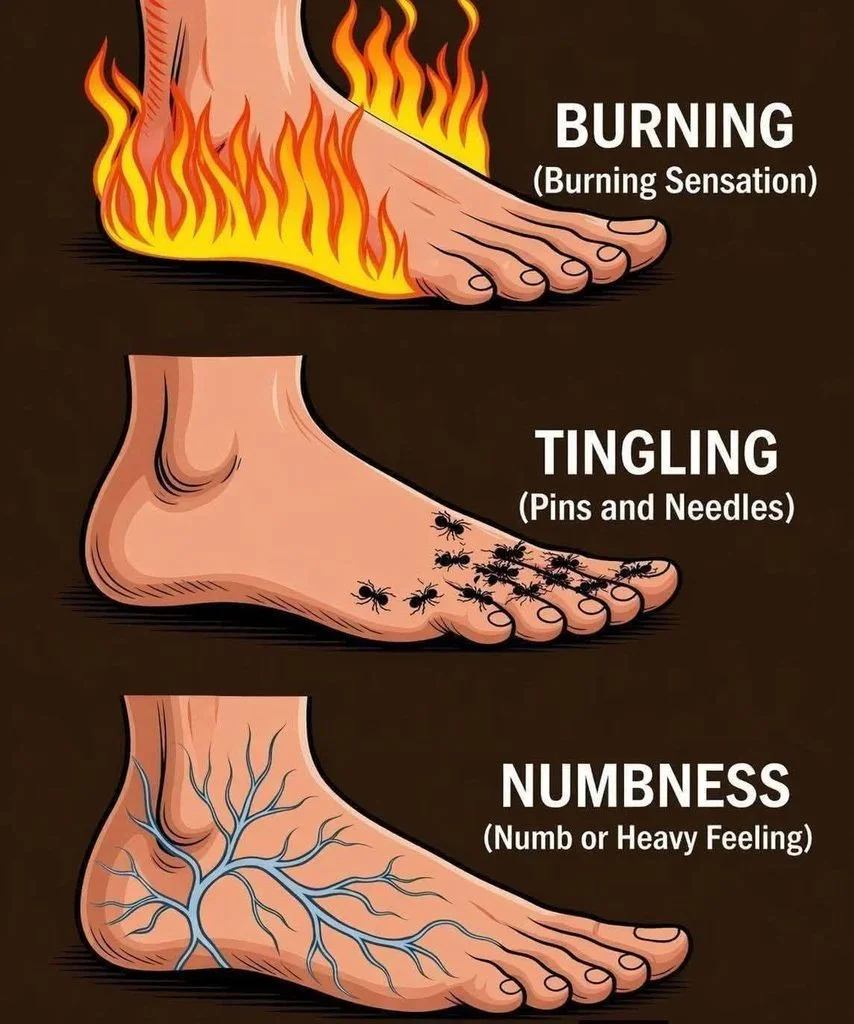
The most common early neurological symptom is paresthesia—abnormal sensations such as tingling, “pins and needles,” or numbness, typically beginning in the hands and feet and often described as a “stocking-glove” distribution. Unlike the transient tingling of a limb that has “fallen asleep,” these sensations tend to be constant and gradually worsen. They reflect the beginning of peripheral nerve damage and are a clear signal that the nervous system is under duress.
Proprioception and Gait: When the Ground Feels Unstable
As the dorsal columns of the spinal cord are affected, individuals may lose their sense of proprioception—the unconscious awareness of where their limbs are in space. They may be unable to feel vibrations (tested with a tuning fork) and may develop a positive Romberg sign, meaning they become unsteady when standing with their eyes closed. Walking can become difficult, clumsy, or unsteady, and limbs may feel stiff. This is not a matter of simple weakness; it is a fundamental disruption of the sensory feedback loops that allow the brain to coordinate movement.
Cognitive and Psychiatric Changes: The Brain Under Siege
The brain itself is vulnerable. Severe B12 deficiency can cause confusion, memory problems, and dementia. These cognitive changes can be subtle at first—irritability, apathy, or drowsiness—but they can progress to significant impairment. Depression and other mood disturbances have also been associated with low B12 status. In older adults, these symptoms are often mistakenly attributed to aging or early dementia, delaying the diagnosis of a highly treatable nutritional cause.