Things You Should Never Put in the Dishwasher (Even If You’re Tempted) (And Why)
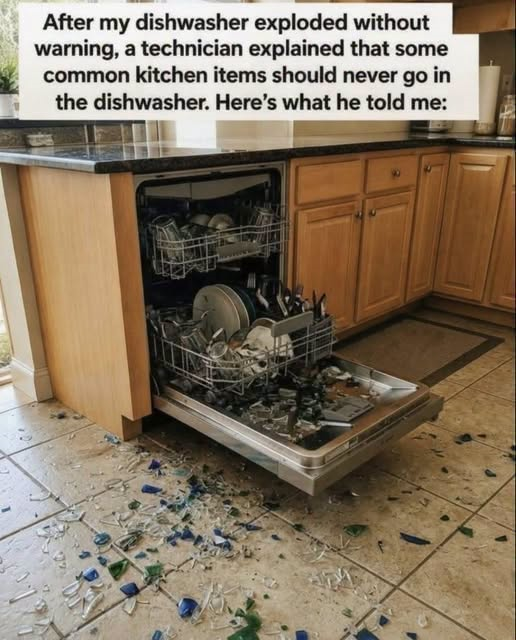
The image is a homeowner’s worst nightmare. A kitchen floor littered with shards of glass, a dishwasher door blown open, and the racks inside a chaotic mess of broken dishes and scattered silverware. The text above the image shares a terrifying warning: “After my dishwasher exploded without warning, a technician explained that some common kitchen items should never go in the dishwasher. Here’s what he told me.”
While dishwashers are undoubtedly one of the greatest labor-saving inventions of the modern age, they are not magical black boxes that can handle anything you throw at them. They are complex appliances that combine high temperatures (often reaching 140°F to 160°F), harsh alkaline detergents, and powerful jets of water. What works wonders on a greasy dinner plate can be absolutely catastrophic for certain materials.
When an item fails inside a dishwasher—whether it shatters into thousands of pieces, melts onto the heating element, or causes a massive pressure buildup—the results can be disastrous. Best case scenario, you lose a favorite mug or a chef’s knife. Worst case scenario, you are facing thousands of dollars in appliance repairs, severe lacerations, or a flooded kitchen, just like the image depicts.
This comprehensive guide will explore the hidden dangers lurking in your kitchen cabinets. We will detail the items you should never put in the dishwasher, the science behind why they fail, and how to properly care for the things you love so they last a lifetime.
The Anatomy of a Dishwasher Explosion: Why Machines Fail
To understand why certain items are dangerous, we must first understand the intense environment inside a dishwasher.
A dishwasher is not just a box that sprays water. It is a high-pressure, high-temperature environment. The water is heated to dissolve tough fats and sanitize surfaces. The detergent is highly alkaline, designed to break down complex food proteins and starches. The spray arms rotate at high speeds, blasting water at various angles to reach every crevice.
The Pressure Build-Up
If a sealed container—like a tightly closed bottle or a lidded tumbler—gets flipped upside down during the wash cycle, the water and heat can cause pressure to build up inside. When the internal pressure exceeds the structural integrity of the container, it can rupture forcefully, sending shards of plastic or metal flying into the drum and damaging the machine.
The Thermal Shock
Glass and ceramics can only handle so much rapid temperature change. If a delicate glass is sitting on the bottom rack directly above the heating element, the extreme localized heat can cause it to crack or shatter. Once one glass shatters, the jets spray the shards everywhere, potentially breaking other items and clogging the machine’s pump and drain, which can lead to a catastrophic failure like the one in the image.
The Blocked Spray Arm
Small items that aren’t secured can flip over, fall through the racks, and become lodged in the rotating spray arm. This blocks the water flow, creates immense pressure in the pump, and can literally burn out the motor or cause water to back up and leak out of the door, flooding your kitchen.
1. The Explosive Hazards: Glass and Crystal
The most common cause of a dishwasher “explosion” is the thermal shattering of glassware.
Fine Crystal and Leaded Glass
Never put fine crystal in the dishwasher. The high heat and harsh detergents will permanently etch the surface, turning it cloudy and destroying its sparkle. Furthermore, some crystal contains lead. The intense heat and acidic foods can cause the lead to leach out, posing a health hazard.
Mason Jars and Thick Glass
While standard glassware is usually safe, Mason jars and heavy, thick glass can be deceptive. Thick glass heats up unevenly. The outside of the jar heats faster than the inside, creating internal stress. When the machine transitions to the rinse cycle or the drying phase, the rapid temperature change (thermal shock) can cause the glass to crack or shatter violently.
Antique or Hand-Blown Glass
Antique glass was not manufactured to withstand modern dishwasher temperatures or the caustic nature of today’s detergents. The glaze on older glass can break down, and the structural integrity is often weaker than modern manufactured glass.
2. The Bladed Beasts: Sharp Knives and Utensils
It is tempting to toss all your cooking tools into the silverware basket. However, sharp knives are one of the most dangerous items to put in a dishwasher.
The Safety Hazard
The primary danger of washing knives in the dishwasher is physical. It is incredibly easy to reach into the silverware basket and accidentally grab the blade of a chef’s knife, resulting in a severe cut. Furthermore, if a knife gets dislodged and goes flying during a high-pressure cycle, it can become a dangerous projectile.
Dulling the Edge
Beyond the safety hazard, dishwashers destroy knife edges. The high heat and detergent can degrade the metallic structure of the blade. More importantly, the knives jostle around during the wash cycle, banging against other utensils. This vibration will quickly dull the fine edge you spent so long sharpening. The edge can even chip if it hits another hard object.
What to do instead: Wash chef’s knives, paring knives, and bread knives by hand with warm water and dish soap. Dry immediately to prevent rust.
3. The Heat-Sensitive Casualties: Plastics and Wood
Dishwashers are tough on non-metal, non-glass materials. The heat and moisture can cause irreversible damage.
Plastic Containers and Tupperware
Not all plastics are dishwasher safe. If a plastic container is not labeled “dishwasher safe,” the heat will cause it to warp, melt, or lose its shape. When it warps, the lid will no longer fit, rendering the container useless.
Even if a plastic is marked dishwasher safe, the extreme heat can degrade the material over time, causing it to become brittle and crack. Furthermore, heating plastics can cause them to leach chemicals like BPA or phthalates, especially if the plastic is old or scratched.
Wooden Spoons and Cutting Boards
Wood is naturally porous. When exposed to the high heat and soaking water of a dishwasher, the wood absorbs moisture and swells. As it dries, it shrinks rapidly. This cycle of swelling and shrinking causes the wood to warp, crack, and split.
Furthermore, the caustic dishwasher detergent strips away the natural oils that keep the wood supple, leaving it dry, rough, and prone to splintering. The glue used to join the pieces of a wooden cutting board can also melt, causing the board to fall apart.
4. The Metal Mutineers: Cast Iron, Aluminum, and Copper
Metals require specific care, and dishwashers are chemically and thermally hostile to many of them.
Cast Iron
Cast iron is perhaps the single worst thing you can put in a dishwasher. The high heat and harsh soap will strip away the polymerized oil seasoning that makes cast iron non-stick and protects it from rust. Once the seasoning is gone, the iron is exposed to water and oxygen, causing it to flash-rust almost immediately. A rusted, unseasoned cast iron pan is a nightmare to restore.
Aluminum Cookware and Bakeware
Aluminum reacts easily with the alkaline detergents used in dishwashers. This reaction causes a dark, dull, chalky film to form on the surface of the metal. This is known as oxidation. If your baking sheets or pots are anodized, the dishwasher will strip the protective coating, ruining the pan.
Copper and Brass
Dishwasher detergent will instantly tarnish copper and brass, turning them a dull, ugly brown. The heat and chemicals strip the protective lacquer often applied to these metals.
Silver and Sterling Silver
While stainless steel flatware is generally dishwasher safe, real silver should always be washed by hand. The high heat and harsh detergents can cause silver to tarnish extremely quickly. If silver comes into contact with stainless steel in the dishwasher, a chemical reaction called “galvanic corrosion” can occur, which can permanently pit and damage the silver.
5. The Hidden Traps: Insulated Tumblers and Sealed Bottles
These items pose a severe risk not just to themselves, but to the machine itself.
Insulated Travel Mugs
Modern travel mugs (like Yeti or Stanley cups) use a double-wall vacuum insulation to keep drinks hot or cold. If water gets inside the vacuum seal, the insulation is destroyed, and the cup will no longer work. Dishwashers can compromise these seals, causing the cup to lose its temperature-regulating abilities.
Narrow-Necked Bottles
Water cannot easily reach the inside of a narrow-necked bottle or vase. If you place one upright in the dishwasher, it will simply fill with dirty, soapy water. If you place it upside down, it can trap water and create a perfect environment for mold and bacteria growth.
Worse, if the bottle is made of glass and the pressure builds up from the hot water, it can shatter.
6. The Adhesive and Specialty Items
Modern items are often made with adhesives, complex electronics, or delicate finishes.
Glued or Bonded Items
If a mug handle has been superglued back on, or a knife blade is set into a wooden handle with epoxy, do not put it in the dishwasher. The intense heat and moisture will melt or weaken the adhesive, causing the item to break apart.
Gold or Hand-Painted China
The decorative elements on fine china, especially those with gold or platinum rims, are often applied over the glaze. Dishwasher detergent is abrasive enough to slowly wear away these delicate metallic finishes.
Non-Stick Pans
While some manufacturers claim their non-stick pans are dishwasher safe, it is generally a bad idea. The harsh detergents break down the delicate non-stick coating, and the high heat can cause the coating to peel or flake off. Once the coating is compromised, the pan is ruined.
Decoding the “Explosion”: The Technician’s Warning
The image at the top shows a catastrophic failure of a dishwasher. While the exact cause of the explosion in the photo isn’t stated, the technician’s advice that “some common kitchen items should never go in the dishwasher” points to a few likely culprits.
A Shattered Item: A thick glass dish (like a Pyrex pan that wasn’t meant for the dishwasher) may have experienced thermal shock, shattering into a thousand pieces, destroying the door, and spilling everything.
Blocked Spray Arm/Pump: A small plastic lid or a lightweight cup flipped over and jammed the spray arm. This built up intense pressure in the water lines, causing a seal to burst and flooding the machine.
Sealed Container Pressure: A tightly sealed travel mug or water bottle flipped over on the bottom rack. The heat expanded the air inside the sealed bottle until it exploded with enough force to blow open the dishwasher door.
How to Properly Load Your Dishwasher (The Safe Zone)
To prevent disasters and ensure your dishes come out sparkling clean, follow these loading best practices:
Scrape, Don’t Rinse: Do not pre-rinse your dishes. Modern dishwashers and detergents are designed to handle food particles. Just scrape large chunks of food into the trash.
Face the Center: Place plates and bowls facing the center of the dishwasher where the spray arm is located. This ensures they get hit with the most water pressure.
Mix It Up: Don’t put all the spoons together. Mix spoons, forks, and knives in the basket so they don’t nest together and block the water.
Angle Cups Downward: Ensure all cups, mugs, and bowls are angled downward so they fill with water but can also drain completely.
Never Block the Spray Arms: Before starting the cycle, give the spray arms a spin. If they don’t spin freely, rearrange the items until they do.
Check the Heat Element: If your dishwasher has an exposed heating element at the bottom (usually older models), never place plastic items on the bottom rack. Keep plastic on the top rack to prevent melting.
Conclusion: A Little Hand-Washing Goes a Long Way
Dishwashers are a fantastic convenience, but they are not indestructible. The catastrophic failure shown in the image is a stark reminder of what can happen when we ignore the manufacturer’s warnings.
By taking a few extra seconds to identify items that should be washed by hand—your grandmother’s fine china, your favorite chef’s knife, the cast iron skillet, and the wooden spoons—you are protecting your valuable kitchenware and your appliance. It is better to spend a minute washing a knife than to spend an afternoon sweeping up broken glass and dealing with a flooded kitchen.
Frequently Asked Questions
Can I put Pyrex in the dishwasher?
Yes, modern tempered Pyrex is usually dishwasher safe. However, older Pyrex (made before 1998) was made of borosilicate glass, which is more prone to thermal shock. If you have vintage Pyrex, it is best to wash it by hand to avoid shattering.
Can I put my Yeti or Stanley cup in the dishwasher?
Most manufacturers state that these cups are top-rack dishwasher safe, but it is highly recommended to wash them by hand. The high heat of the dishwasher can compromise the vacuum seal over time, reducing the cup’s ability to keep drinks hot or cold.
Why did my glass break in the dishwasher?
Glass usually breaks in the dishwasher due to thermal shock (rapid temperature change) or because it was placed too close to the heating element. Thin glass or glass with existing micro-cracks is especially vulnerable.
Can I wash knives in the dishwasher?
No, it is highly recommended to wash knives by hand. The high heat and detergent can dull the blade, and the jostling in the silverware basket can cause the knife to hit other items and chip. It is also a major safety hazard when unloading.
What happens if you put cast iron in the dishwasher?
Putting cast iron in the dishwasher will strip the protective seasoning layer and cause the metal to immediately rust. It can ruin a well-seasoned pan. Always wash cast iron by hand with minimal water and re-oil it immediately.
Can I put Tupperware on the bottom rack?
No. It is best to place all plastic items on the top rack. The bottom rack is closer to the heating element, which can melt, warp, or even cause certain plastics to catch fire.
Is it safe to put aluminum pans in the dishwasher?
No. Dishwasher detergents are highly alkaline and will react with aluminum, causing it to oxidize. This leaves a dark, chalky discoloration on the pans that is difficult to remove.
Can I wash wooden cutting boards in the dishwasher?
Never. The heat and water will cause the wood to swell and crack, and the harsh detergent will strip the natural oils, leaving the wood dry and splintered.
What causes a dishwasher to flood?
Flooding is often caused by a blocked pump or drain line. Small items like broken glass, plastic caps, or even excessive food debris can clog the system. It can also be caused by a malfunctioning door seal or a burst water inlet valve.
Can I put fine china with gold rims in the dishwasher?
No. The abrasive detergent will slowly wear away the delicate metallic gold or platinum finish. Fine china and hand-painted ceramics should always be washed by hand.