The Mystery of the Viral Grandpa Sticker: Unraveling the Mushroom Face Illusion
The Enduring Fascination of Optical Illusions
The mushroom-face sticker is just the latest in a long line of optical illusions that have captured the public’s attention. These viral images serve as fascinating case studies in human perception and the nature of internet culture.
Famous Precedents
The most direct historical antecedent to this sticker is the famous “Rubin vase” illusion (which looks like a vase or two faces in profile) and the “duck-rabbit” illusion (which looks like a duck facing left or a rabbit facing right). These classic illusions remain popular because they tap into a fundamental aspect of human cognition: the brain’s ceaseless effort to impose order and meaning on the world.
Conclusion: A Simple Sticker with a Big Impact
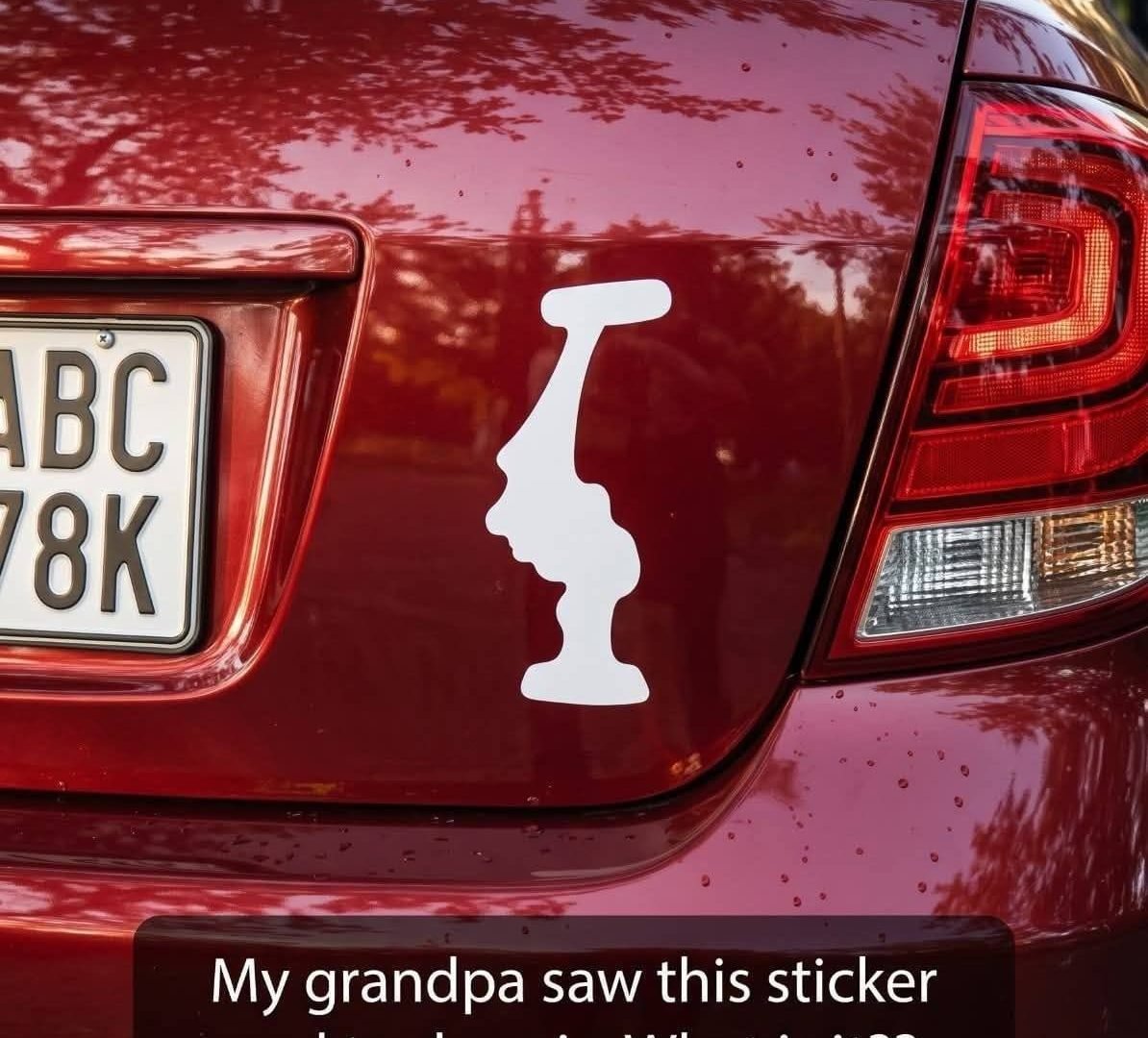
The story of the grandfather who photographed a mysterious bumper sticker is a charming reminder of the power of human curiosity. A simple white shape on a red car sparked a global conversation, uniting people in a shared effort to solve a visual puzzle. The sticker itself is a clever piece of design, a masterful use of negative space that plays with the brain’s tendency to find familiar patterns in ambiguous shapes.
The viral success of the image speaks to the enduring appeal of optical illusions. They surprise us, delight us, and remind us that our perception of reality is far more complex than we might assume. The grandfather may have just wanted to know what the sticker was, but in asking, he gave the internet a perfect little mystery to enjoy.
Frequently Asked Questions
What exactly is the sticker in the viral photo?
The sticker is a dual-image optical illusion. It is designed to look like a mushroom when viewed as a single solid shape, but it also contains the side profile of a human face looking to the left.
Why did the grandfather take a picture of the sticker?
According to the caption, the grandfather saw the sticker on a car and was confused by its appearance. He took a picture to ask his grandchild what it was meant to be.
Is it a mushroom or a face?
It is both. It is an ambiguous image designed to flip between the two interpretations. Some people see the mushroom first, while others immediately see the face. Neither interpretation is “wrong,” as the image is specifically designed to contain both.
What is this type of illusion called?
This is known as an ambiguous figure or a figure-ground illusion. It relies on the brain’s tendency to alternate between two different interpretations of a visual stimulus.
Why does my brain keep flipping between the two images?
This is due to a phenomenon called bistable perception. The brain cannot process both interpretations simultaneously, so it alternates between them. The visual cortex is constantly trying to find the most logical interpretation, causing the image to “flip” back and forth.
Are there other famous examples of this kind of illusion?
Yes, the most famous examples include the Rubin vase (which looks like a vase or two faces in profile) and the duck-rabbit illusion (which looks like a duck facing left or a rabbit facing right).
Why do some people see the face instantly while others only see a mushroom?
Visual perception varies from person to person. Factors such as familiarity with optical illusions, visual acuity, and even cultural background can influence how quickly someone perceives the hidden image. Squinting or looking at the image from a distance can sometimes help the face appear.
What is pareidolia?
Pareidolia is the psychological phenomenon where the human brain perceives a familiar pattern—most often a face—in a random or ambiguous visual stimulus, such as clouds, rocks, or in this case, a bumper sticker.