The Mystery Kitchen Tool the Internet Couldn’t Identify—But You Probably Have One
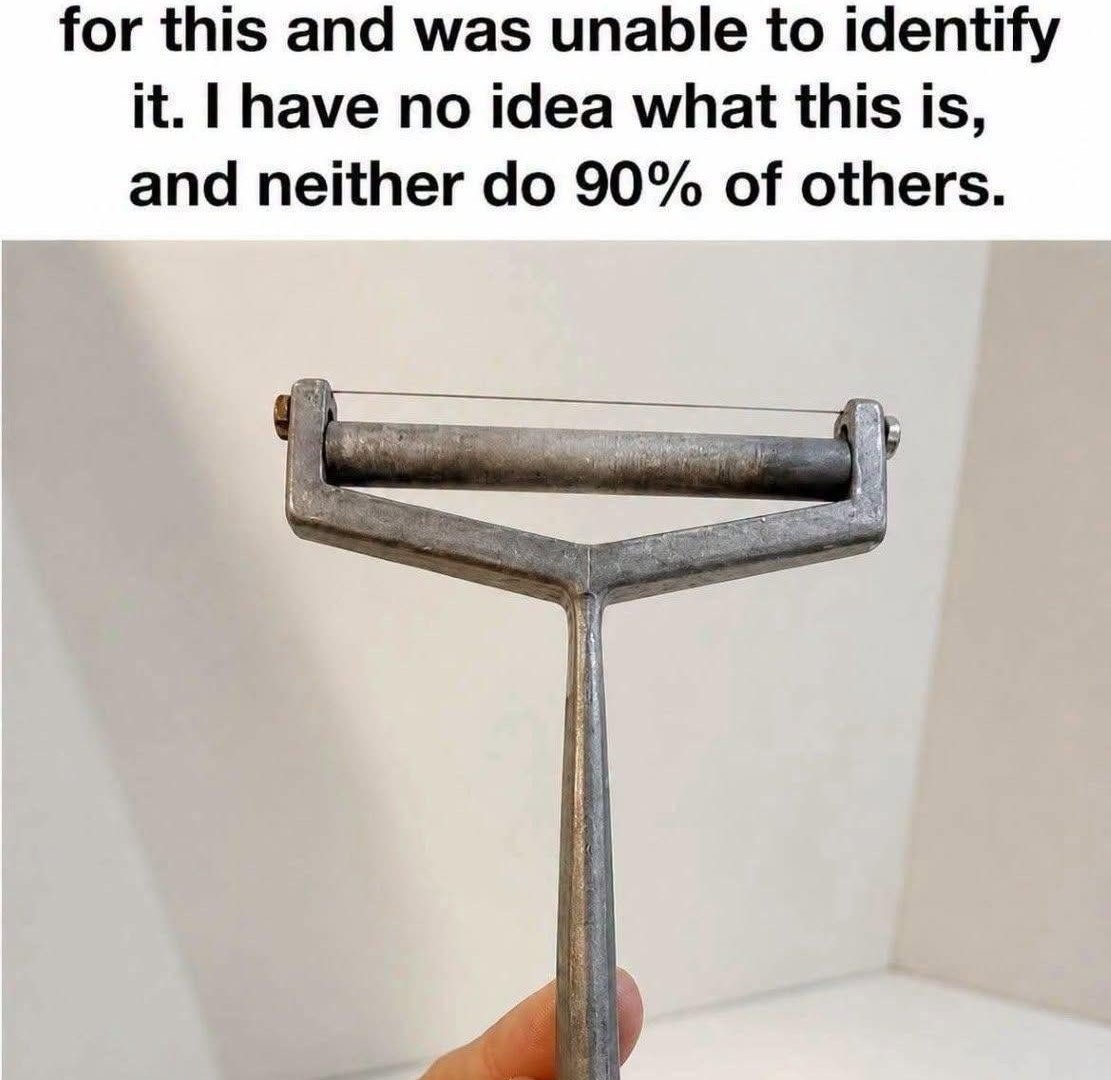
A photo of a simple metal tool with a long handle and a roller at the top has stumped social media users for months. The caption reads: “The whole internet collaborated and couldn’t find what this is. I’m not sure what this is, 90% of people don’t know too.”
But for many people who grew up in the 1960s, 70s, and 80s, this tool is immediately recognizable. It’s a vintage cheese slicer—specifically, the kind designed for hard cheeses like Parmesan .
How it works Unlike modern wire cheese cutters with a single tensioned wire, this vintage model uses a metal roller and a thin wire to slice cheese. You draw the roller across a block of hard cheese, and the wire cuts a thin, even slice. It’s a simple design that’s been around for decades, and many people still have one in their kitchen drawers .
Why the confusion? The tool’s minimalist, industrial look makes it easy to mistake for a scraper, a dough cutter, or even a strange type of grater. Without the context of a kitchen setting, it’s hard to guess its purpose just by looking at it.
A piece of kitchen history This style of cheese slicer was a common household item in the mid-20th century, particularly in Europe and North America. Many of them were made of aluminum or steel and came with a green or wooden roller . Over time, they were replaced by more modern designs, but they remain a favorite among cheese lovers for their simplicity and effectiveness.
Pro tip: If you ever find one at a flea market or in an old kitchen drawer, don’t toss it. Clean it up, and it’ll still work perfectly on a wedge of Parmesan or aged Gouda .
❓ Frequently Asked Questions
What is this tool? It’s a vintage cheese slicer, typically used for hard cheeses .
How does it work? You roll the cylinder across a block of cheese. A thin wire stretches across the roller and cuts a uniform slice .
Why did the internet struggle to identify it? It looks like a generic metal tool. Without the context of a kitchen, it’s difficult to guess its purpose.
Is it still made today? Modern versions exist, but this specific vintage style is less common. You can find them at antique shops, flea markets, and online marketplaces .
What kind of cheese does it work best on? Hard cheeses like Parmesan, Pecorino, and aged Gouda .
How do I clean it? Wash it by hand with warm, soapy water. The wire can be delicate, so avoid harsh scrubbing.
Is it valuable? Most vintage cheese slicers are not expensive. They’re more of a nostalgic kitchen item than a collector’s piece .
Where can I find one? Look for them at antique stores, estate sales, and online vintage shops .