The Laundry Detergent Drawer Decoded: Why Your Clothes Aren’t Getting Clean
There is a specific, deeply frustrating moment that occurs when you pull a fresh load of laundry from the washing machine. You expect a burst of that clean, crisp scent and a garment that feels soft and renewed. Instead, you are greeted with clothes that still carry the faint, lingering odor of sweat, stubborn stains that have refused to lift, and a texture that feels slightly stiff or greasy. You used detergent. You ran the cycle. So, why on earth are your clothes still dirty?
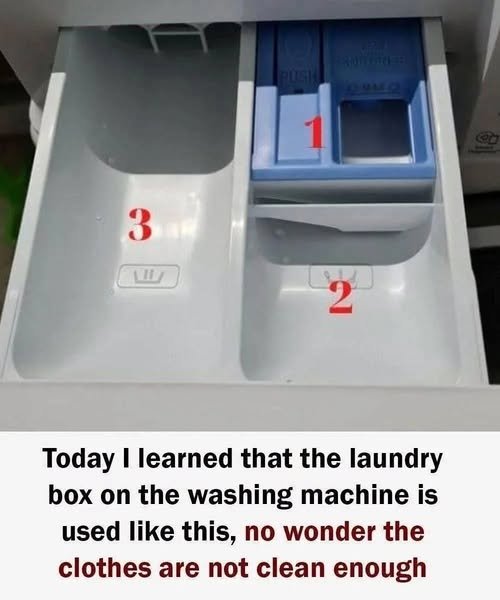
The answer, in many cases, is hiding in plain sight right at the top of your machine. The image presented—showing the detergent dispenser drawer with three distinct compartments marked 1, 2, and 3—is the key to solving this universal laundry mystery. The caption perfectly captures the revelation many homeowners experience: “Today I learned that the laundry box on the washing machine is used like this, no wonder the clothes are not clean enough.”
For decades, we have been confidently pouring detergent, fabric softener, and bleach into these plastic trays, assuming the machine magically knows what to do with them. But the truth is, the washing machine is a highly calibrated piece of engineering. Each compartment is designed to release its contents at a specific point in the wash cycle. If you put the wrong product in the wrong slot, you are actively sabotaging your laundry. You are essentially washing your clothes in plain water and then coating them in a layer of soap at the very end of the cycle.
This comprehensive guide will decode the mysteries of the washing machine detergent drawer. We will explore the anatomy of the dispenser, explain the science of why each compartment exists, detail the devastating consequences of common loading mistakes, and provide a complete, step-by-step guide to ensuring your clothes come out perfectly clean, every single time.
The Anatomy of the Dispenser Drawer
While washing machines come in many brands and models, the standard pull-out detergent drawer universally follows a three-part design. The image provided uses numbers to delineate these sections, but they are typically labeled with specific symbols that are often overlooked.
Understanding the Symbols
Before diving into the specific compartments, it is essential to recognize the universal symbols used by manufacturers:
The Flower Symbol (often in blue): This indicates the compartment for Fabric Softener.
The “I” Symbol: This indicates the compartment for Pre-Wash detergent.
The “II” Symbol (or just a large unmarked section): This is the compartment for the Main Wash detergent.
Compartment 1: The Fabric Softener Slot (The Blue Section)
In the viral image, the number “1” is placed over the blue section, which features a small central well with a siphon tube (often referred to as a “cap” or “hat”).
What goes here: Only liquid fabric softener or conditioner. How it works: This compartment operates on a siphon mechanism. The liquid sits in the tray until the final rinse cycle. At that point, the machine pumps a small amount of water into the compartment. When the water level rises above the siphon tube, the negative pressure pulls the mixture of water and softener down into the drum. Why it matters: Fabric softener is designed to coat fabric fibers with a lubricating film to make them feel soft and reduce static. If you put laundry detergent in this slot, the detergent will only be released during the final rinse. By that point, the main wash cycle is over. Your clothes have already been washed in water without detergent, and now they are being rinsed in a thin layer of soap, which can leave residue and a greasy feel.
Compartment 2: The Pre-Wash Slot (The Right Section)
The number “2” in the image is placed over the right-hand side of the drawer. This compartment is often smaller and is sometimes accompanied by the “I” symbol.
What goes here: Detergent, usually powder, intended for an initial pre-wash cycle. How it works: If you select a pre-wash setting on your machine, water will flush through this compartment first. The detergent mixes with the water, and the machine runs a short, preliminary cycle to loosen heavy soil or stains before draining the dirty water away. After draining, the machine fills again and proceeds to the main wash cycle. Why it matters: If you put your primary, everyday detergent in this compartment and don’t select a pre-wash cycle, the machine will simply flush the detergent down the drain before the main wash even begins. You are literally pouring money down the drain, and your clothes are washing in nothing but water.
Compartment 3: The Main Wash Slot (The Large Left Section)
The number “3” is placed over the largest compartment on the left side of the drawer. This is the workhorse of the machine.
What goes here: Your primary laundry detergent (liquid or powder). How it works: When the main wash cycle begins, a jet of water flushes through this large compartment. The water mixes with the detergent, creating a soapy solution that flows directly into the drum to wash your clothes. Why it matters: This is where 90% of your detergent should go. If you accidentally put your detergent in the fabric softener slot (Compartment 1) or the pre-wash slot (Compartment 2), your clothes are not receiving the cleaning power they need during the main wash. This is the number one reason clothes come out looking dull, feeling stiff, and still carrying body oils and dirt.
The Devastating Mistakes That Ruin Your Laundry
Now that we understand the anatomy, let’s explore the specific errors that people make and why they result in a “no wonder my clothes aren’t clean” scenario.
Mistake 1: The Detergent-Softener Mix-Up
This is the most common error. Pouring liquid detergent into the blue compartment (Compartment 1). Because the blue compartment only releases during the final rinse, the detergent is wasted. The clothes are washed in water alone. At the end of the cycle, the detergent is suddenly released, leaving a soapy residue on the clothes. This can cause skin irritation, static buildup, and a dull, dingy appearance.
Mistake 2: Overfilling the Softener Compartment
Even if you put the right product in Compartment 1, you might be using too much. The siphon mechanism relies on a specific volume of water to pull the liquid out. If you fill the softener past the “MAX” line, the siphon is overwhelmed, and the liquid may not dispense fully, or it may dispense too early in the cycle, washing away before the rinse. Furthermore, concentrated fabric softener can clog the siphon tube over time, leading to a thick, waxy buildup that eventually blocks the flow entirely.
Mistake 3: Mixing Detergent and Softener
Many people simply pour both the detergent and the softener into the same large compartment (Compartment 3). This is a recipe for disaster. The chemicals in the detergent (especially surfactants) bind to the chemicals in the fabric softener. They cancel each other out. The detergent is neutralized and cannot clean the clothes, and the softener is neutralized and cannot soften them. It is a complete waste of both products.
Mistake 4: Using the Wrong Type of Detergent
Not all detergents are created equal. High-Efficiency (HE) washing machines require HE detergents. These are formulated to produce low suds. If you use a regular, high-sudsing detergent in an HE machine, the excess foam can overflow the drawer, seep into the machine’s internal components, and cause malfunction. It also traps dirt in the drum instead of letting it drain away.
Mistake 5: Neglecting the Drawer Itself
The detergent drawer is a warm, damp environment. It is the perfect breeding ground for mold, mildew, and bacteria. If you do not regularly remove and clean the drawer, these harmful organisms will be flushed into your wash water, transferring onto your clothes. This is a primary cause of “musty” or “sour” smelling laundry, even after a heavy wash.
Beyond the Drawer: Other Reasons Your Clothes Are Still Dirty
While mastering the detergent drawer is the most critical first step, there are other factors that can sabotage your laundry routine.
Overloading the Drum
Washing machines need space for the clothes to agitate and tumble. If you stuff the drum to the brim, the detergent and water cannot circulate properly. The dirt from the outside of the fabric cannot be flushed away, and the clothes will simply rub against each other, grinding the dirt deeper into the fibers. A good rule of thumb is to fill the drum about three-quarters full.
Using Too Much Detergent
More soap does not equal cleaner clothes. Overdosing on detergent creates an excess of suds. These suds trap dirt particles and prevent them from being rinsed away. The clothes come out stiff, crusty, and feeling dirty. Always follow the manufacturer’s recommendations based on your water hardness and the size of the load.
Cold Water Washing for Stains
While cold water is excellent for preserving colors and preventing shrinking, it is not always effective at breaking down stubborn stains like sweat, oil, or grease. For heavily soiled items, you need warm or hot water to activate the cleaning agents in the detergent.
Overloaded Washing Machine Filters
Most front-loading machines have a small filter at the bottom (usually behind a small panel). This filter traps lint, coins, and debris. If it becomes clogged, water cannot drain properly, and your clothes will end up sitting in dirty water.
A Step-by-Step Guide to Properly Loading the Detergent Drawer
To ensure perfectly clean clothes, follow this definitive protocol for loading your dispenser.
Identify the Compartments: Look for the symbols on your drawer. The large section is Main Wash (II), the section with the siphon is Fabric Softener (Flower), and the smaller section is Pre-Wash (I).
Add the Main Detergent: Pour the recommended amount of liquid or powder detergent into the large Main Wash compartment (Compartment 3). If you are using pods, do not put them in the drawer; place them directly in the drum with the clothes.
Add the Softener (If Desired): Pour liquid fabric softener into the compartment with the flower symbol (Compartment 1). Do not fill it past the MAX line.
Add Pre-Wash (For Heavy Stains): If you are using a pre-wash cycle, add a small amount of detergent to the Pre-Wash compartment (Compartment 2).
Select the Correct Cycle: Ensure you are selecting the cycle that corresponds to your drawer setup. If you put detergent in the pre-wash slot, make sure the pre-wash setting is activated.
Clean After Use: After every wash, pull the drawer out slightly and allow it to air dry. Once a month, remove the entire drawer and wash it in warm, soapy water. Use a small brush (like an old toothbrush) to clean the siphon tube and the internal spouts in the machine housing.
The Science of Softener: Why the Blue Compartment Exists
The fabric softener compartment is perhaps the most misunderstood part of the washing machine. It is a brilliant piece of micro-engineering that relies on fluid dynamics.
The compartment is designed with a tube that extends upwards. When the machine reaches the rinse cycle, a valve opens, allowing a small amount of water to flow into the compartment. As the water fills the compartment, it mixes with the softener. Once the liquid level reaches the top of the inner tube, it spills over the edge. This action creates a siphon. The entire mixture is instantly sucked down the tube and into the drum.
This design ensures that the softener is released at the exact right moment: after the soapy wash water has been drained, and before the final spin. If you pour detergent into this compartment, the detergent will coat the clothes at the very end of the cycle, leaving them sticky and unclean.
Conclusion: Reclaiming the Wash Cycle
The mystery of the “laundry box” is solved. The three numbered compartments on your washing machine are not decorative; they are the control center for your entire laundry operation. Misplacing your detergent is a guaranteed way to end up with clothes that are dull, stiff, and still harboring the dirt they were meant to shed.
By taking a moment to understand the symbols—the large compartment for the main wash, the small compartment for pre-wash, and the blue siphoning compartment for fabric softener—you can immediately improve the efficacy of every load you wash. Make sure your detergent is going into the main wash, your softener is in the blue section, and your drawer is clean and free of mold. With these simple corrections, you will finally unlock the true cleaning power of your washing machine, and your clothes will emerge fresh, bright, and truly clean.
Frequently Asked Questions
What do the numbers 1, 2, and 3 mean on a washing machine drawer?
The numbering is a standard guide: 1 (usually the blue section) is for fabric softener. 2 (the smaller section) is for pre-wash detergent. 3 (the largest section) is for the main wash detergent.
What happens if I put detergent in the fabric softener compartment?
If you put detergent in the fabric softener slot, it will only be released during the final rinse cycle. Your clothes will be washed in plain water during the main cycle, and then coated in detergent residue at the end, leaving them stiff and unclean.
Why are my clothes still dirty after washing?
The most common reason is putting detergent in the wrong compartment, preventing it from being used during the main wash. Other reasons include overloading the machine, using too much detergent, or never cleaning the detergent drawer, which can harbor mold and bacteria.
Can I put laundry pods in the drawer?
No. Laundry pods should always be placed directly into the washing machine drum, at the back, before adding clothes. They need the water circulation of the drum to dissolve properly. In the drawer, they may not dissolve fully and could clog the dispenser.
What does the flower symbol on the detergent drawer mean?
The flower symbol universally indicates the compartment for fabric softener. It is designed to release its contents only during the final rinse cycle.
How often should I clean my detergent drawer?
You should pull the drawer out to air dry after every wash. You should remove the drawer entirely and wash it with warm soapy water at least once a month to prevent the buildup of mold, mildew, and clogged detergent.
Why does my fabric softener not dispense properly?
The most common reason is overfilling the compartment past the MAX line, which disrupts the siphon mechanism. Another reason is a clogged siphon tube due to a buildup of thick, congealed softener.
Can I mix fabric softener and detergent in the same compartment?
No. Mixing them neutralizes both products. The detergent will not clean, and the softener will not soften. They must be placed in their respective compartments to be released at the correct times.
What is the “I” and “II” on the drawer?
“I” stands for Pre-Wash (Compartment 2). “II” stands for Main Wash (Compartment 3). These symbols are a standard European convention, though many machines now also use numerical labels.
Why does my washing machine smell musty?
A musty smell is often caused by mold growing in the detergent drawer, the rubber door seal, or the drain filter. Regularly cleaning the dispenser drawer and running a hot maintenance wash can eliminate the odor.