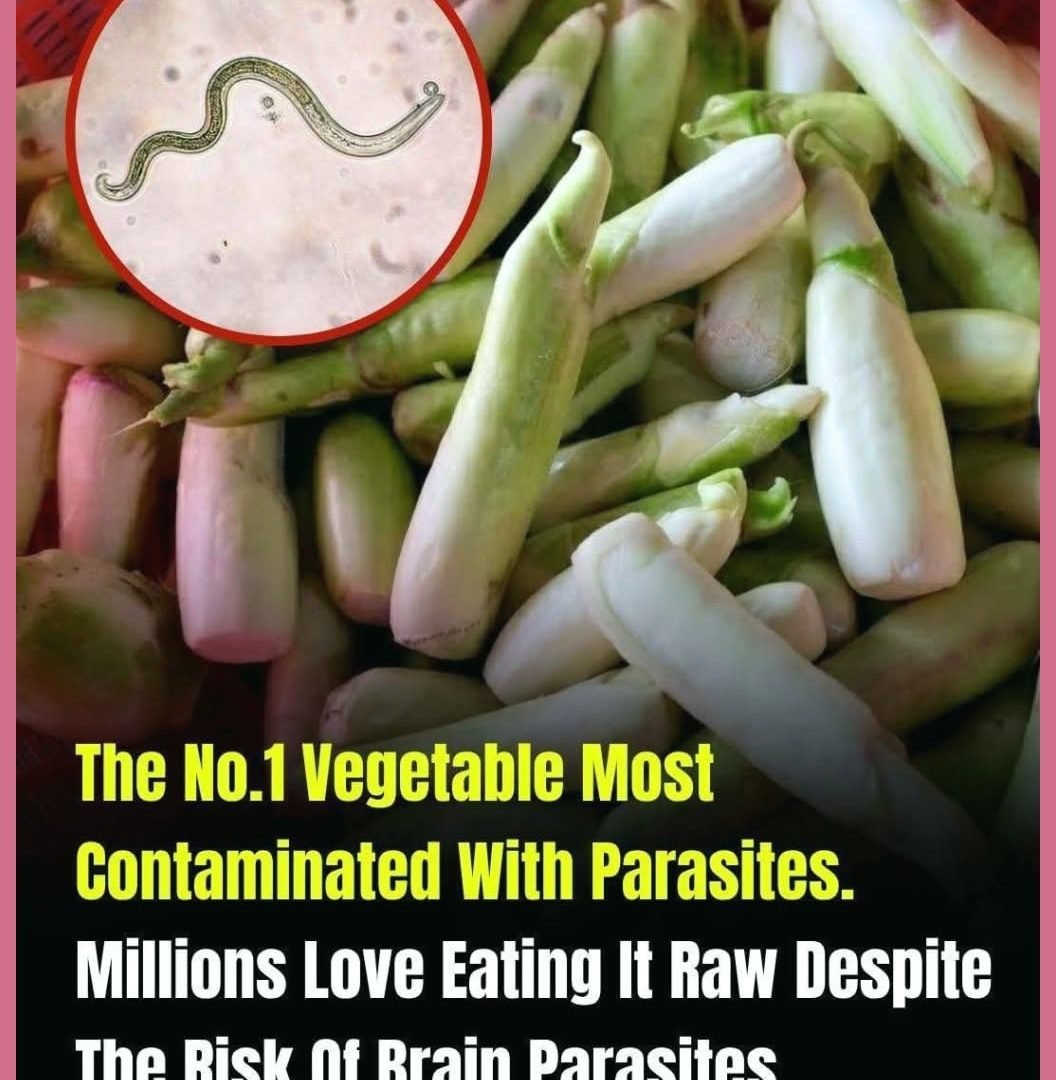
The dark, round fruit in this image appears to be a water chestnut. The claims that eating it introduces “100,000 parasites” or causes severe harm are not supported by any credible scientific evidence.
🔍 The Reality Behind the Water Chestnut
The image has been widely circulated on social media, but the food itself isn’t inherently dangerous. Here’s what’s actually going on:
A Common, Safe Food: Water chestnuts are a popular ingredient in many Asian dishes, known for their crisp texture and mild flavor. They are a staple in stir-fries and are also eaten raw or boiled as a snack.
The “Parasite” Myth: The viral text uses a shocking number (“100,000 parasites”) to create fear, but there is no scientific basis for this. While any raw food can potentially carry bacteria if contaminated, water chestnuts are not a known source of massive parasitic infections.
A Potential Confusion: Some people confuse water chestnuts with other aquatic plants like water caltrop (also called “singhara” or “buffalo nut”), which is another dark, horned fruit. While water caltrop can carry a parasite called Fasciolopsis buski if eaten raw in certain regions, this is a specific and localized risk, not a universal danger associated with the food shown here.
✅ What You Should Do
You don’t need to be afraid of water chestnuts, but it’s always smart to practice good food safety:
Cook Them: The safest and most common way to eat water chestnuts is cooked. Boiling, stir-frying, or roasting them will eliminate any potential bacteria or parasites.
Wash Thoroughly: If you eat them raw (which is safe if they are fresh and clean), be sure to wash and peel them thoroughly under running water first.
Trust Your Source: Buy them from reputable grocery stores or markets, not from unknown sources.
The image and its caption are designed to provoke fear rather than inform. By understanding the food’s actual nature and following standard food safety practices, you can safely enjoy water chestnuts without worry.