The Blood Type Linked to a Higher Probability of Reaching 100: What the Science Actually Says
The pursuit of a long, healthy life is one of humanity’s oldest and most persistent quests. We meticulously track our diets, obsess over exercise routines, and invest heavily in the latest medical advancements, all in the hope of extending our time on Earth. Yet, hidden within our very veins lies a biological marker that a growing body of scientific research suggests may hold a profound influence over how long we live: our ABO blood type. While lifestyle and environment are undeniably critical, a fascinating field of study has zeroed in on a specific blood group that appears to have a statistical advantage when it comes to extreme longevity—the rare milestone of reaching 100 years old.
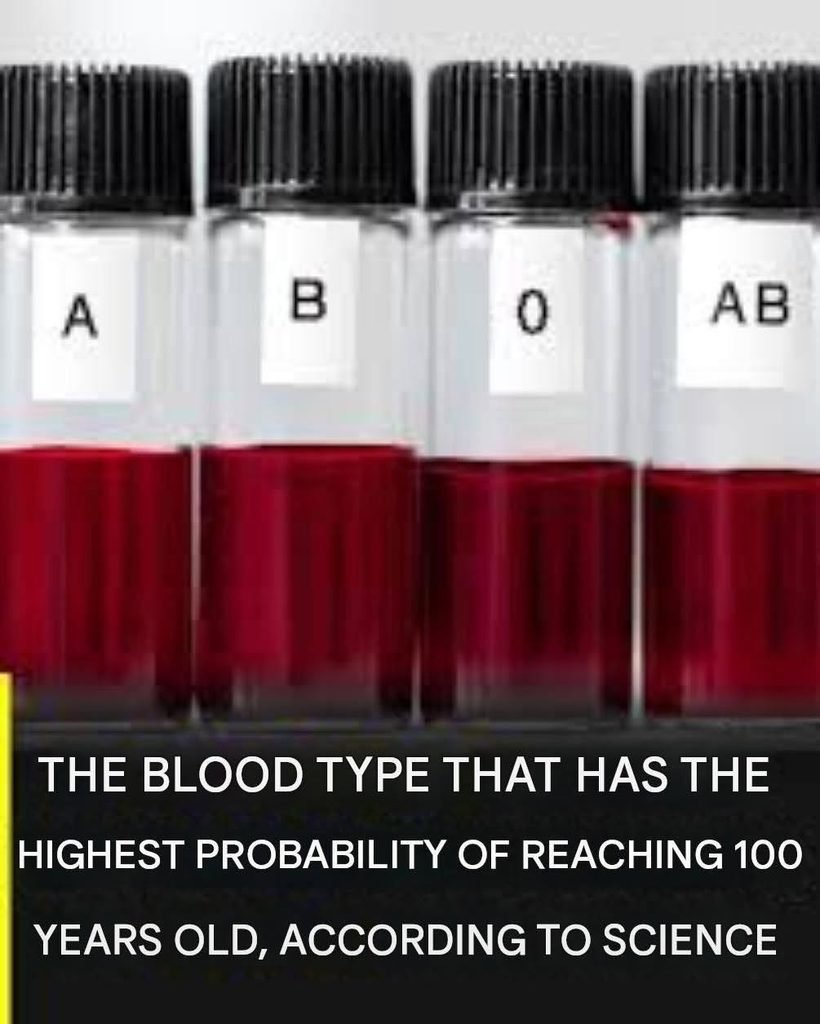
A viral social media image featuring four vials of blood labeled A, B, O, and AB, accompanied by the bold text “THE BLOOD TYPE THAT HAS THE HIGHEST PROBABILITY OF REACHING 100 YEARS OLD, ACCORDING TO SCIENCE,” has reignited public curiosity about this biological lottery. For anyone wondering if their blood type dictates their lifespan, the answer is far more complex than a simple “yes” or “no.”
The blood type that consistently emerges at the center of this research is Blood Type B. Multiple studies, particularly those conducted in populations with high numbers of centenarians, have observed a notable predominance of the B antigen among individuals who survive into their second century of life. This is not merely a statistical anomaly; it is a finding that has prompted scientists to investigate the deep biological mechanisms—from cellular repair to metabolic resilience—that might link this specific blood group to a slower aging process and a higher probability of achieving exceptional longevity.
However, science is rarely as straightforward as a viral headline. The relationship between blood type and lifespan is a complex web of genetics, disease susceptibility, and environmental factors. To understand why Type B has captured the attention of gerontologists, we must look at the landmark study that started it all, the biological theories behind it, and the conflicting evidence that points to another blood type entirely.
The Landmark Discovery: Blood Type B and Centenarians
The foundation of the connection between Blood Type B and longevity was laid by a team of Japanese researchers in a study published in the journal Experimental Gerontology in 2004. This research, led by Kenichiro Shimizu and colleagues from Keio University School of Medicine, sought to investigate the association between ABO blood groups and life expectancy by comparing a group of individuals who had achieved extreme old age with a younger, healthy control group.
A Study of 269 Centenarians
The study examined the blood type distribution of 269 centenarians (individuals aged 100 or older) living in Tokyo. These findings were then compared against a much larger, regionally matched control group of 7,153 individuals. The results were striking. When analyzing the frequencies, the researchers found that Blood Type B was observed more frequently in the centenarian group than in the general control population.
Specifically, the frequencies of blood types in the centenarians were:
Type A: 34.2%
Type B: 29.4%
Type O: 28.3%
Type AB: 8.2%
In comparison, the control group showed a lower frequency of Type B (around 21.9%) and a higher frequency of Type A. The statistical analysis revealed that the observed frequencies in centenarians were significantly different from those in the controls (P=0.04), leading the authors to conclude that “blood type B might be associated with exceptional longevity.”
Validation Against the General Population
The findings were not a one-off anomaly. The researchers took the extra step of comparing the centenarians’ blood types against a massive database of 4,464,349 individuals from a 1978 survey representing the general Japanese population. Once again, the increased frequency of Blood Type B among centenarians was confirmed, with a highly significant statistical difference (P=0.005). This robust methodology strengthened the case that the presence of the B antigen might confer some form of survival advantage in the quest for extreme longevity.
It is important to note where this study was conducted. Japan is renowned for having one of the highest life expectancies in the world and a large population of centenarians. Furthermore, the Japanese population is relatively genetically homogenous compared to many Western nations, which makes it easier for researchers to isolate specific variables, like blood type, without the results being muddied by vast genetic variations.
The Biology of Blood Type B: A Model of Resilience
The statistical link observed in population studies is compelling, but it raises a crucial question: What is it about the biology of Blood Type B that could contribute to a longer life? The answer appears to lie in how the body handles stress, repairs itself, and combats disease at a cellular level.
Enhanced Cellular Repair and Metabolic Stress Management
A more recent and sophisticated study has provided a potential biological mechanism for this longevity advantage. Researchers have found that individuals with Blood Type B may age more slowly due to a superior ability to manage metabolic stress and repair cellular damage.
This research analyzed the biological age of multiple organs in over 5,000 volunteers by measuring thousands of proteins in the bloodstream. Biological age is a measure of how well your body is functioning, independent of chronological age. The results were remarkable. While approximately 20% of the general population showed accelerated aging in at least one organ, this characteristic was not observed in participants with Blood Type B.
The scientists attributed this to two key factors: a better capacity for cellular repair and more efficient management of metabolic stress, which protects the body against various age-related diseases. This suggests that Blood Type B may provide a systemic, protective advantage that helps the body withstand the wear and tear of time more effectively than other blood types.
Surviving Serious Illnesses
Another theory, proposed by the original Japanese researchers, is that Blood Type B might contribute to longevity through mechanisms that favor surviving serious diseases rather than simply escaping them. The ABO blood group antigens are not just present on red blood cells; they are expressed on the surfaces of most cells in the body and can influence a wide range of biomedical processes.
Different blood types have been associated with varying susceptibilities to certain diseases. For instance, Type A has been linked to higher risks of certain cancers and clotting disorders, while Type O has been linked to bleeding disorders. The researchers hypothesized that the biological profile of Type B might offer a unique resilience, allowing individuals to better endure and recover from life-threatening illnesses that would otherwise claim the lives of people with other blood types. This resilience could be a key factor in pushing the lifespan toward the extreme limits of human longevity.
The Contradiction: What About Blood Type O?
If you were to search for the “longest living blood type” online, you would find just as many articles claiming that Blood Type O holds the secret to longevity. And this isn’t just internet speculation. There are highly credible, large-scale genetic studies that point in the opposite direction of the Japanese research.
The PLOS Genetics Study
A major 2015 study published in the journal PLOS Genetics, which analyzed the genomes of thousands of centenarians and controls, found that centenarians were more likely to have Blood Type O.
Why would Type O be advantageous? The theory centers on cardiovascular health. Research has shown that people with Blood Type O tend to have lower levels of von Willebrand factor (a protein that promotes blood clotting) and lower levels of LDL (bad) cholesterol. Because cardiovascular disease is the leading cause of death worldwide, a built-in lower risk of heart attacks and strokes could naturally push a lifespan toward the extreme upper limits.
The Complexity of the ABO System
How can one study say Type B and another say Type O? This is where the complexity of genetics and epidemiology comes into play.
Different Populations: The 2004 study looked at a specific Japanese population. The 2015 genetic study looked at a broader European descent population. Genetic variations and environmental factors (like diet) differ significantly between these groups.
Different Metrics: The Japanese study looked at blood type distribution among living centenarians. The genetic study looked at specific genetic markers associated with blood types.
Type AB: Other research has found that people with Type AB have the highest risk of cognitive decline and stroke, likely because they share some of the clotting risks of Type A and Type B.
To add another layer of complexity, a 2020 study conducted on a large Chinese population concluded that ABO genetic variants are not associated with human longevity at all. The researchers found no significant difference in the distribution of ABO genes between the elderly and the general population.
Ultimately, your blood type is just one tiny genetic marker among thousands. It cannot predict your future with certainty. While the 2004 Japanese study offers compelling evidence that Blood Type B is overrepresented among people who live to 100, it is not a guarantee. Longevity is a multifactorial trait influenced by a vast array of genetic, environmental, and lifestyle factors.
(End of Part 1. Continue to Part 2 to explore how different blood types interact with specific diseases, the truth about the Blood Type Diet, and the actionable, evidence-based habits you can adopt to extend your lifespan, regardless of your blood type.)