Nocturnal Leg Cramps: 5 Serious Reasons Your Body Is Warning You (And How to Stop Them)
Meta Description: Waking up with a painful leg cramp? It might be more than just a muscle twitch. Discover the 5 hidden health warnings behind nocturnal leg cramps and how to treat them.
Introduction
There are few things more jarring than being woken from a deep sleep by a sudden, agonizing pain in your calf or foot. The muscle feels hard, knotted, and impossible to relax. This phenomenon, known medically as a nocturnal leg cramp (or commonly a “charley horse”), affects millions of people.
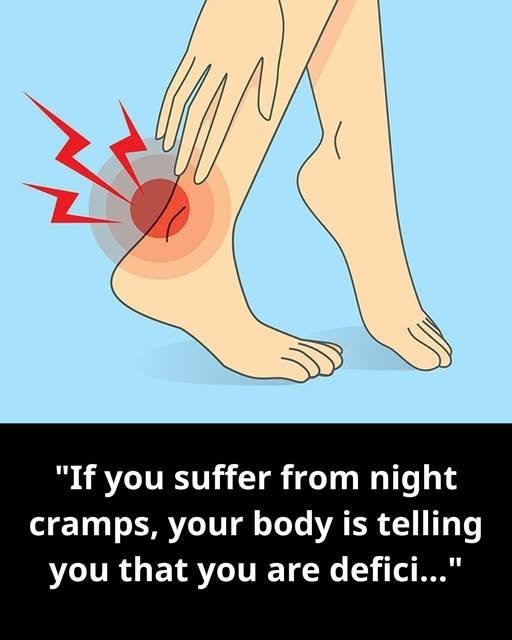
While often dismissed as a random muscle spasm or a sign of aging, frequent night cramps can actually be your body’s way of sending a distress signal. As the image above suggests, if this is happening often, your body may be warning you of an underlying issue ranging from simple dehydration to circulation problems.
Here is a factual breakdown of what these cramps mean and how to address the root cause.
1. The Warning: “I Am Dehydrated and Lacking Electrolytes”
The most common cause of leg cramps is a simple imbalance in your body’s chemistry. Muscles rely on a delicate balance of water and minerals to contract and relax properly.
The Deficiencies: If you are low on Magnesium, Potassium, or Calcium, your nerves can become hyperexcitable, causing muscles to spasm uncontrollably.
The Fix: Ensure you are drinking enough water throughout the day. Incorporate electrolyte-rich foods like bananas (potassium), spinach (magnesium), and dairy or leafy greens (calcium) into your diet.
2. The Warning: “My Circulation Is Poor”
If your cramps are accompanied by cold feet or pain when walking, it could be a sign of Peripheral Artery Disease (PAD).
The Mechanism: PAD occurs when plaque builds up in the arteries, narrowing them and reducing blood flow to the limbs. When you lie down at night, blood flow slows down further. If the muscles aren’t getting enough oxygen-rich blood, they can cramp up in protest.
The Fix: This requires a doctor’s visit. Lifestyle changes like quitting smoking, managing cholesterol, and walking regularly can help improve circulation.
3. The Warning: “My Nerves Are Damaged”
For people with diabetes, night cramps can be an early sign of Diabetic Neuropathy.
The Mechanism: High blood sugar levels over time can damage the nerves in the legs and feet. This nerve damage often manifests as cramping, tingling, or a “pins and needles” sensation, particularly at night when there are fewer distractions.
The Fix: Strict blood sugar management is crucial to prevent further nerve damage.
4. The Warning: “My Medications Are Causing Side Effects”
If you recently started a new medication, the cramps might be a direct result.
The Culprits:Statins (cholesterol-lowering drugs) are notorious for causing muscle pain and cramping. Diuretics (water pills) used for high blood pressure can deplete your body of potassium and magnesium, leading to cramps.
The Fix: Never stop taking prescribed medication without consulting your doctor. They may be able to adjust your dosage or switch you to a different drug.
5. The Warning: “My Muscles Are Overworked”
Sometimes the warning is simply physical. If you stood on hard floors all day or exercised intensely without stretching, your muscles are fatigued.
The Mechanism: Muscle fatigue leads to a shortening of the muscle fibers. When you lie in bed with your toes pointed slightly downward (plantar flexion), the calf muscle is already in a shortened position, making it prime territory for a cramp.
The Fix: Stretch your calves before bed. Stand facing a wall, place your hands on it, and step one foot back, keeping the heel on the ground to stretch the calf.
Immediate Relief: What to Do When It Happens
When a cramp strikes in the middle of the night, try these steps to stop the pain:
Straighten and Flex: Straighten your leg and pull your toes upward toward your shin (dorsiflexion). This forces the cramped muscle to lengthen.
Stand Up: Putting weight on the affected leg can help force the muscle to relax.
Heat: Apply a heating pad or take a warm shower to increase blood flow and relax the tension.
When to See a Doctor
Occasional cramps are normal. However, you should see a doctor if:
The cramps are severe and happen frequently (several times a week).
You notice swelling, redness, or skin changes in your leg.
The cramps are associated with muscle weakness.
Home remedies (stretching and hydration) do not help after a few weeks.
Conclusion
Night leg cramps are painful and disruptive, but they are rarely something you just have to “live with.” By listening to your body’s warnings—whether it needs more water, better circulation, or a medication adjustment—you can stop the pain and get back to a restful sleep.
Disclaimer: This article is for informational and educational purposes only and does not constitute professional medical advice. If you are experiencing severe or persistent leg pain, please consult a healthcare provider for a proper diagnosis.