New Method: Could Colonoscopy Become a Less Invasive Examination?
For decades, the colonoscopy has held a dual reputation in modern medicine. It is widely celebrated as the gold standard for colorectal cancer screening—a life-saving procedure that can detect and remove precancerous polyps before they ever have the chance to become malignant. Yet, simultaneously, it is one of the most feared and avoided medical examinations. The mere mention of the word evokes anxiety about the required bowel preparation, the invasiveness of the procedure, and the potential for discomfort. This reluctance is not just a matter of personal preference; it is a significant public health crisis. Delayed diagnoses due to patient avoidance directly contribute to high colorectal cancer mortality rates.
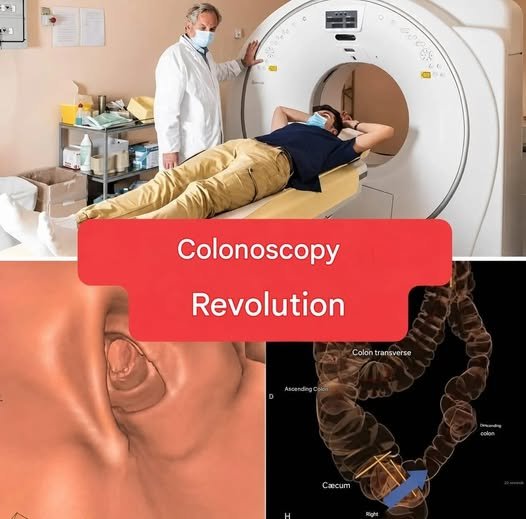
However, a quiet revolution is underway in the field of gastroenterology. The image provided—featuring a CT scanner, a detailed 3D reconstruction of the colon, and a close-up of an endoscopic view—encapsulates the core of this transformation. It suggests a future where examining the colon is no longer a daunting, invasive ordeal, but a quick, comfortable, and highly accurate experience.
This comprehensive guide will explore the cutting-edge technologies and methodologies that are redefining colorectal cancer screening. We will delve into the science of virtual colonoscopies, the marvel of swallowable camera pills, the game-changing role of artificial intelligence, and the promise of robotics. By examining the facts behind these innovations, we can understand how the medical community is working to dismantle the barriers of fear and discomfort, making life-saving screening accessible to everyone who needs it.
The Current Paradigm: Why Colonoscopy is the Gold Standard
Before exploring the future, it is essential to understand the present. Optical colonoscopy (OC) remains the undisputed gold standard for colorectal cancer prevention. It is the only screening test that is both diagnostic and therapeutic. During the procedure, a long, flexible tube equipped with a camera and light is inserted into the rectum and guided through the entire length of the colon.
The primary advantage of OC is its ability to directly visualize the lining of the colon. If a polyp is found, it can be removed immediately during the same procedure, effectively preventing cancer from developing. This “one-stop” diagnostic and therapeutic capability is unmatched. However, this gold standard comes with significant drawbacks. The procedure requires a rigorous bowel preparation to clear the colon of all fecal matter. It typically involves sedation, carries a small risk of complications such as perforation or bleeding, and requires a recovery period. These factors contribute to the widespread patient reluctance that the new “revolution” seeks to address.
The First Revolution: Virtual Colonoscopy (CT Colonography)
The most established alternative to the traditional colonoscopy is Computed Tomography Colonography (CTC), commonly known as virtual colonoscopy. This technique, first described in 1994, uses a CT scanner to take hundreds of cross-sectional images of the abdomen and pelvis. Advanced computer software then assembles these images into a detailed 2D and 3D model of the colon, allowing a radiologist to “fly through” the colon virtually, inspecting the lining for polyps and abnormalities.
How It Works and What to Expect
A virtual colonoscopy is a minimally invasive and well-tolerated procedure. While it still requires bowel preparation to empty the colon, the preparation is often less rigorous than for a traditional colonoscopy. It frequently involves a low-residue diet and the use of a tagging agent (oral contrast) that mixes with any residual stool, making it easier to distinguish from polyps on the scan.
During the exam, a small, flexible tube is inserted into the rectum to gently inflate the colon with carbon dioxide (CO2). This distension is necessary to obtain clear images of the colon walls. The patient then lies on a table that moves through the CT scanner. The entire scan takes only about 10 to 15 minutes, and there is no need for sedation, meaning the patient can immediately return to normal activities.
The Evidence: Accuracy and Applications
Decades of research have validated the accuracy of CT colonography. Studies have shown that CTC demonstrates performance comparable to that of optical colonoscopy, particularly in detecting advanced adenomas (≥ 10 mm) and early-stage colorectal cancers. It is highly sensitive and specific for identifying significant benign precursors years before they could potentially become malignant.
Because it is less invasive, CTC is increasingly used in specific clinical scenarios. It is an excellent option for elderly or fragile patients who may not tolerate sedation or the invasiveness of OC, and for patients who refuse a traditional colonoscopy. It is also a valuable tool when an optical colonoscopy is incomplete due to anatomical challenges or obstructions. Furthermore, CTC provides a “one-stop shop” examination, as it can simultaneously stage local colon cancer and assist in preoperative planning for laparoscopic surgery.
The Limitations
Despite its advantages, CTC is not a perfect replacement for optical colonoscopy. The primary limitation is that it is purely diagnostic. If a polyp is detected, the patient must undergo a separate optical colonoscopy for its removal. Additionally, the procedure involves exposure to a low dose of ionizing radiation, though modern low-dose protocols have significantly minimized this risk. There is also a small risk of pneumoperitoneum (air outside the colon) from the CO2 insufflation, though this is rare and typically resolves on its own.
The Second Revolution: Colon Capsule Endoscopy (CCE)
Imagine swallowing a tiny pill equipped with a camera, a light, and a battery. This is the reality of Colon Capsule Endoscopy (CCE). It is a fundamentally noninvasive and painless procedure that requires no intubation, no insufflation, and no sedation. The patient simply swallows the capsule, which then travels through the digestive tract, capturing thousands of high-resolution images of the colon mucosa as it goes.
The Technology and Procedure
The first-generation capsule (CCE-1) was introduced in 2006. Today, second-generation capsules (CCE-2) feature higher imaging frequencies and wider fields of view, dramatically improving their diagnostic capabilities. The capsule transmits images to a recorder worn on the patient’s waist. After the procedure, the recorder is returned to the doctor, who reviews the footage.
The Evidence: A Viable Alternative
The accuracy of CCE-2 is impressive. A meta-analysis reported that the sensitivity and specificity of CCE-2 for detecting colonic polyps of 6 mm or larger were 86.0% and 88.1%, respectively. A systematic review found that the detection rate for colorectal cancer ranged from 64% to 100%, with a 93% detection rate for completed procedures. The diagnostic accuracy of CCE-2 is comparable to that of optical colonoscopy and surpasses that of CT colonography, making it a viable alternative.
Current Indications and Limitations
Currently, the U.S. Food and Drug Administration (FDA) has approved CCE-2 specifically for patients with a previously incomplete optical colonoscopy. The European Society of Gastrointestinal Endoscopy also proposes CCE as a screening tool for average-risk patients who refuse or cannot tolerate a conventional colonoscopy.
The most significant drawback of CCE is the stringent bowel preparation required. Because the capsule cannot flush away fecal matter, the colon must be exceptionally clean for the camera to get a clear view. Additionally, if a suspicious lesion is found, the patient will still need a traditional colonoscopy for biopsy or removal. Furthermore, CCE is not recommended for patients with swallowing disorders, known bowel obstructions, or implanted cardiac devices.
The Third Revolution: Artificial Intelligence (AI) in Colonoscopy
While CTC and CCE focus on making the procedure less invasive, Artificial Intelligence is revolutionizing the traditional colonoscopy by making it vastly more effective. One of the biggest challenges in colonoscopy is the “miss rate”—the percentage of polyps that are inadvertently overlooked by the endoscopist. AI-assisted colonoscopy, specifically Computer-Aided Detection (CADe), acts as a second set of eyes, highlighting suspicious lesions in real-time on the monitor.
The Data: A Significant Improvement in Detection
The evidence supporting AI in colonoscopy is robust. A massive systematic review and meta-analysis of 38 randomized controlled trials, involving nearly 30,000 patients, found that AI-assisted colonoscopy significantly improved the Adenoma Detection Rate (ADR) and the Polyp Detection Rate (PDR). The relative risk (RR) for both was 1.19, indicating a 19% increase in detection compared to standard colonoscopy.
More importantly, AI significantly reduced the miss rates. The Adenoma Miss Rate (AMR) and Polyp Miss Rate (PMR) were reduced by roughly half (RR=0.52 and 0.53, respectively). This means that AI is actively helping doctors find polyps that would have otherwise been left behind, which is a profound advancement for cancer prevention. AI systems have also been shown to improve detection in screening cohorts, with ADR reaching 79% compared to 68% in standard procedures.
Clinical Implications
AI does not make the procedure less invasive, but it makes it significantly more reliable. By ensuring that fewer precancerous polyps are missed, AI-assisted colonoscopy directly enhances the protective benefit of the screening. It addresses the human factor of fatigue and distraction, offering a consistent, high level of scrutiny throughout the entire procedure.
The Fourth Revolution: The Rise of Robotics and Soft Robotics
The future of endoscopy lies in robotics. Traditional colonoscopes are rigid, difficult to maneuver through the complex, variable anatomy of the intestines, and can cause discomfort due to the pushing and looping of the scope. Robotic colonoscopy aims to solve these issues by providing greater dexterity, stability, and patient comfort.
Robotic-Assisted Colonoscopy
Robotic colonoscopes have been in development for decades. These systems use robotic arms and advanced control mechanisms to navigate the colon with precision. While several devices have received FDA clearance, mainstream adoption has been limited due to their complexity and cost. However, recent pilot studies have demonstrated their viability. A UK study of a novel robotic colonoscopy system found it to be a safe and effective method that improved patient comfort and completion rates, even in cases where previous colonoscopies had failed.
The Promise of Soft Eversion Robots
Perhaps the most exciting development is the emergence of soft eversion robots, also known as “vine robots” or “soft growing robots”. These devices are fundamentally different from traditional scopes. Made from thin, flexible, airtight thermoplastic polyurethane, they grow from the tip, everting (turning inside out) like a vine as they are pushed forward.
This design allows for frictionless advancement through the colon, potentially enabling pain-free procedures without the need for sedation. The robot can navigate the tortuous paths of the colon by growing and steering at its tip, rather than pushing against the colon walls. While still in the research phase, these soft robots represent a paradigm shift in minimally invasive diagnostics, offering the potential for a truly patient-friendly colonoscopy.
The Non-Invasive Frontier: Blood and Stool Tests
For patients who absolutely refuse any form of endoscopic or radiological screening, there are non-invasive options that analyze biological samples. These tests do not visualize the colon, but they can detect signs of cancer or advanced polyps.
Stool-Based Tests (FIT and mt-sDNA)
The Fecal Immunochemical Test (FIT) is a simple, at-home test that detects hidden blood in the stool. It is inexpensive and widely used. The multitarget stool DNA test (mt-sDNA), commercially known as Cologuard, is more advanced. It combines a FIT test with DNA biomarkers to detect both blood and cellular changes shed by cancerous or precancerous growths. The mt-sDNA test has demonstrated high sensitivity for detecting colorectal cancer and is considered a highly effective non-invasive screening option.
Blood-Based Tests (Liquid Biopsy)
A newer frontier is the cell-free DNA (cfDNA) blood test. This “liquid biopsy” looks for fragments of tumor DNA circulating in the bloodstream. In the ECLIPSE study, a cfDNA blood test was validated as a primary screening option. However, it is crucial to understand the limitations. While blood-based tests are highly convenient, they perform poorly in detecting advanced precancerous lesions (APCL) compared to stool tests. The sensitivity of FIT for APCL is significantly higher than that of cfDNA tests (31.5% vs. 13.2%). Because precancerous polyps do not shed as much DNA into the blood as cancers do, a blood test may miss the very lesions that a colonoscopy would catch and remove. Therefore, while blood tests may improve overall screening adherence, they are not a substitute for the preventative power of colonoscopy or high-sensitivity stool tests.
The Psychological Barrier: Why Less Invasive Matters
The development of these new methods is not just about technological innovation; it is about addressing a deeply human problem. Conventional colonoscopy is perceived as an invasive and potentially painful procedure, which requires conscious or deep sedation and takes place in an unpleasant setting. This perception leads to widespread avoidance.
Less invasive techniques, such as CT colonography and capsule endoscopy, remove many of these barriers. By eliminating the need for sedation, reducing recovery time, and minimizing physical discomfort, these methods have the potential to significantly increase patient compliance with screening guidelines. Early detection is the single most effective way to reduce colorectal cancer mortality, and any method that encourages more people to get screened is a victory for public health.
Conclusion: A Future Without Fear
The “Colonoscopy Revolution” is not a single event, but a convergence of multiple groundbreaking technologies. Virtual colonoscopy offers a non-invasive, radiation-based alternative for those who cannot or will not undergo sedation. Capsule endoscopy provides a painless, swallowable option that is comparable in accuracy. Artificial intelligence is making traditional colonoscopies smarter and safer by reducing miss rates. And the emergence of soft robotics promises a future where a colonoscopy could be a truly pain-free, frictionless experience.
While the traditional optical colonoscopy will likely remain the gold standard for its unique ability to both diagnose and treat in a single session, the future of colorectal screening is one of personalized choice. By offering a spectrum of options—from the highly effective but invasive, to the less invasive but highly accurate—the medical community is finally beginning to dismantle the wall of fear that has surrounded this life-saving examination for far too long. The revolution is here, and it is making the journey toward a healthier colon far less daunting.