My Nana Swore By This Simple Trick to Clean Jewelry With Almost No Work
There is a unique kind of disappointment that comes with looking at a favorite ring or a beloved necklace and realizing it has lost its sparkle. Over time, the everyday realities of life—lotion, hand sanitizer, natural skin oils, hairspray, and plain old dust—accumulate on the surface of our jewelry, dulling the metal and clouding the brilliance of the stones. For many people, the immediate reaction is to run to the nearest jeweler for a professional cleaning, or to buy expensive ultrasonic machines and chemical dips. However, as many grandmothers have long known, the most effective solution is often already sitting on your kitchen counter.
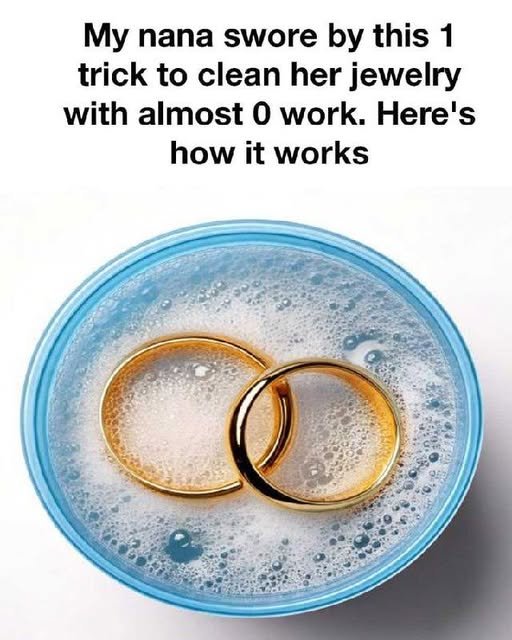
A viral post recently highlighted a generational piece of wisdom: “My nana swore by this 1 trick to clean her jewelry with almost 0 work.” The accompanying image shows two gold rings soaking in a sudsy, light-blue liquid, likely a mixture of warm water and a gentle dish soap. This seemingly humble method is not an old wives’ tale; it is a scientifically sound, incredibly effective way to restore the brilliance of most fine jewelry.
The “Nana Trick” relies on basic chemistry to break down the oily residues that trap dirt and dull the surface of your precious pieces. However, while it is a brilliant hack for gold, platinum, and diamonds, it is not a universal cure-all. Certain gemstones, delicate settings, and soft metals require very different care.
This comprehensive guide explores the ultimate guide to at-home jewelry cleaning. We will break down exactly how the dish soap trick works, provide step-by-step instructions for getting the best results, explain which materials it is safe for (and which it will ruin), bust common cleaning myths, and offer expert tips for keeping your jewelry looking brand new for generations.
The Science Behind the “Nana Trick”: Why Dish Soap Works
To understand why a drop of dish soap is so effective, you have to understand what is actually making your jewelry dirty. The dulling layer on your rings and necklaces is rarely just dust. It is predominantly a mixture of sebum (skin oil), sweat, dead skin cells, cosmetic residue (lotion, foundation, sunscreen), and environmental dirt.
Water alone cannot remove these substances because oil and water do not mix. This is where the dish soap comes in. Dish soaps are formulated with surfactants (surface-active agents). These molecules have a water-loving (hydrophilic) head and a water-fearing (hydrophobic) tail. When you mix soap and water, the hydrophobic tails attach themselves to the oils and dirt on your jewelry, while the hydrophilic heads remain in the water. This action lifts the grime off the metal and suspends it in the water, allowing it to be easily rinsed away.
Warm water enhances this process by softening the oils and making them easier for the surfactants to break down. Unlike harsh chemical cleaners, mild dish soap is gentle enough that it will not strip the metal or damage most stones, but strong enough to cut through the toughest daily grime.
How to Execute the “Nana Trick” Step-by-Step
The “almost 0 work” promise of this trick is largely true, provided you follow the correct procedure. You do not need to scrub vigorously or use toxic chemicals, but you do need to be gentle and thorough.
Step 1: Gather Your Materials
You will need:
A small bowl (glass or ceramic is best).
Warm water (not boiling).
A few drops of mild, grease-cutting dish soap (like Dawn or a similar brand).
A soft-bristled toothbrush (a baby toothbrush is ideal).
A fine-mesh strainer (optional but highly recommended).
A soft, lint-free cloth (microfiber is excellent).
Step 2: Prepare the Solution
Fill the small bowl with warm water and add a few drops of dish soap. Swirl the water to create suds. Avoid using extremely hot water, as sudden temperature changes can cause certain gemstones to crack (thermal shock).
Step 3: Soak the Jewelry
Place your jewelry in the soapy water and let it soak for 15 to 20 minutes. For heavily soiled pieces, you can let them soak for up to 30 minutes. The warm, soapy water will begin to break down the oils and loosen the dirt almost immediately. This is the “0 work” phase—let the solution do the heavy lifting.
Step 4: Gentle Scrubbing
After soaking, remove the jewelry and use the soft-bristled toothbrush to gently scrub the piece. Pay special attention to the crevices, the gallery (the area underneath the main stone), and the prongs where dirt loves to hide. Do not scrub aggressively; a gentle, circular motion is sufficient. For rings, gently brush the inside of the band where sweat and lotion accumulate.
Step 5: Rinse Thoroughly
Rinse the jewelry under warm running water to wash away the soap and the suspended dirt. Crucial Safety Tip: Always close the drain or place the jewelry in a fine-mesh strainer before rinsing. Small rings and delicate chains can easily slip down the drain, leading to a plumbing disaster.
Step 6: Dry and Buff
Pat the jewelry dry with a soft, lint-free cloth. For extra shine, gently buff the metal with a microfiber cloth. Make sure the piece is completely dry before storing it, as trapped moisture can cause tarnishing in some metals.
Is the Dish Soap Trick Safe for ALL Jewelry?
While the dish soap method is a hero for most jewelry, it is absolutely vital to know the exceptions. Using water and soap on the wrong materials can cause irreversible damage.
The “Safe” List: What You Can Clean with Soap and Water
Gold (Yellow, White, and Rose): Solid gold is highly resistant to soap and water. (Note: White gold is often plated with rhodium, which can wear away over time, but the soap will not accelerate this).
Platinum: A highly durable and non-reactive metal that handles soapy water beautifully.
Diamonds: Diamonds are incredibly hard and chemically inert. They also attract grease, making the dish soap trick particularly effective for them.
Rubies and Sapphires: These are durable, non-porous stones that can safely be cleaned with warm water and soap.
Most Garnets, Amethysts, and Citrines: As long as they are not heavily included or fractured, these stones are generally safe.
The “Danger” List: What You Should NEVER Soak
Pearls: Pearls are organic and porous. Soaking them in water can damage their nacre (the outer layer), causing them to lose their luster or peel. They should only be wiped with a soft, damp cloth.
Opals: Opals contain water within their structure. If they dry out or absorb too much water (especially if the water contains soap or chemicals), they can crack or lose their play-of-color.
Emeralds: Emeralds are typically treated with oils or resins to enhance their clarity. Soaking them can strip these treatments, ruining their appearance. They are also prone to having internal fractures.
Turquoise, Lapis Lazuli, and Malachite: These are porous stones. They can absorb the soapy water and discoloration, permanently ruining their appearance.
Coral, Amber, and Ivory: These are organic materials that are soft and porous. Water can degrade them.
Glued or Assembled Pieces: If a piece contains glued-in stones or is made of mixed materials, soaking can weaken the adhesive.
Common Jewelry Cleaning Myths (And Why You Should Ignore Them)
The internet is full of “life hacks” for cleaning, and jewelry is no exception. However, some popular methods are actually damaging.
Myth 1: Toothpaste is Great for Cleaning Silver and Gold
The Reality: Toothpaste is mildly abrasive. While it might scrub away some surface grime, it can also scratch the metal, leaving permanent micro-scratches that dull the piece over time. It can also damage softer gemstones. Stick to the dish soap method.
Myth 2: Boiling Water is Best for Sanitizing Jewelry
The Reality: Boiling water is a recipe for disaster. The extreme heat can cause thermal shock, which can crack sensitive stones or loosen the glue holding pieces together. Warm water is always the safest choice.
Myth 3: Vinegar and Baking Soda Can Clean Everything
The Reality: While the baking soda and aluminum foil trick is a legitimate method for removing tarnish from plain silver, it is not safe for silver with gemstones, oxidized finishes, or pearls. Vinegar is an acid and can damage porous stones and strip delicate finishes.
Myth 4: Ultrasonic Cleaners Are Safe for Every Gem
The Reality: Ultrasonic cleaners use high-frequency vibrations to shake dirt loose. While excellent for diamonds, they can cause stones with internal fractures (like emeralds or opals) to shatter. They can also loosen stones that are not securely set.
Special Care: Cleaning Silver and Delicate Pieces
Cleaning Tarnished Silver
Silver tarnishes when it reacts with sulfur compounds in the air, turning black or brown. The dish soap trick is great for general dirt, but it will not remove tarnish. For tarnish, use a silver polishing cloth (often treated with a mild rouge) or the aluminum foil method: line a bowl with aluminum foil, add boiling water and baking soda, and submerge the silver. The chemical reaction transfers the tarnish from the silver to the foil.
Cleaning Delicate Chains
Chains are prone to tangling. When cleaning them, lay them flat in a shallow dish rather than dropping them in a deep bowl. You can also thread the chain through a straw to keep it straight while you clean it.
Maintaining Your Jewelry: Prevention is Better Than Cleaning
To reduce the frequency of deep cleanings, adopt a few simple habits.
The “Last On, First Off” Rule: Put your jewelry on after you have applied all lotions, perfumes, makeup, and hairspray. Remove your jewelry immediately when you get home. This prevents the bulk of the cosmetic residue from ever touching the metal.
Remove Before Swimming and Showering: Chlorine and saltwater can damage metal and stones. Showering with jewelry exposes it to soap scum and body oils that dull the shine.
Remove Before Bed: Sleeping with jewelry can cause chains to tangle and kink, and rings can catch on blankets.
Store Properly: Store pieces separately in a fabric-lined jewelry box or individual pouches. This prevents harder stones (like diamonds) from scratching softer metals or stones. Keep silver in anti-tarnish bags or strips to slow oxidation.
When to Visit a Professional Jeweler
The dish soap trick is perfect for routine maintenance, but there are times when a professional is needed.
Loose Stones: If you notice a stone wobbling or if you hear a rattling sound when you shake the piece, stop using it and take it to a jeweler. They can tighten the prongs before the stone falls out.
Deep Scratches: A jeweler can polish out minor scratches and restore the metal’s original finish.
Vintage and Antique Pieces: Antique jewelry often has delicate settings or unknown treatments that require specialized care.
Heavily Soiled Pieces: If a piece has not been cleaned in decades, it may require professional steam cleaning and ultrasonic treatment.
Conclusion: A Time-Tested Trick That Still Works
The dish soap and warm water trick is a perfect example of generational wisdom. It is simple, inexpensive, and relies on basic chemistry rather than harsh chemicals. By breaking down the oily residues that trap dirt, mild dish soap safely restores the sparkle to gold, platinum, and diamonds with minimal effort.
However, the key to this trick is knowing your materials. While it is a “0 work” miracle for a diamond ring, it can be a disaster for an opal or a string of pearls. By understanding which pieces can handle a soapy soak and following a few simple safety precautions—like closing the drain and avoiding boiling water—you can easily maintain the beauty of your everyday jewelry from the comfort of your home. So, take a cue from Nana, grab a drop of dish soap, and watch that sparkle return.
Frequently Asked Questions
Can I use dish soap to clean all my jewelry?
No. While it is safe for gold, platinum, diamonds, and durable stones like rubies and sapphires, it is not safe for porous or organic materials. Avoid using it on pearls, opals, emeralds, turquoise, coral, amber, and any pieces that are glued together.
How often should I clean my jewelry with this method?
For pieces worn daily (like engagement rings or wedding bands), a quick 10-minute soak once a week or every two weeks is ideal. For occasional pieces, clean them before and after wearing them, or whenever they appear dull.
Can I use this trick on silver jewelry?
Yes, mild dish soap and warm water is safe for silver and will remove surface oils and dirt. However, it will not remove tarnish (the black oxidation). For tarnish, use a silver polishing cloth or a dedicated silver cleaner.
Why did my gemstone crack after soaking it?
Certain gemstones (like opals and emeralds) are sensitive to rapid temperature changes or water absorption. If you soak them in warm water, they can expand, crack, or lose their internal treatments. Always check if a stone is water-safe before soaking it.
Is a soft toothbrush really safe for jewelry?
Yes, a soft-bristled toothbrush (especially a baby toothbrush) is perfect. It can reach into crevices and under the setting without scratching the metal or the stones. Never use a medium or hard-bristled brush, as it can cause scratches.
What should I do if my jewelry has a loose stone?
Do not clean it or soak it. Remove it immediately and take it to a professional jeweler. They can re-tighten the prongs and secure the stone, preventing it from being lost.
Can I use hand soap or body wash instead of dish soap?
It is not recommended. Hand soaps and body washes often contain moisturizers, lotions, and fragrances that can leave a filmy residue on your jewelry. Dish soap is formulated to cut through grease and rinse clean without leaving a film.
How do I dry my jewelry without leaving lint?
Use a microfiber cloth or a lint-free lens cloth. These materials are highly absorbent and will not leave tiny fibers stuck in the prongs or crevices of your jewelry.