Learn How to Clean 15 Kilograms of Waste from Your Colon in One Night
The Anatomy of the Problem: Why Waste Gets Stuck
To understand how to clear the colon, we must first understand how it gets blocked. The colon, or large intestine, is a five-foot-long muscular tube responsible for absorbing water and electrolytes from indigestible food matter and forming solid waste (stool).
When the muscles of the colon (the peristaltic wave) slow down, stool lingers for too long. The colon continues to absorb water, causing the stool to become dry, hard, and sticky. This hardened waste can become glued to the walls of the colon, creating a thick, toxic plaque. Over time, this accumulation can narrow the passageway, making it nearly impossible to pass new waste efficiently.
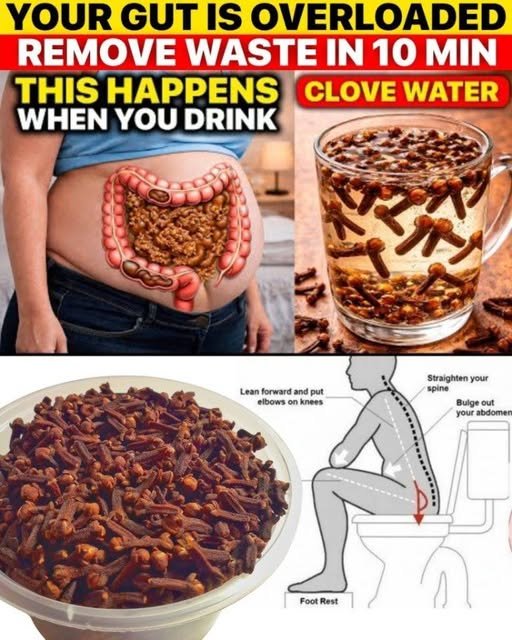
The dark, lumpy colon shown in the image is a classic representation of fecal impaction, a severe form of constipation where hard, dry stool blocks the rectum and prevents normal bowel movements.
The Mechanics of Elimination: Decoding the Posture Diagram
The top-left image holds a crucial secret to colon health: the biomechanics of sitting. For decades, we have accepted the modern Western toilet as the standard, but biologically, it forces us into an unnatural position.
The Puborectalis Muscle
To understand why posture matters, you must know about the puborectalis muscle. This is a U-shaped sling of muscle that wraps around the lower rectum. In a standing or sitting position (with knees at a 90-degree angle), this muscle remains contracted, keeping the rectum closed and maintaining a kink in the bowel to prevent accidental leakage.
The Squatting Solution (The Footrest)
When you squat, the puborectalis muscle relaxes, straightening the rectum and allowing stool to pass easily. The modern toilet, which forces us to sit upright, essentially puts our bodies in a suboptimal position for elimination.
The diagram highlights the “Squatty Potty” effect:
Elevate your knees above your hips: Using a footrest (as shown in the diagram) elevates the knees, mimicking a squat.
Lean forward: Resting your elbows on your knees expands the abdomen and further relaxes the pelvic floor.
Straighten the spine and bulge the abdomen: This creates intra-abdominal pressure that helps push the waste out without straining.
The Overnight Cleansing Elixir: The Recipe Revealed
The bottom-right image shows a brownish liquid being poured. This is the key to the overnight flush. To achieve the dramatic evacuation promised in the image, you need a combination of ingredients that draw water into the colon, soften the impacted stool, and stimulate powerful muscle contractions.
The most powerful, time-tested two-ingredient recipe for an overnight colon cleanse is Prune Juice and Chia Seeds.
Why This Combination Works
Prune Juice (The Evacuator): Prunes are nature’s most potent natural laxative. They are rich in sorbitol, a sugar alcohol that the body digests very slowly. When sorbitol reaches the large intestine, it acts as an osmotic agent, drawing massive amounts of water into the bowel. This softens the stool and stimulates peristalsis (the muscle contractions that push waste out).
Chia Seeds (The Broom): Chia seeds are hydrophilic, meaning they absorb up to 10 times their weight in water. When mixed with the prune juice, they form a thick, mucilaginous gel. This gel acts as a gentle, natural broom, scraping the walls of the colon and binding with the hardened waste to sweep it out.
The Exact Recipe
1 cup (8 ounces) of 100% pure Prune Juice.
2 tablespoons of raw Chia Seeds.
(Optional) A squeeze of fresh lemon juice to improve the taste and add a boost of Vitamin C.
The Preparation
Pour the prune juice into a glass or a jar.
Add the chia seeds and stir vigorously for 30 seconds to prevent clumping.
Wait 5 minutes, then stir again.
Let the mixture sit for at least 15 to 20 minutes until the chia seeds have fully absorbed the liquid and formed a thick, pudding-like consistency.