If You’re a Woman with Chin Whiskers, Pay Attention: What Your Body Is Trying to Tell You
Introduction: Breaking the Silence on a Common Struggle
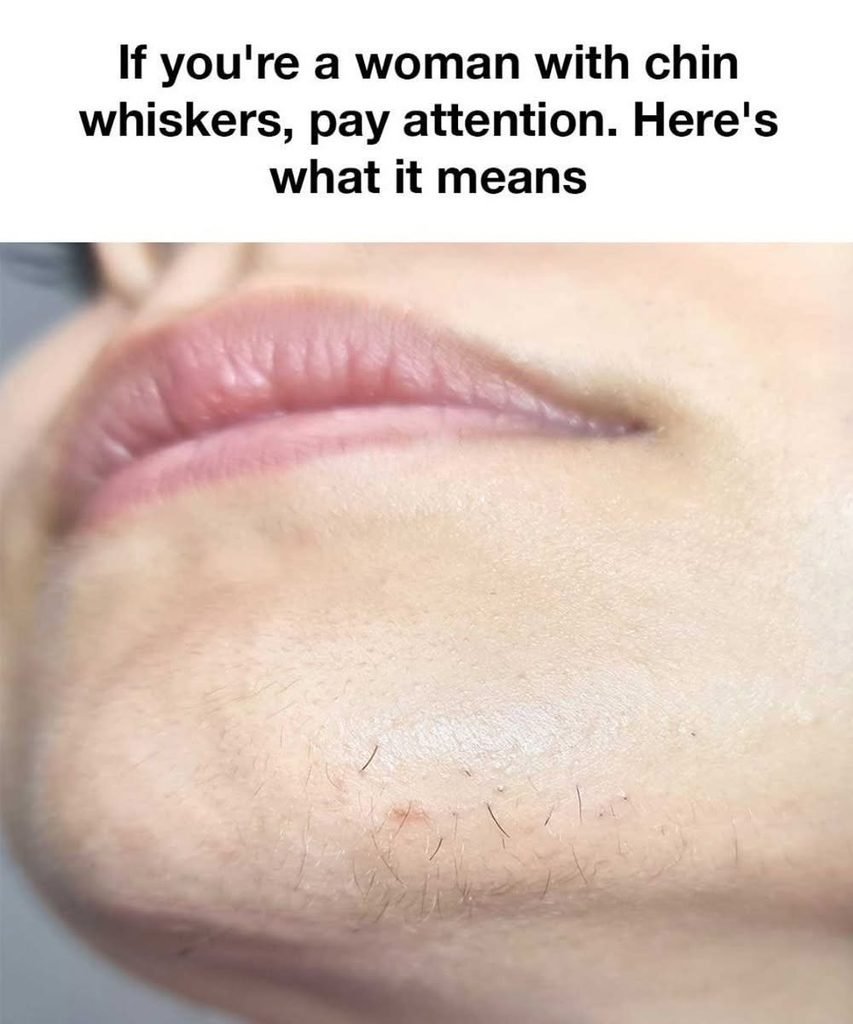
The image is a stark, intimate close-up of a woman’s chin, revealing a scattering of dark, coarse, wiry hairs sprouting just below the lip and along the jawline. The text above it is direct and commanding: “If you’re a woman with chin whiskers, pay attention. Here’s what it means.”
For millions of women around the world, this image is not just a picture; it is a daily source of frustration, embarrassment, and silent anxiety. They are the women who keep tweezers in their car, who spend countless hours in front of magnifying mirrors, who book waxing appointments weeks in advance, and who feel a flush of panic when a stranger’s eyes linger a little too long on their jawline. Society has long coded facial hair as a strictly masculine trait, leaving women who develop it feeling isolated and unfeminine.
However, the sudden or progressive appearance of dark, thick hair on the chin—medically known as hirsutism—is not a random occurrence, nor is it a personal failing. It is a biological signal. Your body is communicating something important about your internal hormonal environment.
The presence of chin whiskers can range from a few isolated hairs caused by a genetic quirk to a sign of a complex endocrine disorder like Polycystic Ovary Syndrome (PCOS). This comprehensive two-part guide will decode exactly what these chin whiskers mean. We will explore the science of hair growth, the delicate balance of sex hormones, the underlying medical conditions that trigger this change, and the most effective, science-backed methods for managing and treating it.