If You See Someone with a Three-Point Tattoo, Should You Really Run? The Truth Behind the Viral Warning
Introduction: The Chilling Warning That Went Viral
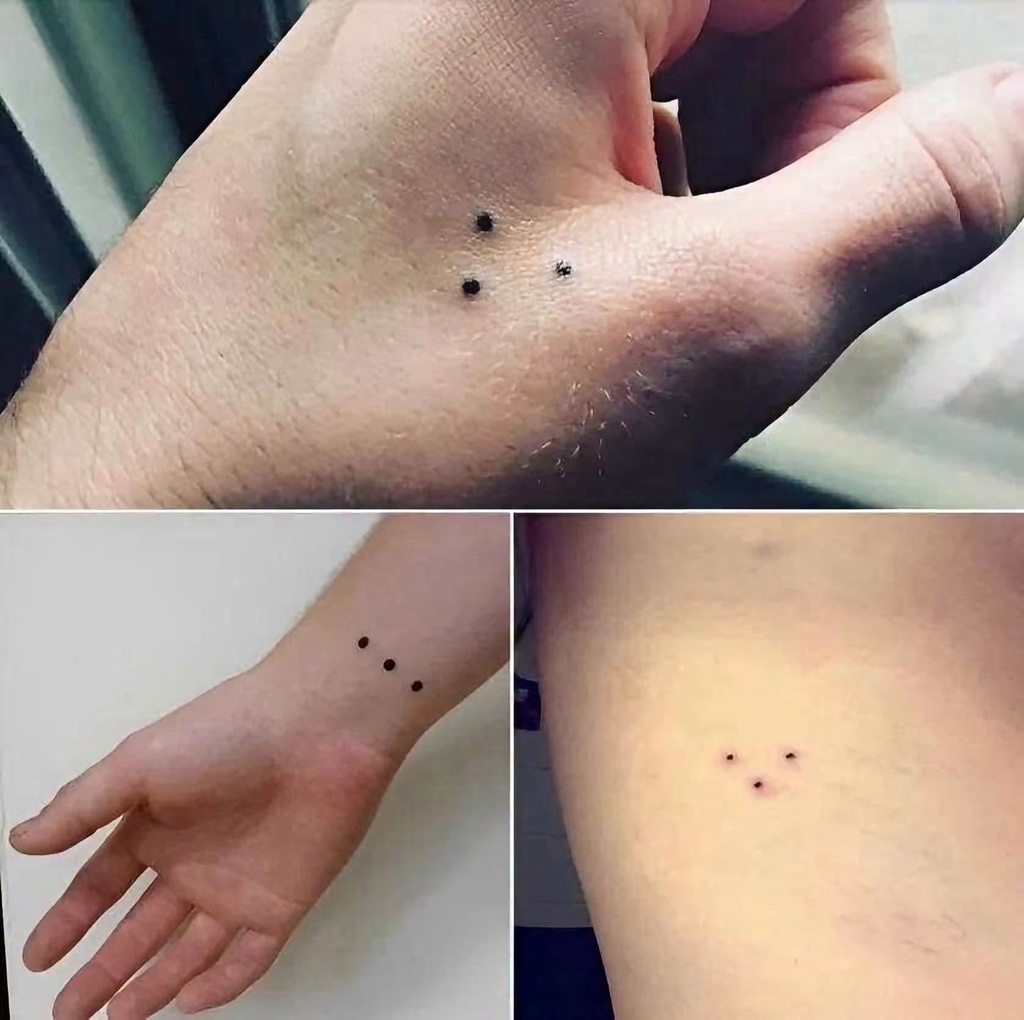
The image is designed to trigger immediate alarm. Across three separate panels, we see human skin marked with three distinct, dark dots. In the top panel, they appear on the back of a hand; in the bottom left, they are tattooed on a wrist; and in the bottom right, they sit on a thigh. The text overlay delivers a stark, terrifying directive: “If you see someone with a three-point tattoo, run as far as you can.”
In the age of social media, warnings like this spread like wildfire. They tap into our primal instincts of fear and self-preservation. The implication is clear: these three dots are a secret, sinister code marking the individual as a dangerous criminal, a member of a violent gang, or perhaps a trafficker. But how much of this is true? Is a three-dot tattoo really a universal sign of danger, or is it an internet myth that unfairly stigmatizes innocent people?
The reality is far more nuanced. While the three-dot tattoo does have historical associations with certain subcultures and criminal organizations, its meaning is entirely dependent on context, culture, and placement. To blindly “run away” from anyone with this mark is to fall victim to fear-mongering.
This comprehensive two-part guide will decode the mystery of the three-dot tattoo. We will explore its origins in prison culture, its various meanings across the globe, its surprising medical applications, and why taking internet warnings at face value can be more harmful than helpful.