If You Have Small White Spots on Your Arms or Legs, It’s a Clear Sign That… Find Out Why!
The Science of Pigment: Why Do White Spots Form?
To truly understand what your body is telling you, it helps to understand the biology of melanin.
The Role of Melanocytes
Melanocytes are specialized cells located in the basal layer of the epidermis. They produce melanin, which is packaged into tiny structures called melanosomes and transferred to the surrounding skin cells (keratinocytes). Melanin is your skin’s natural sunscreen—it absorbs UV radiation to protect your DNA from damage.
The “Burn Out” Theory
In conditions like IGH, chronic exposure to the sun causes cumulative DNA damage. The melanocytes become exhausted and undergo apoptosis (programmed cell death) or simply cease functioning. Because there are no melanocytes left in that specific spot to produce melanin, the skin appears white, even when exposed to the sun.
The Inflammation Factor
In conditions like Pityriasis Alba, the skin is dry and mildly inflamed. This inflammation disrupts the normal transfer of melanosomes from the melanocytes to the skin cells. Once the dryness and inflammation are treated, the pigment usually returns.
Diagnosis: How to Tell the Difference
While the visual differences are a good starting point, a definitive diagnosis requires a professional.
The Woods Lamp Examination
A dermatologist will often use a Wood’s lamp (a special UV light) in a dark room.
IGH: The spots will appear brightly fluorescent.
Tinea Versicolor: The yeast will glow a characteristic yellowish-green.
Vitiligo: The skin will appear completely devoid of pigment, glowing a stark, brilliant blue-white.
Skin Biopsy
In rare cases, if vitiligo is suspected, a small sample of skin may be taken and examined under a microscope to confirm the complete absence of melanocytes.
Treatment and Management: What to Do Next
If you have determined the likely cause of your white spots, here is how to manage them.
For Idiopathic Guttate Hypomelanosis (IGH)
Acceptance and Sun Protection: IGH is harmless and usually does not require treatment. However, you must protect the skin from further sun damage. The spots will always be visible, but preventing the surrounding skin from tanning will make them less noticeable.
Cosmetic Procedures: For those who are deeply bothered by the spots, dermatologists can offer treatments like cryotherapy (freezing the spots), microdermabrasion, or fractional laser therapy to stimulate repigmentation. These procedures are not always successful and can be expensive.
For Pityriasis Alba
Moisturize: This is the most effective treatment. Apply a thick, fragrance-free moisturizer (like Cerave or Cetaphil) to the affected areas daily.
Topical Steroids: For stubborn cases, a mild over-the-counter hydrocortisone cream can reduce the underlying inflammation.
Sunscreen: Protect the skin from tanning to reduce the contrast between the spots and the surrounding skin.
For Tinea Versicolor
Over-the-Counter Antifungals: Lotions, creams, or shampoos containing selenium sulfide (like Selsun Blue), ketoconazole, or clotrimazole are highly effective.
Prevention: To prevent recurrence, use an antifungal shampoo as a body wash once a month during hot, humid weather.
For Vitiligo
Medical Intervention: Vitiligo requires a medical diagnosis and treatment plan. Treatment options include topical corticosteroids, calcineurin inhibitors, and phototherapy (light therapy) to restore pigment.
When to See a Doctor
You should consult a healthcare professional if:
The white spots are spreading rapidly.
They are accompanied by pain, severe itching, or bleeding.
You have other symptoms, such as fatigue, weight changes, or hair loss (which could indicate an autoimmune issue).
The spots appear on your face or genitals.
You are unsure of the diagnosis and need peace of mind.
Conclusion: Listen to Your Skin
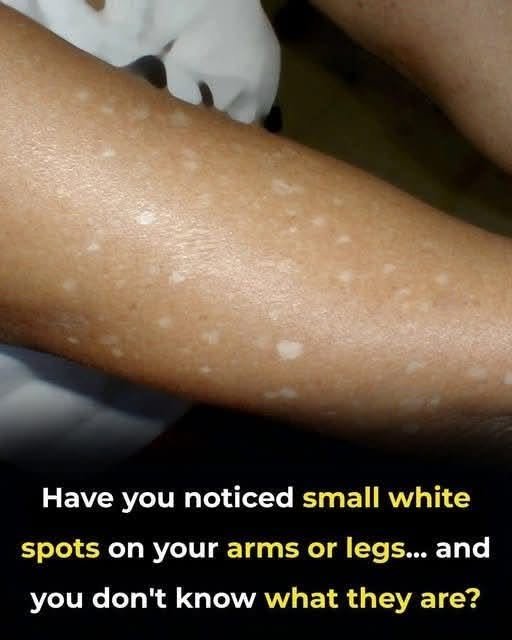
The viral image asking what the white spots on your arms or legs mean is tapping into a very real human concern. The good news is that the most common answer is Idiopathic Guttate Hypomelanosis (IGH)—a harmless, cosmetic condition caused by sun exposure and aging. Your body is simply showing you the footprints of your time in the sun.
Whether it is IGH, dry skin (Pityriasis Alba), a yeast overgrowth (Tinea Versicolor), or an autoimmune response (Vitiligo), your skin is communicating with you. By paying attention to the shape, texture, and location of the spots, and by seeking professional advice when needed, you can decode these messages. Wear your sunscreen, keep your skin moisturized, and embrace the unique map of your skin.
Frequently Asked Questions
What causes small white spots on arms and legs?
The most common cause in adults is Idiopathic Guttate Hypomelanosis (IGH), which is linked to sun exposure and aging. In younger people, it is often Pityriasis Alba (dry skin), or Tinea Versicolor (a fungal infection).
Are white spots on the skin dangerous?
In the vast majority of cases (like IGH), they are completely harmless and purely cosmetic. However, if the spots are spreading rapidly, are accompanied by other systemic symptoms, or look like large patches of complete pigment loss, they should be evaluated by a doctor to rule out vitiligo.
Can white spots on the skin be cured?
It depends on the cause. Pityriasis Alba usually resolves with moisturizing. Tinea Versicolor can be cured with antifungal medication. IGH has no permanent cure, though cosmetic procedures can sometimes reduce their appearance. Vitiligo can be managed with medical treatments.
How do I know if I have vitiligo or IGH?
IGH spots are usually very small (1-5mm), sharply defined, and scattered randomly on sun-exposed areas. Vitiligo patches are usually larger, have completely lost their pigment, and often appear symmetrically on both sides of the body. A doctor can confirm with a Wood’s lamp exam.
Does the sun cause white spots?
Yes, chronic exposure to the sun’s UV radiation can damage the melanocytes (pigment cells) in the skin, causing them to stop producing melanin. This results in the small white spots of IGH.
Is Tinea Versicolor contagious?
No, Tinea Versicolor is not contagious. It is caused by an overgrowth of yeast (Malassezia) that naturally lives on everyone’s skin. It is triggered by heat, humidity, and sweating.
What is the best moisturizer for white spots?
For conditions like Pityriasis Alba, a thick, fragrance-free cream containing ceramides (like CeraVe, Cetaphil, or Eucerin) is best. It repairs the skin barrier and reduces the dryness that causes the pigment to fade.
Should I wear sunscreen if I have white spots?
Yes, absolutely. If you have IGH or Tinea Versicolor, sun exposure will cause the surrounding skin to tan, making the white spots stand out even more. Sunscreen also prevents further damage to the melanocytes.