Ground-Up vs. Ground-Down Electrical Outlets: What an “Upside-Down” Receptacle Really Means
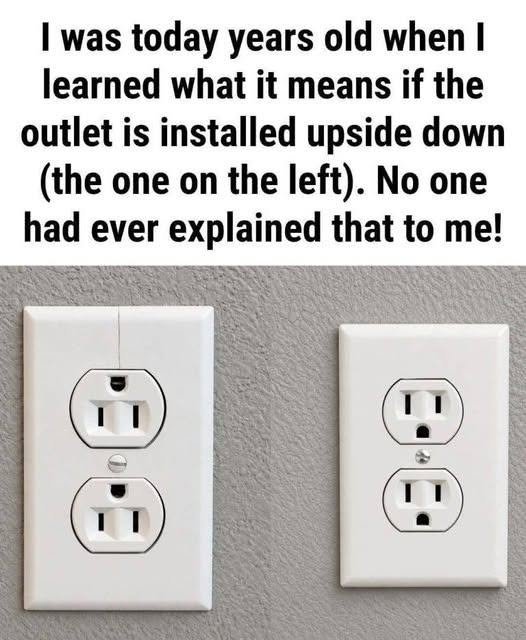
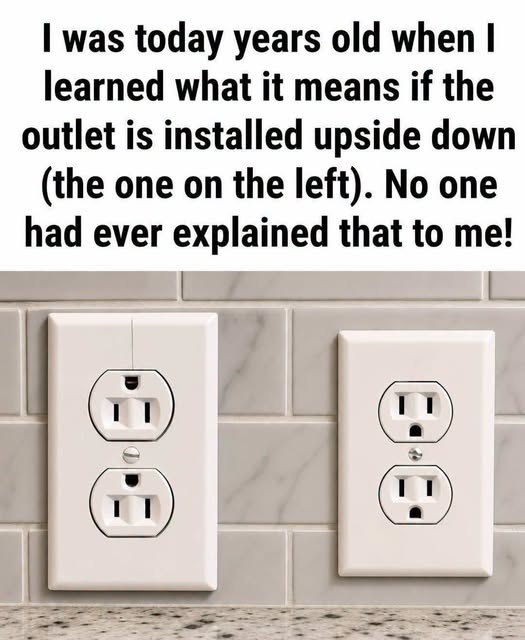
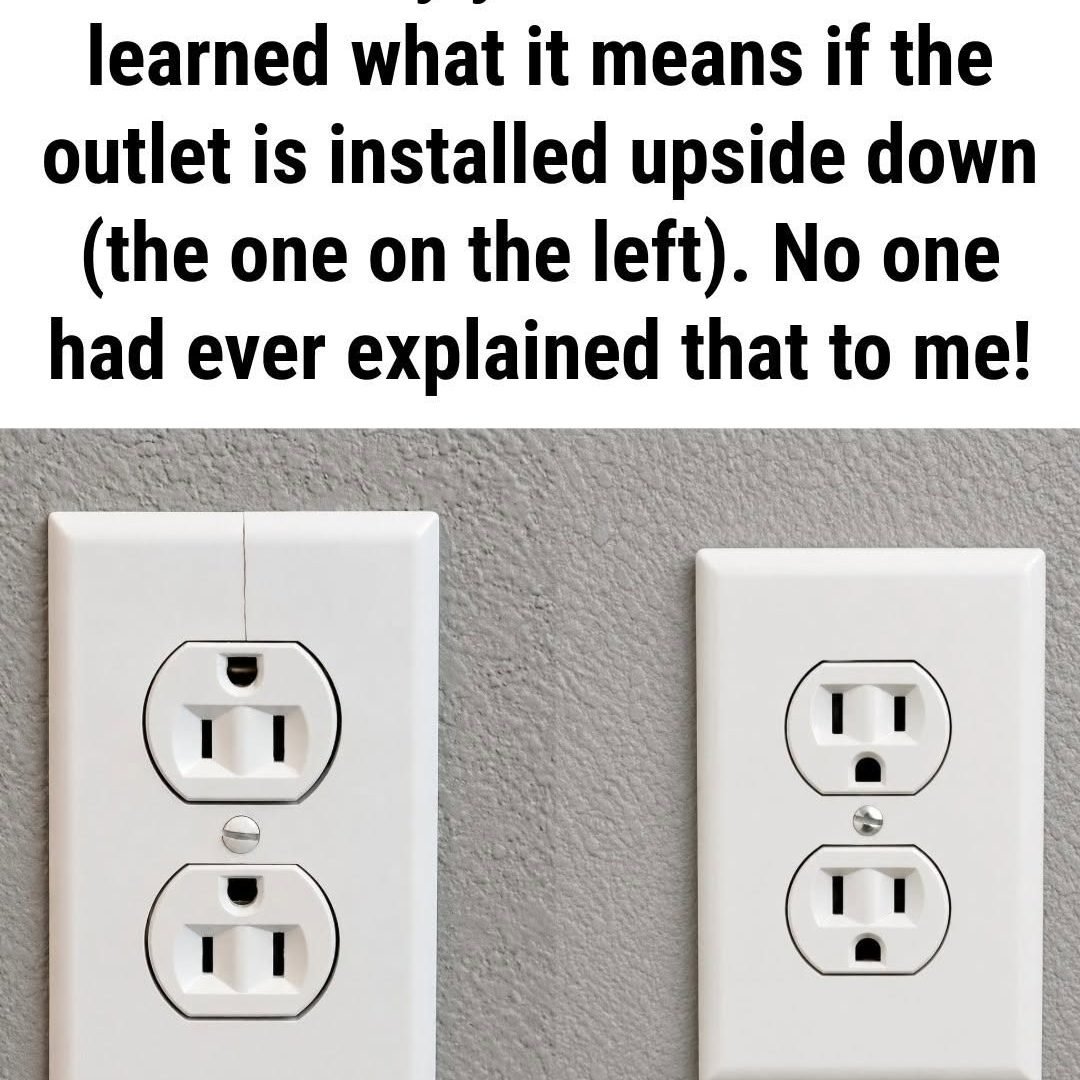
A photo of two standard North American electrical outlets—one with the round grounding hole at the top, the other with it at the bottom—has circulated widely online with a caption expressing surprise: “I was today years old when I learned what it means if the outlet is installed upside down (the one on the left). No one had ever explained that to me!”
The post touches on a common household mystery. Most people are accustomed to seeing outlets with the grounding pin hole at the bottom. When they encounter one with the grounding hole at the top, they often assume it was installed by mistake, that it signals something unusual, or that it changes how the outlet works. In reality, the orientation is usually a deliberate choice. The outlet is not electrically “upside down,” and it does not stop working. The difference is about convention, safety philosophy, and sometimes local building standards.
This article explains what a ground-up outlet is, why some electricians install receptacles that way, whether it is required by code, what it does and does not mean, and what homeowners should know before changing an outlet’s orientation.
What “Upside Down” Actually Means
A standard North American 120-volt receptacle has two flat slots and one round grounding hole. The two flat slots are the hot and neutral connections. The round hole is the equipment grounding conductor.
In the common orientation, the round grounding hole sits at the bottom. This is often called ground-down. In the alternative orientation, the round grounding hole sits at the top. This is called ground-up. It is sometimes casually described as “upside down,” but that phrase is misleading. The device is not installed incorrectly from an electrical standpoint. It is simply rotated 180 degrees.
The outlet on the left in the image is a ground-up installation. The outlet on the right is ground-down. Both are standard duplex receptacles. Neither orientation changes voltage, polarity, or the outlet’s basic function.
Why Some Electricians Install Outlets Ground-Up
There are several reasons a ground-up outlet may be chosen. Not all of them apply in every situation, and none of them is a universal legal requirement for ordinary homes.
1. The Falling-Object Safety Argument
The most frequently cited reason for ground-up installation is safety. Imagine a plug is partially pulled out of the outlet, leaving the metal prongs exposed. If a metal object—such as a spoon, a piece of wire, a tool, or a metal cover plate—falls against the plug, contact with the live hot slot could cause a short circuit, sparks, or a shock.
In a ground-up outlet, the round grounding pin is the topmost connection. If a metal object falls downward along the wall, it may contact the grounding pin first. Because the grounding pin is designed to provide a safe path for stray current, this orientation is often described as reducing the chance that a falling object will bridge the live connections.
This is a theoretical safety advantage rather than a guarantee. It depends on the object’s shape, the plug’s position, and the direction of the fall. It also does not protect against every possible contact scenario. Still, it is the reasoning many electricians and facility managers cite.
2. Right-Angle Cord Strain Relief
Some appliances use right-angle plugs, where the cord exits the plug body at a 90-degree angle. Depending on the plug design, a ground-up outlet can allow the cord to hang downward naturally instead of bending upward against the wall. This can reduce strain on the cord and the plug, especially for appliances placed close to the wall.
This is a practical consideration rather than a universal rule. A right-angle plug that hangs comfortably in a ground-down outlet may hang awkwardly in a ground-up one, or vice versa, depending on how the plug is molded.
3. Commercial, Healthcare, and Institutional Standards
Some commercial buildings, laboratories, healthcare facilities, and industrial settings adopt ground-up orientation as part of their internal electrical specifications. Facility maintenance departments may choose it for consistency, safety policy, or because a design professional specified it. In some healthcare environments, ground-up receptacles are common, though requirements vary by facility and local authority.
This does not mean ground-up is legally mandatory in every hospital or commercial building. It means that individual institutions and local codes sometimes adopt standards that go beyond the minimum residential code.
4. A Visual Cue for a Switched Outlet
Some electricians use ground-up orientation as a subtle visual signal that a receptacle is controlled by a wall switch. For example, in a room without a ceiling light, a switched outlet may be installed ground-up so that the homeowner can identify which outlet is switched. However, this is a local convention, not a reliable universal rule. A ground-up outlet does not always mean the outlet is switched.
5. Personal or Regional Preference
Some electricians simply prefer ground-up installation. They may have been trained that way, or they may believe it looks more finished. In some regions, ground-up is more common than in others. The choice can reflect local custom as much as technical reasoning.
Is Ground-Up Required by Code?
In the United States, the National Electrical Code (NEC) does not generally mandate a specific orientation for standard residential receptacles. It requires that receptacles be installed in a safe and proper manner, but it does not say the grounding hole must be up or down. Local amendments, state codes, or specific facility standards may impose additional requirements.
In Canada, the Canadian Electrical Code also does not generally require a particular orientation for ordinary receptacles, though local authorities and project specifications may have preferences.
Because requirements vary, the most accurate statement is this: ground-up is permitted and often deliberate, but it is not universally required for ordinary homes. If you are doing permitted electrical work, check with your local building department or a licensed electrician.
Does Ground-Up Change How the Outlet Works?
No. The outlet delivers the same voltage and current regardless of orientation. The hot slot, neutral slot, and grounding hole are still connected to the same circuit conductors. A lamp, charger, or appliance will work normally in either orientation.
The orientation also does not change the polarity of the outlet. The wider neutral slot and narrower hot slot remain the same. A polarized plug will still fit only one way.
The only practical differences are physical: how a plug hangs, how a right-angle cord exits, and whether the grounding pin is at the top or bottom.
Is an “Upside-Down” Outlet Dangerous?
No, not by itself. A ground-up outlet is not inherently dangerous. It is a standard receptacle installed in a permitted orientation. The outlet is not “backwards” in the sense of reversed wiring. Reversed polarity—where the hot and neutral wires are connected to the wrong terminals—is a real electrical hazard, but it is separate from the outlet’s physical rotation.
A ground-up outlet can still be wired incorrectly, just as a ground-down outlet can. The orientation of the faceplate does not tell you whether the wiring behind it is correct. Only a tester or an electrician can confirm that.
Does Ground-Up Mean the Outlet Is Switched?
Not necessarily. As noted, some electricians use ground-up as a visual cue for a switched receptacle, but this is a convention, not a rule. A ground-up outlet may be always live, or it may be controlled by a switch. The only way to know is to test it or trace the circuit.
Should You Flip Your Outlets?
If you prefer the look of ground-down outlets and want to change them, it is possible—but it is not necessary for safety or function. Flipping a receptacle requires turning off the circuit breaker, confirming power is off, removing the faceplate, unscrewing the receptacle, rotating it, and reinstalling it. If you are not comfortable working with electrical wiring, hire a licensed electrician.
There are also reasons not to flip them casually. If the ground-up orientation was chosen for a right-angle cord, a switched-outlet cue, or a facility standard, changing it could reduce convenience or create confusion. In a rental property, altering electrical devices without permission may violate the lease. In a commercial or healthcare setting, changing the orientation may conflict with facility specifications.
If the outlet is damaged, loose, cracked, or warm to the touch, do not simply rotate it. Turn off the circuit and have it inspected by a qualified electrician.
How to Tell If Your Outlet Is Wired Correctly
The orientation of the outlet does not tell you whether it is wired safely. To check for correct wiring, use a plug-in circuit tester or ask an electrician. A simple tester can identify open grounds, reversed polarity, and other common problems.
Warning signs that require professional attention include:
A burning smell near the outlet.
Discoloration or scorch marks on the faceplate.
A loose plug that falls out easily.
Buzzing or crackling sounds.
Warmth around the outlet under normal load.
Sparks when plugging or unplugging a device.
These are not orientation issues. They are signs of a possible electrical fault and should be addressed promptly.
The Bottom Line
The ground-up outlet in the photo is not a mistake, a secret code, or a sign of dangerous wiring. It is a standard receptacle installed with the grounding pin at the top. Some electricians choose this orientation for safety reasons, cord strain relief, facility standards, or personal preference. Others use it as a visual cue for a switched outlet, though that is only a local convention. In most ordinary residential settings, the electrical code does not require one orientation over the other.
The outlet works the same way whether the grounding hole is up or down. What matters is that the receptacle is wired correctly, in good condition, and installed according to local requirements. If you are curious about your own outlets, a circuit tester and a licensed electrician can answer the important questions. The orientation is a detail of convention; safe wiring is the real priority.
Frequently Asked Questions
Q: Is an outlet with the ground pin at the top installed upside down? It is usually described as ground-up rather than upside down. It is a deliberate orientation, not necessarily an installation error.
Q: Is ground-up required by electrical code? In most ordinary residential settings in the United States and Canada, the code does not mandate a specific orientation. Local amendments, facility standards, or project specifications may require it in some settings.
Q: Does ground-up affect how the outlet works? No. The outlet provides the same voltage and current. Polarity and function do not change with orientation.
Q: Why do some electricians install outlets ground-up? Common reasons include the falling-object safety argument, right-angle cord strain relief, commercial or healthcare standards, a visual cue for switched outlets, and personal or regional preference.
Q: Does a ground-up outlet mean it is controlled by a switch? Not necessarily. Some electricians use it as a cue, but it is not a universal rule. Test the outlet to know for sure.
Q: Can I rotate my outlet to ground-down? Yes, if you are qualified and the power is off. If you are not comfortable working with electrical wiring, hire a licensed electrician. Do not alter outlets in a rental or commercial property without permission.
Q: Is a ground-up outlet safer? It is often argued to be safer in a specific scenario involving a falling metal object and a partially exposed plug. The advantage is theoretical and situational, not a guarantee.
Q: How can I check whether my outlet is wired correctly? Use a plug-in circuit tester or contact a licensed electrician. The orientation of the faceplate does not confirm correct wiring.
Q: What are the warning signs of an outlet problem? Burning smells, scorch marks, loose plugs, buzzing, crackling, sparks, or unusual warmth are signs to stop using the outlet and seek professional inspection.
Q: Should I worry if my home has a mix of ground-up and ground-down outlets? A mix is common and not inherently dangerous. It may reflect different electricians, remodels, or local conventions. If you are concerned, have an electrician inspect the wiring rather than judging by orientation alone.