Grooming Tools and Everyday Design Explained: The Purpose of the Tiny Hole in Nail Clippers
Introduction: The Humble Tool with a Hidden Secret
Every day, we interact with dozens of objects that we assume we understand completely. We click our pens, zip our jackets, and trim our nails without a second thought. But every once in a while, a viral social media post forces us to look at a mundane object with fresh eyes, revealing a hidden feature that has been right in front of us our entire lives.
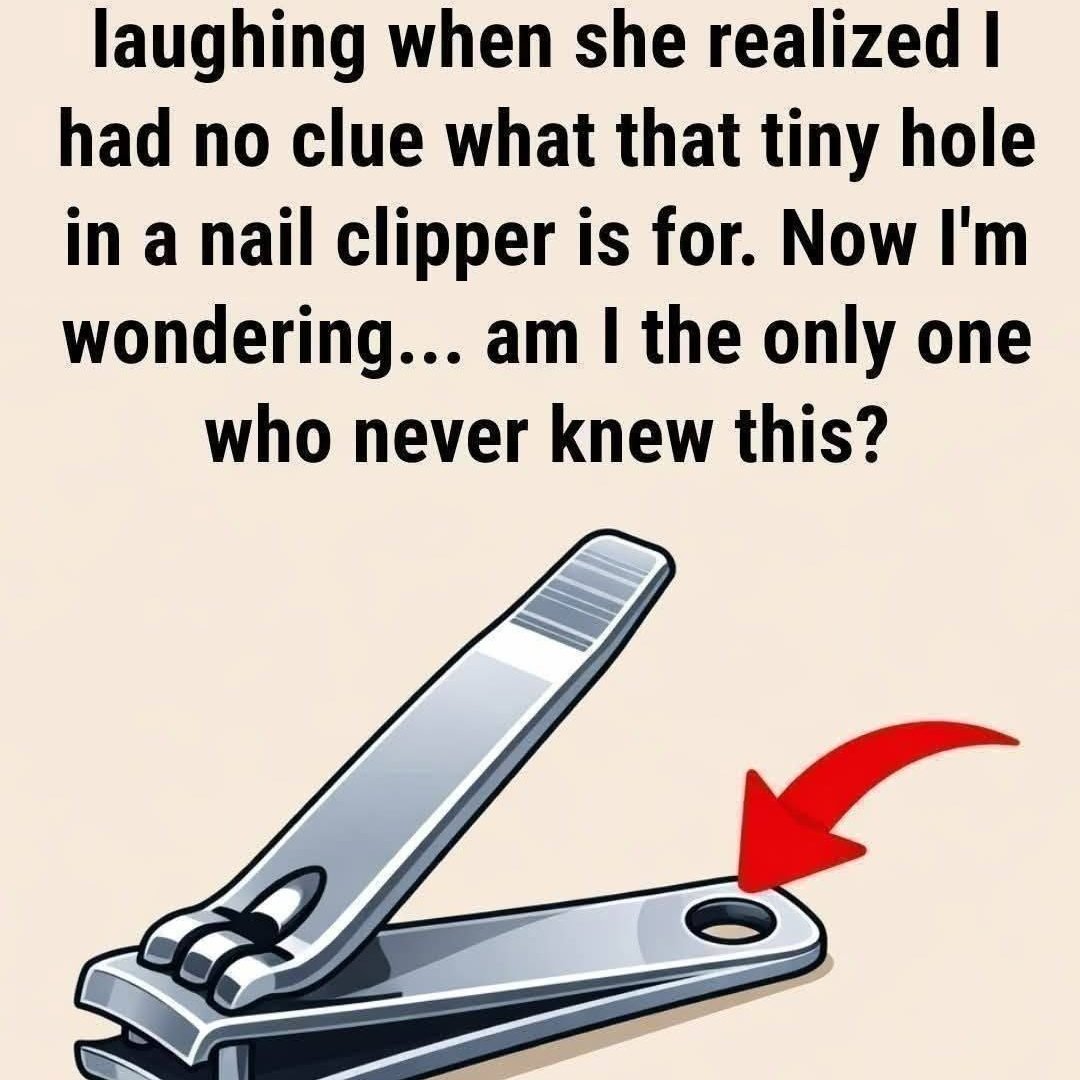
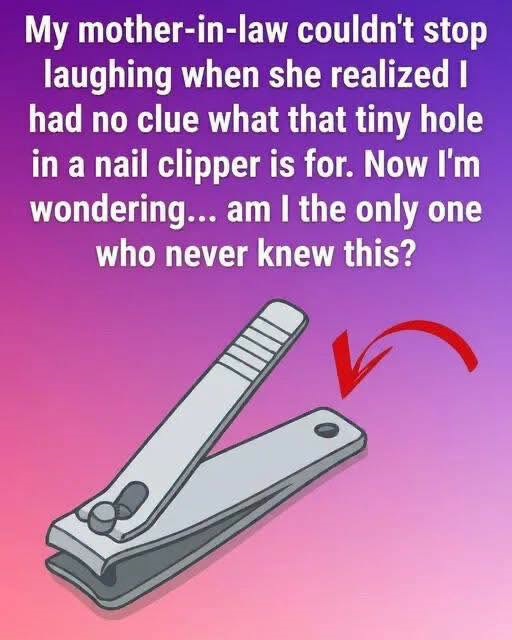
The image is a perfect example of this phenomenon. It features a standard stainless steel nail clipper, with a bright red arrow pointing directly to the small, circular hole at the end of the pressing lever. The accompanying text reads: “My mother-in-law couldn’t stop laughing when she realized I had no clue what that tiny hole in a nail clipper is for. Now I’m wondering… am I the only one who never knew this?”
The post taps into a universal feeling of collective ignorance. Millions of people have held a nail clipper, yet very few have ever stopped to ponder the purpose of that tiny hole. Is it for hanging the clipper on a hook? Is it a remnant of the manufacturing process? Or does it serve a highly specific, practical function that makes the tool work better?
This comprehensive guide will explore the anatomy of the nail clipper, delve into its fascinating history, and finally reveal the truth about the tiny hole. By the end of this article, you will not only have the answer to the mother-in-law’s riddle, but you will also gain a deeper appreciation for the brilliant engineering that goes into the everyday objects we take for granted.