Everyone Should Unplug This Kitchen Appliance Before Going to Sleep to Prevent a Fire
The Other Dangerous Kitchen Appliances You Shouldn’t Leave Plugged In
While the toaster and coffee maker are the most common offenders, several other kitchen appliances pose significant risks if left plugged in overnight.
1. The Air Fryer
Air fryers have become incredibly popular, and they draw a massive amount of wattage (often 1,500 watts or more) to heat up quickly. They also contain high-powered fans. If left plugged in, the internal capacitors can hold a charge. Furthermore, the heating coils and the fan mechanism can overheat if a cooling cycle is interrupted by a surge. Always unplug your air fryer after use.
2. The Microwave
A microwave is generally safer than a toaster, but it still draws heavy current. The sheer weight of a microwave means the plug can sometimes sag in the wall socket, creating a loose connection and a high-resistance point that generates heat. If the internal transformer or magnetron fails while you are asleep, it can cause a fire inside the metal casing.
3. Electric Kettles and Instant Pots
Anything that heats water or cooks food under pressure draws a massive amount of power. Electric kettles often have exposed heating elements at the base. If a leak occurs while the unit is plugged in, it can cause a short circuit. Pressure cookers (like Instant Pots) draw continuous power during their long cooking cycles, and if left plugged in, a faulty sensor could lead to a dangerous overheating event.
The Hidden Threat: “Vampire” Power and Outlet Overload
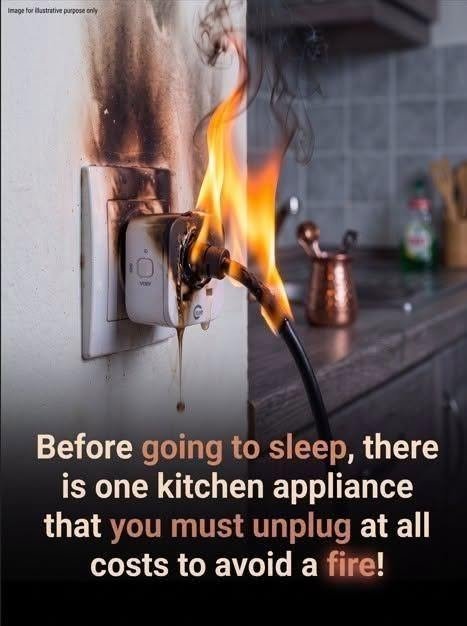
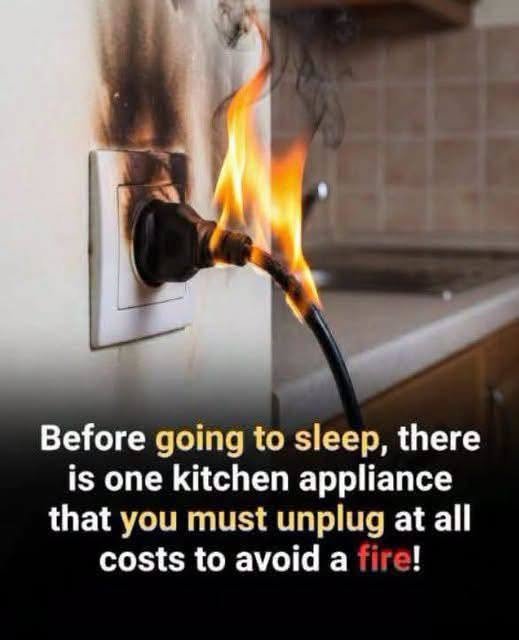
The image of the flaming outlet highlights another critical issue: outlet overload. The two plugs in the image appear to be melting.
The Danger of Loose Connections
When a plug is inserted into a wall outlet, it relies on spring-loaded metal contacts to hold it tightly. Over time, especially with heavy appliances being plugged in and out, these contacts can loosen. A loose connection creates high electrical resistance, which generates heat. The heat can melt the plastic of the plug, exposing the live metal prongs to the air. If dust or a flammable material touches the prongs, a fire breaks out.
Daisy-Chaining and Extension Cords
If you have a toaster, a coffee maker, and an air fryer all plugged into the same power strip or extension cord, you are creating a recipe for disaster. Power strips have a maximum wattage limit. If you exceed that limit, the internal wiring of the strip will melt. If you are daisy-chaining (plugging one strip into another), the risk is compounded exponentially. High-heat kitchen appliances should always be plugged directly into a dedicated wall outlet.
The Ultimate Sleep Protocol: A Room-by-Room Checklist
To protect your home and your family, adopt a strict nighttime protocol. Before you go to sleep, do a quick visual check of your kitchen.
Unplug the “Big Three”: The toaster, the coffee maker, and the air fryer. Physically pull the plug from the wall.
Check the Stove: Ensure all gas burners are completely off and the oven is off. Double-check the knobs.
Clear the Counters: Remove any dish towels, paper towels, or wooden cutting boards that are resting against or near heat-generating appliances.
Inspect the Outlets: Look for any signs of discoloration, melting, or a burning smell around your kitchen outlets. If an outlet feels hot to the touch, stop using it immediately and call an electrician.
Avoid “Standby” Mode: If you must leave an appliance plugged in (like a microwave or a smart fridge), ensure it is not in a high-heat cycle.
What to Do If a Fire Starts
If, despite your precautions, an appliance or outlet catches fire, you must act quickly and safely.
Do Not Use Water: Water conducts electricity. Throwing water on an electrical fire can electrocute you or cause the fire to explode outward.
Cut the Power: If it is safe to do so, unplug the appliance or flip the main circuit breaker to cut the power to the kitchen.
Use a Fire Extinguisher: Use a Class C fire extinguisher (designed for electrical fires) or a multipurpose ABC extinguisher. Aim at the base of the fire.
Smother the Fire: If you do not have an extinguisher, you can use baking soda to smother a small fire on the stovetop, but never on a wall outlet or an appliance plugged into the wall.
Evacuate and Call 911: If the fire is spreading, if the room is filling with smoke, or if you are unsure, get out of the house immediately and call emergency services.
Conclusion: A Simple Habit That Saves Lives
The terrifying image of the flaming wall outlet is not just a piece of viral clickbait; it is a realistic depiction of what can happen when we become complacent with our electrical appliances. The convenience of modern kitchen gadgets is undeniable, but it comes with a responsibility to use them safely.
The simple habit of unplugging your toaster, coffee maker, and other high-heat appliances before going to bed is one of the most effective, low-effort ways to prevent a catastrophic house fire. It takes less than ten seconds to pull a plug, but those ten seconds could be the difference between a peaceful night’s sleep and a devastating tragedy. Do not wait for a close call to change your habits. Make unplugging your kitchen appliances a non-negotiable part of your nightly routine. Your family, your home, and your peace of mind depend on it.
Frequently Asked Questions
Why is the toaster specifically dangerous to leave plugged in?
A toaster combines extreme heat (elements reaching over 600°F) with highly flammable fuel (dried bread crumbs). If a crumb falls on a live element, or if the mechanical switch fails while plugged in, it can ignite the plastic housing and cause a major fire.
Can I leave my coffee maker plugged in overnight?
It is not recommended. Coffee makers mix water and electricity. A leak can cause a short circuit, and if the machine is programmed for auto-start, a malfunction could cause it to turn on and boil dry while you sleep, leading to a fire.
Does turning the appliance “off” stop the fire risk?
No. Most appliances only switch off the “hot” wire. If the internal wiring fails, or if there is a power surge from the grid, electricity can still reach the internal components, causing them to overheat and ignite even when the switch is off. Unplugging is the only way to completely sever the power.
What caused the outlet to catch fire in the picture?
The image likely depicts an electrical overload or a short circuit. This happens when too much power is drawn from the outlet, or when a loose connection creates high resistance, generating intense heat that melts the plug and ignites the plastic.
Is it safe to use a power strip for kitchen appliances?
No. High-wattage appliances like toasters, air fryers, and kettles should always be plugged directly into a wall outlet. Power strips are not designed to handle the heavy current draw of these devices and can easily overheat and melt.
What type of fire extinguisher should I have in my kitchen?
You should have a multipurpose ABC extinguisher, or a Class C extinguisher specifically designed for electrical fires. Never use water on an electrical fire.
How often should I clean my toaster?
You should empty the crumb tray of your toaster at least once a week, or more often if you use it daily. Never turn the toaster upside down and shake it vigorously, as this can damage the heating elements; simply remove the tray and wipe it clean.