Does Sleeping on Your Right Side Harm Your Stomach? What the Science Says About Sleep Position and Reflux
How your stomach and esophagus work
Your stomach produces acid to break down food. The esophagus is the tube that carries food from your mouth to your stomach. At the bottom of the esophagus is a ring of muscle, often called the lower esophageal sphincter, which acts like a valve. It opens to let food in and closes to keep stomach contents from rising back up.
The stomach itself is not a loose bag that spills in one direction. Its lining is designed to handle acid, and the valve works in most positions, whether you are sitting, standing, or lying down.
Gravity does play a role. When you are upright, gravity helps keep acid where it belongs. When you lie down, it becomes slightly easier for acid to move upward, especially if the valve is weak or your stomach is full.
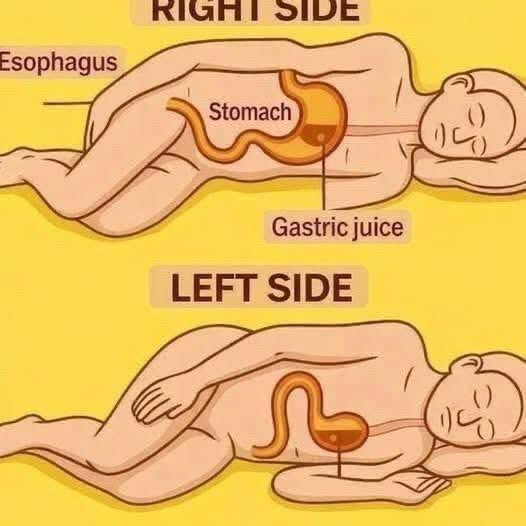
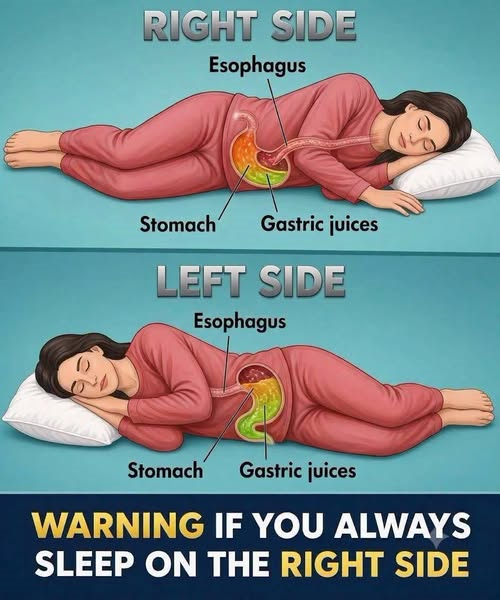
That is why the diagrams in the image show the stomach in different spots relative to the esophagus. They are a simplified illustration, not a precise medical picture.