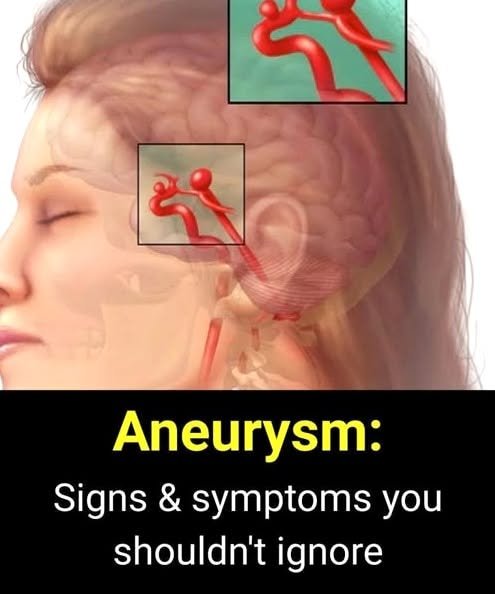
The image above illustrates a human head with a magnified view of a bulging blood vessel in the brain, accompanied by the text: “Aneurysm: Signs & symptoms you shouldn’t ignore.”
An aneurysm occurs when a section of a blood vessel wall weakens and bulges outward. While many aneurysms remain small and cause no symptoms, a ruptured aneurysm is a serious medical emergency that requires immediate attention. Understanding the potential warning signs can help individuals seek timely medical evaluation.
What Is an Aneurysm?
An aneurysm is a ballooning or bulge in the wall of a blood vessel. While they can develop in various parts of the body, they are most commonly found in the brain (cerebral aneurysm) and the aorta (aortic aneurysm). Many small aneurysms are discovered incidentally during medical imaging for other conditions and may never cause problems.
Potential Warning Signs
A common misconception is that aneurysms always strike without warning. In reality, some people may experience symptoms before a rupture occurs, particularly if the aneurysm is large or pressing on nearby structures.
Symptoms of an Unruptured Aneurysm
When an unruptured aneurysm presses on nerves or brain tissue, it may cause:
Headaches: Persistent or localized headaches, particularly behind the eyes.
Vision Changes: Double vision, blurred vision, or loss of peripheral vision.
Pain: Pain above or behind the eye, or on one side of the face.
Neurological Symptoms: Numbness, weakness, or difficulty speaking.
It is important to note that these symptoms can have many other causes and do not necessarily indicate an aneurysm. However, persistent or unusual symptoms should be evaluated by a healthcare professional.
Symptoms of a Ruptured Aneurysm
A ruptured aneurysm is a medical emergency. The most common symptom is a sudden, severe headache, often described as the worst headache of one’s life. Other symptoms may include:
Nausea and vomiting
Stiff neck
Sensitivity to light
Blurred or double vision
Confusion or difficulty speaking
Seizures
Loss of consciousness
If you or someone you know experiences these symptoms, seek emergency medical help immediately.
Risk Factors
While anyone can develop an aneurysm, certain factors increase the risk:
High Blood Pressure: Uncontrolled hypertension is a significant risk factor.
Smoking: Smoking damages blood vessel walls and increases the risk of aneurysm formation and rupture.
Family History: A family history of aneurysms may increase risk.
Age and Gender: Aneurysms are more common in adults over 40, and women have a higher risk of brain aneurysms.
Certain Medical Conditions: Conditions such as polycystic kidney disease and connective tissue disorders can increase risk.
The Importance of Medical Evaluation
If you are experiencing symptoms that concern you, or if you have risk factors for an aneurysm, it is important to consult a healthcare professional. They can determine whether further evaluation, such as imaging tests, is appropriate.
For many people, aneurysms are discovered during routine screenings or evaluations for other conditions. In these cases, doctors can monitor the aneurysm and recommend appropriate management.
Conclusion
While the topic of aneurysms can be concerning, understanding the potential signs and risk factors can help individuals make informed decisions about their health. If you have concerns, seek guidance from a qualified medical professional.