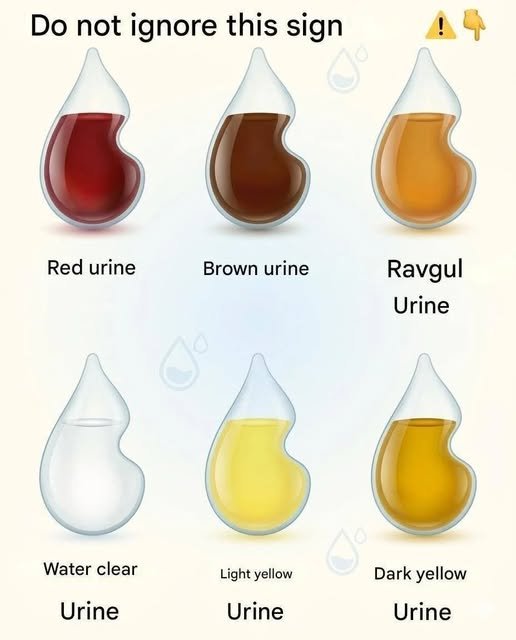
A Comprehensive Guide to Urine Color and Health: Decoding Your Body’s Liquid Biopsy
The image before us displays a highly visual diagnostic chart: six test tubes containing urine at varying stages of color concentration. The spectrum ranges from the pale, almost translucent “Light Yellow” to the golden “Yellow,” the concentrated “Dark Yellow,” the deep “Amber,” the alarming “Brown,” and finally, the stark, warning-sign “Red,” which has been explicitly circled to draw the eye.
While minor, temporary fluctuations in urine color are entirely normal and are often related to what you eat or how much water you drink, persistent or sudden shifts in hue—especially those at the darker or redder end of the spectrum—can be the very first indicator of a serious underlying medical condition.
This comprehensive guide will meticulously decode every color on this spectrum. We will explore the physiological mechanisms that create these hues, distinguish between benign dietary causes and medical emergencies, detail the specific conditions associated with each color, and provide you with a clear, actionable plan for monitoring your health and knowing exactly when to seek professional medical attention. By understanding the science of urochrome, hydration, and systemic health, you can use this daily ritual as a powerful tool for proactive wellness.
The Science of Urine Color: Understanding Urochrome
To accurately interpret the colors in the image, we must first understand the biology behind them. The characteristic yellow color of normal urine is primarily due to a pigment called urochrome.
The Breakdown of Red Blood Cells
Urochrome is a byproduct of the natural breakdown of red blood cells. Every day, your body destroys millions of old red blood cells to make way for new ones. The hemoglobin inside these cells is broken down in the liver, and a yellowish pigment called bilirubin is produced. The liver processes this bilirubin, mixes it with bile, and releases it into the digestive tract. Some of this pigment is eventually filtered out by the kidneys into the urine, where it becomes urochrome.
The Hydration Factor: Concentration vs. Dilution
The intensity of the color depends entirely on how much water is mixed with the urochrome.
Diluted Urine: When you drink plenty of water, the kidneys release a high volume of fluid. This dilutes the urochrome to a pale, light yellow.
Concentrated Urine: When you are dehydrated, the body signals the kidneys to conserve water. The urine volume drops, and the concentration of urochrome increases, resulting in a darker yellow or amber color.
While hydration is the most common variable, urochrome is not the only substance that can alter urine color. Medications, vitamins, food dyes, and medical conditions can all introduce new pigments into the urine, creating colors that range from neon orange to deep brown to bright red.
1. Light Yellow: The Golden Standard of Health
The first test tube on the left, labeled “Light Yellow,” represents the color of a perfectly functioning, well-hydrated body.
What It Indicates
This pale, straw-like color is the optimal target for healthy urine. It indicates that your hydration levels are excellent, your kidneys are filtering efficiently, and your liver is processing bilirubin correctly. It is the color that doctors and nutritionists want to see.
The Benefits of Proper Hydration
When your urine is this color, you are supporting your body’s natural detoxification pathways. Proper hydration ensures that waste products, like urea and excess salts, are flushed out effectively. It also reduces the risk of kidney stones and urinary tract infections (UTIs) by ensuring the bladder is regularly emptied and diluted.
When to Worry
If your urine is consistently this pale color, you are doing everything right. There is no need for concern. Simply maintain your current fluid intake habits.
2. Yellow: The Sign of Normal Hydration
The second test tube, labeled “Yellow,” is a slightly more concentrated shade but still falls within the normal, healthy range.
What It Indicates
This is the color of normal, everyday urine for many people. It means you are adequately hydrated, but perhaps not drinking an excessive amount of water. It is completely normal and indicates that your kidneys are doing their job.
Dietary Causes
Sometimes, a bright yellow color can be caused by dietary factors. Vitamin B2 (Riboflavin) and multivitamin supplements are notorious for turning urine a vivid, almost neon yellow. This is because riboflavin is water-soluble, and the body excretes any excess in the urine. This is completely harmless and is simply a sign that your body is processing the vitamins.