Vitamin B12 Deficiency Is Nothing to Joke About: The 10 Surest Signs and the Science Behind Them
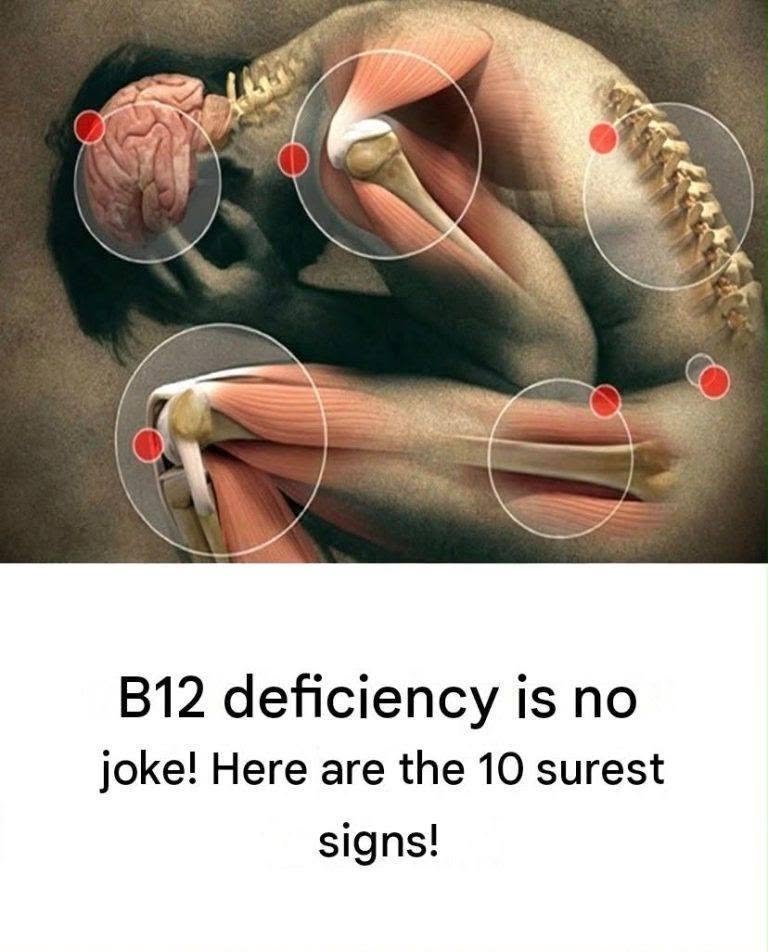
The image is arresting in its quiet severity. A human figure is curled into a defensive, almost fetal posture, and superimposed upon the brain, the spine, the shoulders, the elbows, and the wrists are stark red markers. These are not random points of interest. They represent the precise anatomical territories where a silent, often misunderstood nutritional deficit wages its campaign. The accompanying text is blunt: “B12 deficiency is no joke! Here are the 10 surest signs!” It is a warning that resonates because the symptoms of vitamin B12 deficiency are notoriously easy to dismiss, attribute to stress, aging, or overexertion, or simply ignore until the damage becomes difficult to reverse.
Vitamin B12, or cobalamin, is a water-soluble vitamin that plays an indispensable role in two of the body’s most fundamental processes: the formation of healthy red blood cells and the maintenance of the myelin sheath that insulates and protects nerve fibers. When levels of this vitamin fall, the consequences ripple outward from the bloodstream to the nervous system, the muscles, and even the brain. What makes B12 deficiency particularly insidious is its timeline. The body stores substantial amounts of B12 in the liver—enough to last three to five years—so a deficiency can develop silently over a long period before symptoms surface. Furthermore, the neurological damage can begin even before anemia is detectable, meaning the absence of a classic “anemic” appearance does not rule out a serious problem.
This is not a rare or exotic condition. It is a common, often overlooked, and frequently misdiagnosed nutritional gap that affects millions worldwide, with certain populations—vegans, older adults, and those on long-term medications—at particularly high risk. Understanding the ten surest signs is not about self-diagnosis or succumbing to internet-fueled anxiety. It is about recognizing the body’s signals, understanding the biological mechanisms that produce them, and knowing when to seek proper medical evaluation before irreversible damage occurs.