The Emotional Meaning of Shoulder Pain: What Your Body Is Trying to Tell You
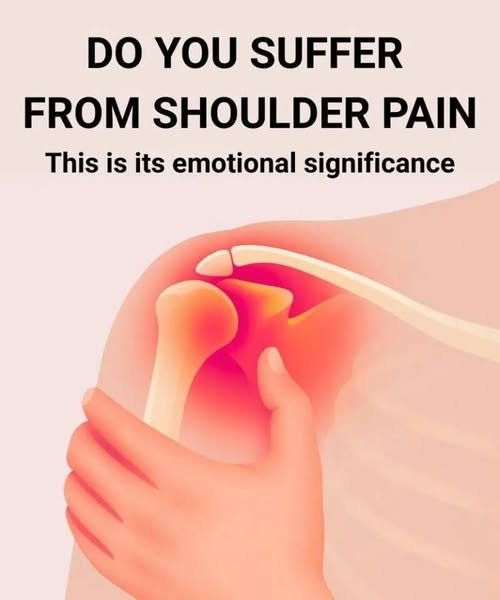
The image before us shows a person clutching their shoulder, their hand pressing firmly into the joint. The text above the illustration asks a profound question: “Do you suffer from shoulder pain? This is its emotional significance.”
For millions of people, shoulder pain is not just a physical ailment; it is a chronic, nagging companion that dictates how they move, sleep, and interact with the world. We often treat shoulder pain as a purely mechanical problem—a strained rotator cuff, a symptom of aging, a result of poor posture, or the aftermath of an old injury. We visit physical therapists, take anti-inflammatory medications, and apply ice and heat. While these physical interventions are necessary and effective, they sometimes fail to address the root cause. The pain persists, or it migrates from the left shoulder to the right, leaving the sufferer frustrated and bewildered.